Singapore’s Keppel and Vietnam’s tycoons: Inside Saigon Marina IFC Tower
The newly inaugurated tower has drawn in the country’s biggest business names, from an aviation tycoon to a disgraced property magnate

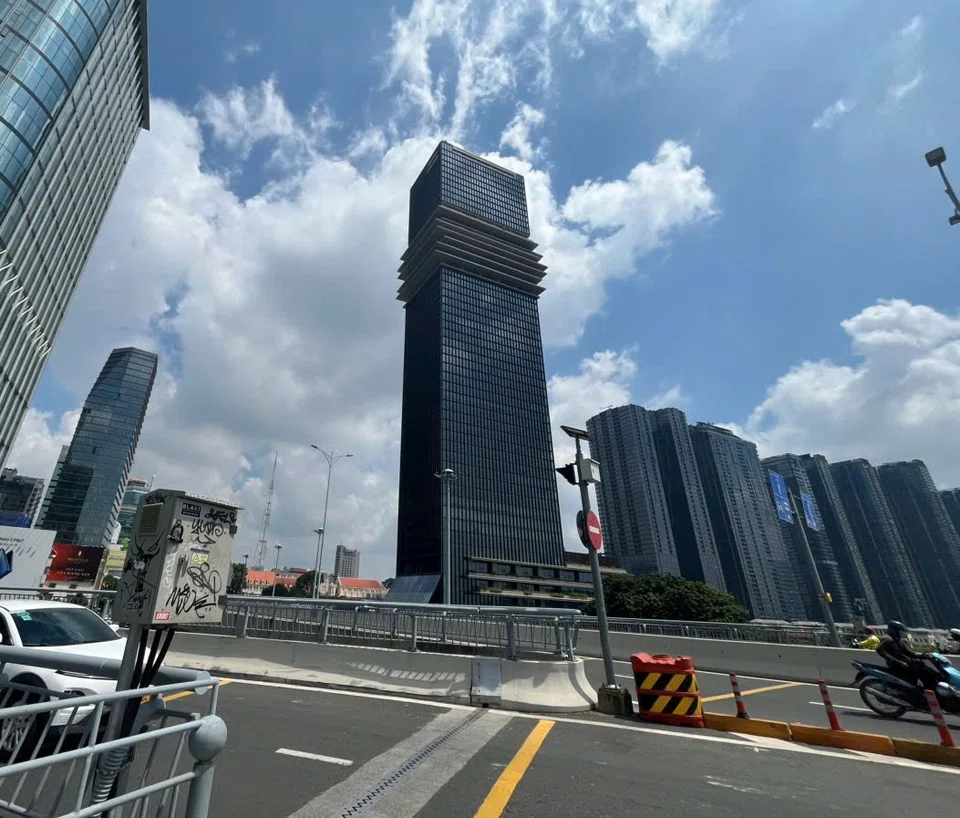
[HO CHI MINH CITY] Overlooking the Saigon River in downtown Ho Chi Minh City, a shimmering new landmark was unveiled on Tuesday (Aug 19) – the Saigon Marina International Financial Centre (IFC) Tower – billed as the first anchor project in the country’s highly anticipated IFC zone.
Rising among the city’s three tallest skyscrapers, the tower has, at various stages, been linked to prominent local billionaires, including Truong My Lan, now jailed for masterminding the world’s largest bank fraud, and Nguyen Thi Phuong Thao, the VietJet Air billionaire founder currently tied to the project.
After a series of ownership changes, the firm behind the tower is now majority owned by Vietnam’s low-key “mysterious businesswoman” Le Thi Huyen Linh.
The development, the first in the city to adopt a transit-oriented development model, with direct access to Metro Line No 1, has also attracted the involvement of major Singapore firms – past and present.
Currently, Keppel , one of the largest Singapore urban development and infrastructure groups, is serving as the project adviser. Since earlier this year, it has been providing real-estate-as-a-service support, including post-completion technical and operational guidance, as well as leasing and marketing consultancy.
“Drawing on Keppel’s extensive real estate experience, which includes sterling developments like Marina Bay Financial Centre in Singapore and Saigon Centre in Vietnam, we look forward to establishing Saigon Marina IFC as a premier financial hub in Ho Chi Minh City,” Joseph Low, Keppel’s chief representative for Vietnam told The Business Times.
Singapore’s property giant CapitaLand once had an indirect link to the project.
Company filings show that Capitaland Tower Company, the tower project’s registered investor, was incorporated in Vietnam in 2016 and first held through CVH Cayman, a CapitaLand subsidiary. Ownership was later transferred to CLV Investment 6 (CLV), another Cayman entity that CapitaLand had established in 2016.
In response to BT’s query, CapitaLand said that CLV had ceased to be its subsidiary in 2017 and that it fully divested its indirect stake in Capitaland Tower Company in 2018.
At the time (in 2018), Capitaland Tower Company’s registered capital was 2.07 trillion dong (S$100 million). In early August, individual investor Linh injected 20.5 trillion dong, just 10 days before the inauguration of the Saigon Marina IFC Tower.
The investment lifted the company’s capital about 11 times to 22.52 trillion dong and made her the controlling shareholder with a 91 per cent stake, according to National Business Registration Portal (NBRP) filings. Linh also serves as the legal representative of Masterise Property Real Estate Management.
Past and present links to tycoons
Capitaland Tower Company has surfaced in official investigations. A Vietnamese police report dated May 29, 2024, that was obtained by BT, listed it among seven Vietnam-based firms tied to illegal cross-border money transfers allegedly linked to the jailed property magnate Lan.
NBRP filings also show that Kenneth Chiu – a lawyer and Lan associate now wanted by the Vietnamese police – was an authorised representative of CLV from 2018 until his removal in March 2023.
CLV fully divested from Capitaland Tower Company in March 2024.
At the tower’s inauguration, attention turned to tycoon Thao, vice-chairperson of Vietnam’s private lender HDBank, who spoke on behalf of the Saigon Marina IFC Tower’s investor, according to state media Vietnam News Agency. She also serves as chairperson of Vietjet Air and Sovico Group.
Just a week before the event, HDBank sought shareholder approval to relocate its headquarters to the Saigon Marina IFC Tower, saying the move would “serve its development strategy in the new period”.
Vietnam’s International Financial Centre
Spanning more than 106,000 square metres (sq m) across 55 above-ground floors and five basement levels, the development allocates 87,000 sq m to Grade A office space, with the remaining area dedicated to a shopping mall, restaurants, meeting halls and premium amenities.
The tower also meets the Leed Gold green building standard, featuring over 30 per cent of its space devoted to greenery and open-air environments.
Saigon Marina IFC Tower is part of the roughly 25.3-hectare Grand Marina Saigon, recognised as the world’s largest Marriott-branded luxury residence project, and developed by Masterise Homes – another major real estate developer in Vietnam.
The entire project now falls within the designated boundaries of the planned IFC zone, where Ho Chi Minh City recently unveiled an ambitious scheme to seek US$7 billion to develop the centre within the next five years.
In June this year, Vietnam’s parliament approved a slew of special mechanisms and incentives for members of the country’s dual-city IFC in Ho Chi Minh City and Da Nang, with the aim to develop it into one of the world’s top 20 IFCs by 2045.
The parliament’s resolution, effective from this September, mandates the registration and admission of IFC members – particularly those in sectors such as banking, insurance, securities brokerage and fund management.
In May this year, a delegation from the Trump Organization, a privately owned business of US President Donald Trump, surveyed potential sites for a Trump Tower project in Ho Chi Minh City’s Thu Thiem peninsula, where city authorities had earmarked vacant land for the country’s new IFC.
Some investors from Singapore, meanwhile, are said to be actively exploring opportunities in the planned IFC in Da Nang, a popular tourist spot in Vietnam known for its picturesque beaches.
TRENDING NOW
He built the Vingroup empire. Now South-east Asia’s richest man is handing some key roles to his sons
‘Our bread and butter’: Family-run Loo’s Hainanese Curry Rice hands reins to third generation
Grab CEO’s wife Chloe Tong on life with Anthony Tan and finding her purpose
US says China to buy 10 million tonnes of coal in 2027 and 2028