



Singapore’s logistics giant YCH targets four US$300 million SuperPorts across Asean by 2030
The first project in Vietnam will serve as a model for the company to replicate in other regional markets, says chairman
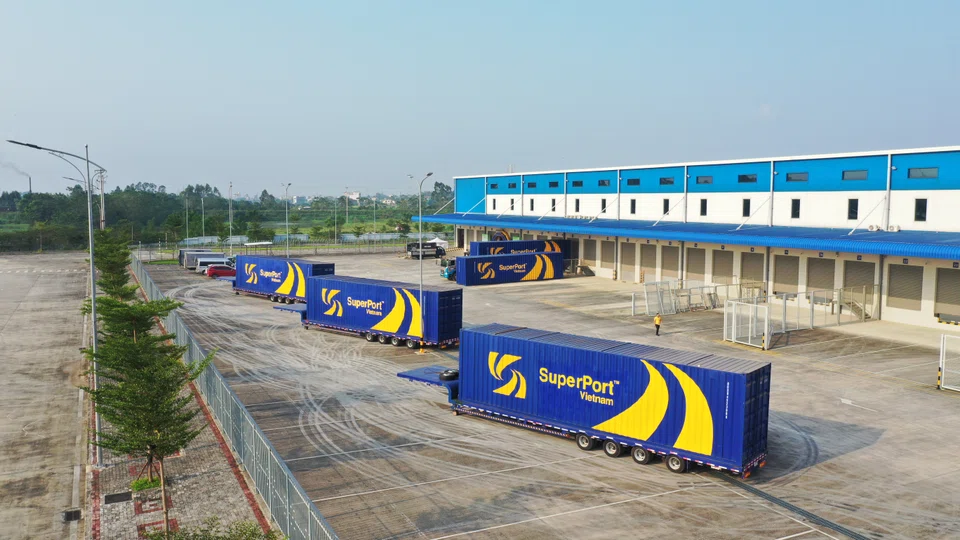
[HO CHI MINH CITY] Singapore logistics provider YCH Group is set to invest in at least four SuperPorts – which are multimodal logistics ports – across South-east Asia over the next five years, starting with hubs in Vietnam and Cambodia.
Additional projects – including those following the model of YCH’s iconic Supply Chain City in Singapore – are also planned for Malaysia, Indonesia, the Philippines and Laos, and will enhance the region’s cargo flow, said executive chairman Robert Yap in an interview with The Business Times.
“The cargo base in the region is growing as Asean economies are growing at a high single digit annually. With this kind of growth, we must create alternate solutions to allow more efficient flows of goods,” he said.
Construction on the first SuperPort began in Vietnam in 2021, with the next one slated to break ground in Cambodia this June. Yap noted that each project requires an investment of about US$300 million, and takes five to eight years to complete.
Founded in 1955 by Yap’s father, the late Yap Chwee Hock, YCH Group currently manages over US$50 billion worth of inventory throughput annually.
Its supply chain hubs of various scales are located in more than 100 cities across Greater China, India, Malaysia, Thailand, Indonesia, the Philippines, Laos, Vietnam, Japan and South Korea.
Amid recent geopolitical shifts, YCH Group is capitalising on the growing demand for supply chain diversification, helping companies adopt the so-called “China Plus One” strategy by moving manufacturing and logistics bases to South-east Asia.
“When the supply chain moves to this area, you need to have a very strong connectivity hub. Otherwise, you can produce cargo, but you cannot send it out at the time and cost that you want,” Yap said.
“With SuperPorts, we are able to harness those multimodal capabilities and enhance the efficiency of everything.”
Vietnam as transhipment hub
Following the support of Vietnam’s then-prime minister Nguyen Xuan Phuc during his visit to Singapore in 2018, the first SuperPort was developed through a partnership between YCH Group and Vietnam’s T&T Group.
Spanning 83 hectares in Vinh Phuc province near Hanoi, Vietnam SuperPort is designed to serve as a transhipment hub to improve China-Asean connectivity. It is within reach of more than 20 industrial parks, as well as road and rail systems linking Vietnam’s northern manufacturing hot spots to China’s border areas.
The project’s first phase began service in January 2023, with the second stage of development in the works.
When fully completed, Vietnam SuperPort will integrate rail, road, air and sea transportation modes with dry port, cargo terminals, and advanced supply chain nerve-centre operations. It also aims to become South-east Asia’s first net-zero multimodal logistics port by 2040.
“It will be exemplary. We want to create a kind of benchmark, a framework and a showcase to teach people why it is important and how to do it right,” Yap said.
Although known as South-east Asia’s manufacturing hub – its factories supply global giants such as Samsung, Foxconn and Intel – Vietnam still faces challenges in a relatively inefficient logistics sector.
While Singapore was the highest-ranked country in the global Logistics Performance Index 2023, Vietnam placed 43rd – lower than its regional peers Malaysia, in the 26th spot, and Thailand, in 34th.
A report by the Vietnam Logistics Business Association (VLA) showed that logistics costs accounted for 16.8 per cent of the country’s gross domestic product in 2023, higher than the average of 10 to 11 per cent in developed nations.
Within the e-commerce sector, logistics expenses even made up between 20 and 25 per cent of product prices. In comparison, these levels are 15 to 20 per cent in other countries in the region.
The main challenges, as VLA’s report pointed out, include the shortage of a highly skilled workforce in supply chain management, asynchronous information technology infrastructure, and the lack of capital to finance logistics upgrades.
“Logistics in Vietnam today is still very fragmented,” Yap said. “We are trying to improve the entire ecosystem, (only then can we) really harness the advantage of what we call optimum efficiency.”
Asean Smart Logistics Network
With SuperPorts and other smaller-scale centres across South-east Asia, YCH is forming an Asean Smart Logistics Network, an initiative launched in 2020 to develop an interconnected, technology-driven and sustainable logistics infrastructure to enhance regional connectivity and foster innovation.
“(The SuperPort model) has to be replicated as we are connecting them to form trusted hubs, then we can actually improve the flows of cargo,” said Yap.
This network will not only facilitate the increasing shipment of goods from Asean to the world, but also enhance intra-Asean trade – which Yap believes has not yet been leveraged to its full potential.
An analysis by Standard Chartered Bank pointed out that Asean is set to form the fastest-growing trade corridors in the world by 2030, with average growth rates projected to be above 6 per cent from 2021 to 2030.
At an average rate of 8.7 per cent, intra-regional trade expansion is forecast to be the most rapid in Asean, hitting US$800 billion at the end of the decade.
Currently, exports within Asean countries constitute 20 per cent – the largest share – of the region’s total exports.
While YCH Group is ready to invest billions of dollars in the coming years, it is in need of long-term financing through regional development institutions to fuel these large-scale projects.
The International Finance Corporation is currently serving as lead arranger of financing for Vietnam SuperPort, with the Asian Development Bank and the Asian Infrastructure Investment Bank also expressing interest, Yap said.
As these new supply chain hubs in the network are strategically positioned to improve accessibility through the multimodal approach, the goal is to eventually boost the logistics performance of the entire South-east Asia region.
“We take inefficiency as the common enemy (of the region),” said Yap.
“Efficient flows will make everything more competitive. When it’s more competitive, more business will come in, and everybody in the region benefits.”






