Singapore’s Sembcorp, SP Group caught in Vietnam’s clean energy U-turn
Tariff and compliance disputes over 173 renewable projects worth US$13 billion are spooking investors from Singapore, the Philippines and the EU
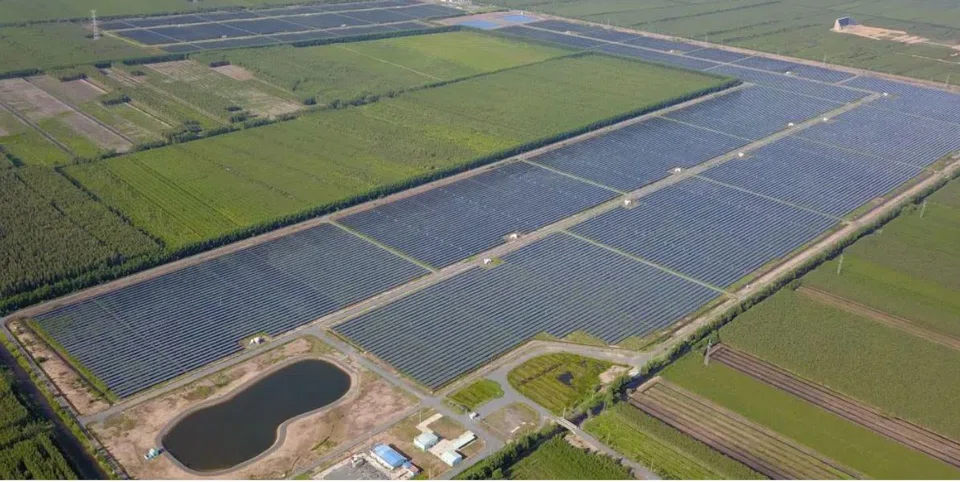
[HO CHI MINH CITY] Singapore’s national utility company SP Group and energy giant Sembcorp Industries are among 19 global firms that may be affected by a sudden rule shift in Vietnam, which puts billions of dollars in renewable energy (RE) investments at risk
SP Group and Sembcorp’s solar farms are among 173 projects – backed by both local and foreign investors – collectively worth around US$13 billion, that now face uncertainty amid Vietnam’s midstream reassessment of incentive eligibility. They are included in a list of affected projects, tied to a compliance dispute stemming from the review seen by The Business Times.
Singapore-incorporated firms hold majority ownership in eight of these projects, with a total installed capacity of over 400 megawatt-peak (MWp), including those backed by the two companies, according to the list.
SP Group is the majority owner of four solar plants, with a total capacity of 165 MWp, while Sembcorp holds stakes in 100 MWp Gaia solar farm and 40.5 MWp BCG Bang Duong solar farm in Long An province, a key industrial hub in southern Vietnam, according to the list obtained by BT.
In response to BT queries, Sembcorp said that the issue has no material impact on the firm’s earnings. “We are closely monitoring the situation and engaging the relevant authorities on a resolution,” the spokesperson noted.
SP did not respond to BT queries.
Vietnam’s compliance dispute stems from a retroactive review of feed-in tariff (FIT) eligibility for renewable energy projects, disrupting a policy that previously guaranteed foreign investors decades-long above-market rates paid by state-owned utility group EVN.
Many projects began operations and sold power to EVN without first obtaining Construction Completion Acceptance (CCA) approvals, as the rule was not initially enforced.
Now, authorities are reassessing the requirement for CCA, leaving investors worried about underpayment, loan defaults, and potential legal battles. A worst-case scenario could trigger bankruptcies, billions in losses, and stalled investment in Vietnam’s push to have renewables make up one-third of its power mix by 2030.
Big headache
Naturally, the review has left many investors sore.
Applying a new requirement retroactively could lead to the reduction of FIT that solar and wind farms have enjoyed, wiping out projects’ entire equity value, according to a joint petition dated Mar 5, signed by 29 investors and sent to Vietnamese leaders. SP and Sembcorp were not the signatories of the letter.
“If unfavourable results occur, we will not dare to keep investing in this sector in Vietnam,” said Nguyen Huu Quang, director of three solar power projects in the country’s north-central and southern provinces. The projects are owned by UK private equity fund Dragon Capital, one of the signatories of the March-dated petition.
“We chose to enter this industry partly because it is considered to have low risks; however, the present circumstances suggest otherwise,” he told BT.
The three plants, with a total capacity of 123 megawatts (MW), have been operational since 2019. They secured power purchase agreements with EVN, which committed to buying their electricity at generous FITs for 20 years.
However, Quang said the investor has abandoned plans to expand its renewable energy portfolio to 300 MW in Vietnam by 2025 due to legal and pricing uncertainties over the past two years.
The latest development could stall many investors’ expansion plans in the South-east Asian economy, which is generally favoured for its high growth and renewable energy potential.
A foreign firm’s business development head admitted that plans to double wind and solar capacity in Vietnam by 2030 are now on hold, with the focus shifting to maintaining their existing 1,000 MW already online.
“I never anticipated that the government would enforce new requirements retroactively,” he said speaking in anonymity.
The total affected investment of foreign-owned projects alone is estimated at around US$4 billion, comprising over 3,600 MWp of solar projects and 160 MWp of wind farms.
Litigation threats
According to Pham Minh Hoang, managing partner at VSE Lawyers, no new rule has been introduced. Instead, a revised interpretation of an existing regulation has sparked disputes over whether projects need CCA approvals to qualify for commercial operation and access to FIT mechanisms.
Most projects obtained CCA approvals after starting commercial operations and had already signed agreements to sell electricity to EVN with favourable rates under the incentives.
“If we are re-considered as not qualified for FIT and required to re-negotiate lower tariffs as well as refund past revenue received, our plants will inevitably face loan defaults,” Quang lamented.
He explained that solar and wind projects in 2019 and 2020 were largely financed through bank loans covering 65 to 70 per cent of development costs, which ranged from US$850,000 to US$1 million per MW. With a typical 10-year repayment period, many still face around five more years of financial obligations.
“If the situation worsens, there is a high chance that some big foreign investors would file lawsuits against EVN,” Hoang opined.
EVN itself has acknowledged the risk. In a February 2024 report, the state utility group admitted that litigation was a real possibility, noting that the CCA compliance requirement was never explicitly stated in past government guidelines or in power purchase agreements with investors.
From incentives to dilemma
The FIT incentives were aimed at promoting early developments of renewable energy to support Vietnam’s sustainable growth when coal was still dominant as the main electricity generation source.
However, EVN has suffered from widening losses, while households and factories have experienced increasing power prices over the past few years.
The abundant supply of solar panels, especially those produced by China, has also significantly cut the development costs of solar farms in recent years, prompting authorities’ efforts to reduce the high tariffs it pays power producers.
Notably, the boom of projects built in haste to meet the cut-off date for the incentives in 2019 and 2020 put a strain on the national electricity system.
As a result, the state inspector launched an investigation and released a report in April 2023, revealing all compliance issues of projects previously qualified for FIT, including the lack of CCA, and requesting the trade ministry and EVN to review and address violations.
Against this backdrop and since September 2023, EVN has only paid partially or delayed payments under its previous power purchase agreements with most electricity producers “without clear legal justification”, according to the investor petition.
“With reduced tariffs, we won’t be able to earn sufficient income to repay our loans, let alone yield any profits,” said Quang.
TRENDING NOW
Genting Singapore trails MBS, but helps anchor Malaysian parent group’s finances
Siti Hasmah Mohamad Ali, wife of former Malaysian PM Mahathir Mohamad, dies aged 100
He built the Vingroup empire. Now South-east Asia’s richest man is handing some key roles to his sons
Why US midterm elections could power the next stock market rally