



Singtel launches network for roaming mobile payment in Asia
Singapore
SINGTEL looks to set itself apart in an increasingly crowded space by coming in to unify mobile wallets for cross-border use, tapping on an estimated US$3 billion opportunity for telcos advancing into e-payments.
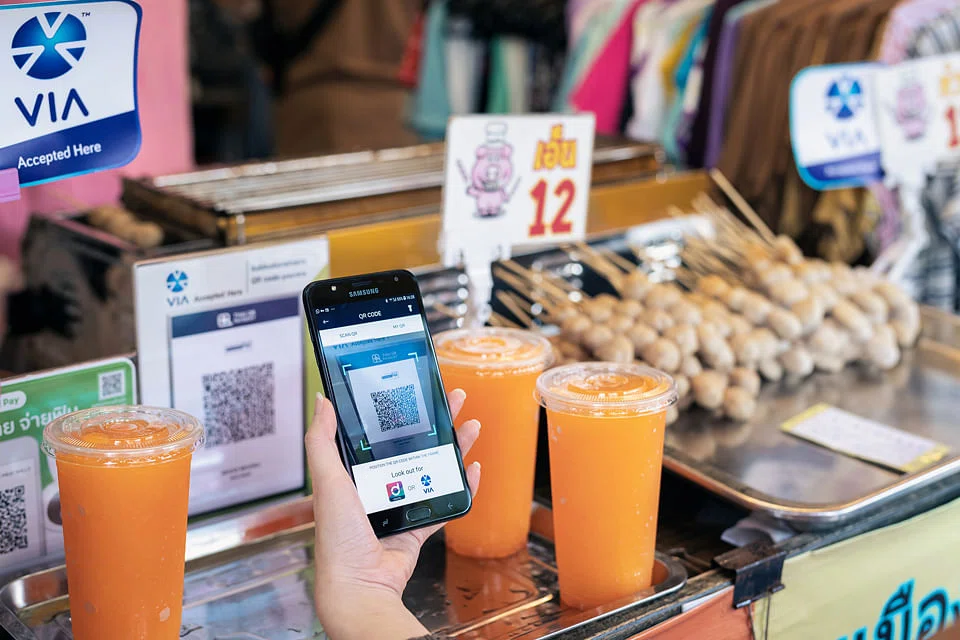
Singapore's largest telco on Tuesday launched VIA, its cross-border mobile payment alliance, with its regional associate AIS and Kasikornbank, Thailand's largest digital bank.
Singtel and AIS will now offer QR code-based mobile payments through their mobile wallets - Singtel Dash, AIS Global Pay and Rabbit Line Pay - across both Singapore and Thailand. These can be used at all merchants displaying the VIA brand and more than 1.6 million Kasikornbank merchants displaying the QR code for payments.
This alliance will allow both telco and non-telco mobile wallets in different markets to be offered on the same platform to consumers, bringing together a region-wide payment network that will enable customers to use their local mobile wallets when travelling, said Singtel.
This means users of Singtel Dash in Singapore can pay for their shopping in Thailand with their Sing-dollar mobile wallet, as the VIA platform will allow consumers to pay in Thai baht through a forex conversion. The full and final forex rate will be made transparent to consumers at the point of purchase.
This then puts Singtel Dash - as a "roaming wallet" - in the same competitive category as several other multi-currency debit cards in the market. Singtel will later expand this service in India, the Philippines and Indonesia, through its associates. All in, Singtel has a group-wide customer base of more than 700 million.
The group has more than half-a-million registered users of Singtel Dash, and with this VIA service, it will be able to reach more than 42 million Line chat users in Thailand.
There are also opportunities to open up the platform to non-Singtel partners, as Singtel has said it is open to working with China's Ping An eWallet, owned by Ping An Insurance Group.
The latest move from Singtel comes as regulators round the world are looking to developed unified QR codes, such that one QR code would be enough to rule all payments across different payment providers. Singapore in September launched its version, and other jurisdictions are expected to follow in time.
There is clear business opportunity for telcos in this market, with a Morgan Stanley report in July estimating that telcos in Asean could gain up to nearly US$3 billion from their expansion into e-payments. Still, Singtel's unique VIA alliance also speaks to the intense competition in mobile payments, with a 2017 UOB report on fintech noting that 43 per cent of Asean fintechs are focused on payments or on mobile wallets.
Consequently, fintechs offering digital wallets as a business model have attracted the most funding of the all Asean fintechs at US$73 million as at Oct 2017, though those offering remittances - a closely related business - has trailed very closely behind with their total investment taking of US$72 million.
This comes as well as in South-east Asia, just about 27 per cent of the region's 600 million people have a bank account, a 2016 KPMG report showed. And in poor countries like Cambodia, the banked population is a mere 5 per cent.
But financial inclusion for the unbanked in Asean could come in the form of their mobile phones, given that smartphone penetration in Asean easily beats out the percentage of those with bank accounts in Asean.
The UOB report cited data showing that the region ranks third globally in terms of the number of mobile users, behind only China and India.
In a press statement, Arthur Lang, CEO of Singtel's International Group, called the VIA alliance a "game changer" for the Singtel Group that is aimed at unifying Asia's fragmented payments scene.
"We see a tremendous opportunity to drive the adoption of mobile payments, which supports Asean's push towards financial inclusion and vision of a single digital market."
TRENDING NOW

Peter Kwee’s Ridley Park bungalow on the market with S$100 million asking price

Motoring tycoon Peter Kwee is back in court: Here are his previous legal battles

Demand, tech capabilities position Apac and AI as Skyscanner’s next growth frontiers: CEO Bryan Batista

South-east Asia has lost Nvidia’s best salesman

