


Asean Business logo
SPONSORED BYUOB logo

‘Size matters’ as Axiata guns for bigger share in key markets, says CEO

To ensure a return on investment, the telco giant is seeking to raise its market share in Indonesia to around 25%

Tan Ai Leng
Published Thu, Jul 18, 2024 · 05:00 AM
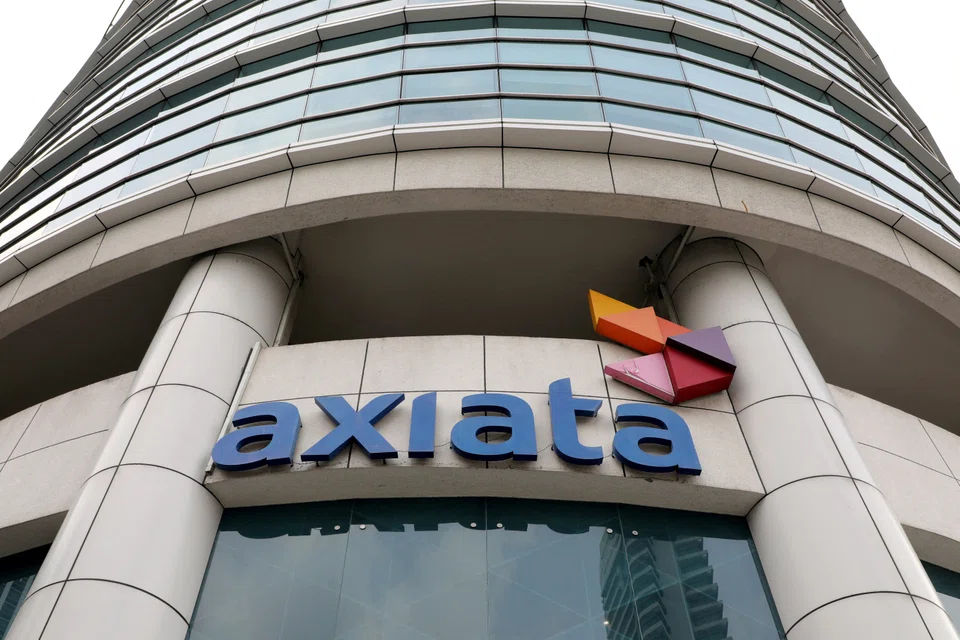
    • Beyond conventional telco business, Axiata Group is expanding its digital businesses to transform into a “techco”.
    • Beyond conventional telco business, Axiata Group is expanding its digital businesses to transform into a “techco”. PHOTO: REUTERS

    [KUALA LUMPUR] Axiata Group – one of the largest telcos in Asia (*see amendment note) – is set to grow its market share in Indonesia to at least 20 per cent following a series of mergers in the country over the past two years, its top executive said.

    “Size does matter. If we couldn’t be No 1 or No 2, it would be best – necessary – to have a sizeable market share of around 20 to 25 per cent to ensure a return on investment,” chief executive and managing director Vivek Sood told The Business Times in an interview.

    Axiata Group – listed on Bursa Malaysia with a market capitalisation of nearly RM24 billion (S$6.9 billion) – is one of the largest telcos in Asia, with operations in nine countries and serving over 160 million customers.

    Its Indonesian-listed subsidiary, XL Axiata, is the third-largest telco in the country with 58 million subscribers.

    As things stand, Telkomsel holds the largest share of Indonesia’s mobile network with 50.5 per cent or 153 million subscribers – followed by Indosat Ooredoo Hutchison with a 20 per cent market share or 100 million subscribers.

    Axiata Group CEO Vivek Sood says a sizeable market will allow a telco to have better market-pricing power and the ability to enhance efficiency. PHOTO: AXIATA GROUP

    The gap is narrowing. Following a merger with Smartfren Telecom, a subsidiary of conglomerate Sinar Mas, which is expected to be completed by year-end, Axiata’s subscriber base in Indonesia will balloon to 94 million.

    But despite the significant increase in subscriber base, the group needs to continue growing its market share to enhance profitability, said Sood.

    There is no rush with that, though. The near-term focus, as Sood pointed out, would be on building synergies, consolidating business operations and achieving organic growth.

    In the financial year ended December 2023, Axiata booked a nearly RM2 billion loss from a profit of RM9.8 billion the year before, on the back of a 10 per cent jump in revenue to RM22 billion. The losses were partly led by one-off impairment losses resulting from its exits from Nepal and Myanmar.

    Things are looking up in the group’s key markets.

    “In the three pillar markets in which we have significant market share (Indonesia, Bangladesh and Sri Lanka), we are seeing the market pricing power return, driving revenue growth. Our average revenue per user (ARPU) has improved in the past one-and-a-half years,” he added.

    For the first quarter of 2024, Axiata’s revenue rose 14.2 per cent to RM5.6 billion, while net profit slid 18.7 per cent year on year to RM60 million.

    In the same period, XL Axiata achieved multi-year record quarterly earnings as ARPU doubled and reached an all-time high of 44,000 rupiah (S$3.66) due to easing competition.

    Kenanga Research said Axiata’s earnings were mainly anchored by XL Axiata and its Cambodian subsidiary Smart, which offset losses in its operations in Sri Lanka and Internet business in Indonesia.

    Towering on delayering

    In Indonesia, Axiata is implementing a delayering strategy to transform XL Axiata into a ServeCo offering fixed-mobile converged services, while Link Net focuses on expanding fibre infrastructure as FibreCo.

    This strategy has proven successful in unlocking value, as seen with Axiata’s infrastructure business, Edotco. The company began this approach in 2013 by carving out Edotco from its main operations, allowing it to concentrate on developing, constructing and leasing telecom towers in various markets.

    Recently, Edotco expanded its presence in the Philippines by acquiring 2,710 towers from PLDT Philippines, boosting its portfolio to 35,000 towers across nine countries.

    After the recent acquisition, Edotco solidified its position as the sixth-largest independent tower company globally by tower count. Since 2022, Edotco has aimed to become a top 5 tower company, with plans to go public by 2026 (*see amendment note).

    On the group’s infrastructure business, Sood said the introduction of 5G will significantly advance the economy and drive the demand for telecommunications infrastructure services, benefiting Axiata’s tower infrastructure business.

    In Sri Lanka, Axiata led industry consolidation with its operating company Dialog acquiring a 100 per cent stake in its smaller competitor Airtel Lanka. PHOTO: REUTERS

    Room for growth in Malaysia, Sri Lanka

    In Malaysia, Axiata’s wholly owned Celcom Axiata merged with Digi in 2022, which led to the formation of CelcomDigi – the largest telco in Malaysia. Norwegian-based Telenor was Digi’s major shareholder prior to the merger.

    Post-merger, although Axiata is no longer the controlling shareholder in CelcomDigi, it remains a major shareholder with a 33.1 per cent ownership, equal to Telenor’s share. This merger significantly expanded Axiata’s customer base in Malaysia.

    For the first full year post-merger, CelcomDigi delivered significant synergies and contributed RM530.6 million in profit to Axiata in financial year 2023.

    In Sri Lanka, where Axiata commands half the market, the telco led industry consolidation with its operating company Dialog acquiring a 100 per cent stake in its smaller competitor Airtel Lanka.

    This acquisition is expected to increase Dialog’s mobile subscriber market share to more than 60 per cent in Sri Lanka.

    Axiata is optimistic that its digital businesses will grow, increasing their revenue contribution to 10 per cent by 2028. PHOTO: AXIATA GROUP

    Telco to techco

    Sood, who has been in the industry for over 15 years, is also leading the group’s transformation beyond the conventional telco business into a “techco” (technology company).

    Axiata’s digital business, including its fintech arm Boost Holdings, Axiata Digital and Analytics (ADA) and Axiata Digital Lab, is gaining momentum and now generates around 5 per cent of group revenue.

    Although the current revenue contribution from this segment is small, the 58-year-old chieftain is optimistic that digital businesses will grow, increasing their contribution to 10 per cent by 2028.

    “ADA, which focuses on digital advertising and data analytics, has delivered a fifth profitable year with 90 per cent of sales coming from third-party companies, and only 10 per cent are internal sales,” he added.

    The recent launch of Boost Bank marked a key milestone of diversifying its portfolio into the digital financial services sector.

    “We are already involved in the digital payment business via Boost, with the partnership with RHB Bank; this enables us to expand our presence in financial services and tap the large underbanked population in Malaysia,” said Sood.

    Axiata owns 78 per cent of Boost Holdings, which in turn holds a 60 per cent interest in Boost Bank. The digital bank, Malaysia’s first home-grown digital bank, was launched in June this year.

    Amendment note: This story has been further updated for clarity and to reflect the correct figure.



