Some prime JB sites double in value as RTS fever grips Johor property
Observers caution the surge is uneven, and that the state’s property overhang could cast a shadow
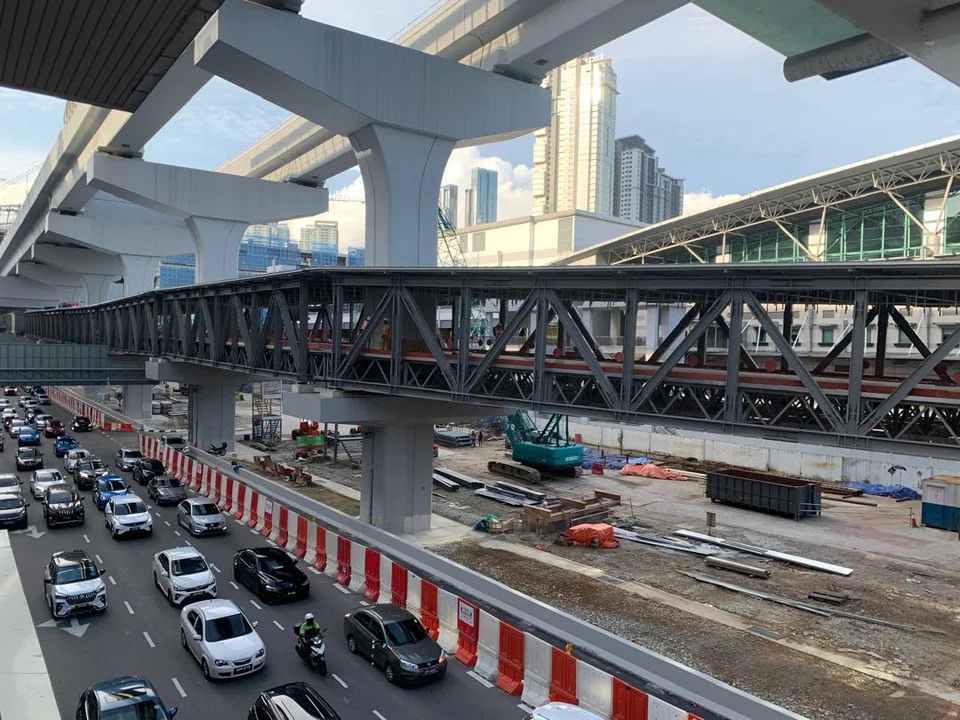
[JOHOR BAHRU] Johor’s property market may be bracing for a breakout year ahead of the Johor-Singapore Rapid Transit System (RTS) Link’s completion, with the cost of land around Johor Bahru station jumping from about RM700 (S$220) per square foot (psf) three years ago to between RM1,000 and RM1,500 psf today.
Olive Tree Property Consultants CEO Samuel Tan said the surge reflects not only demand, but also recent increases in allowable plot ratios, though “you still need parking and real demand to fully use that extra density”.
This repricing marks a clear shift in Johor’s cycle, market players say, from broad-based growth to a far more selective market where connectivity, above all else, now determines value.
Youke Home Management Service director Rainee Lai, who monitors projects near the Bukit Chagar station, remarked: “The RTS is turning JB into a kind of satellite town for Singapore.”
Based on her analysis, prices in the city centre have risen about 18 to 20 per cent since 2020, with the strongest demand concentrated in projects within walking distance of the station.
“For investors, two things really matter now: how close the project is to the RTS, and whether the product actually fits daily commuters,” she noted.
At the top end, projects within walking distance of RTS stations are setting new price benchmarks.
CTC SkyOne, located about 300 metres from the Bukit Chagar RTS station, is being marketed at around RM1,389 to RM1,490 psf – about 2.5 times Johor Bahru’s traditional average. It is targeted for completion in 2029.
Interestingly, even a modest distance from the RTS can blunt pricing power.
Mah Sing Group’s M Grand Minori – launched in August in Taman Pelangi, about 3 km from Bukit Chagar – offers serviced apartments starting from about RM390,000 for units sized 403 sq ft to 835 sq ft, or about RM470 to RM970 psf.
The project is still pitched as transit-accessible, but its lower price points stand in contrast to RTS-adjacent launches, which are asking significantly higher rates.
National Property Information Centre (Napic) data shows how far Johor has come. The state recorded a 5.7 per cent year-on-year increase in its House Price Index in the first half of 2025, among the strongest gains in Malaysia. By comparison, the index, nationwide, rose 0.7 per cent over the same period.
Landed homes posted solid growth, while serviced apartments in prime locations have seen even sharper increases.
It’s no surprise that developers are racing to align their pipelines with the RTS-led growth corridor.
Sunway Property’s RM4 billion Sunway Majestic development in Yahya Awal, launched in October, is set to deliver more than 1,000 small office or home office units within close reach of the Customs, Immigration and Quarantine complex and the future RTS Link.
The developer has also announced a RM2.6 billion mixed-use project at the Bukit Chagar RTS station with MRT Corporation, integrating residential, retail, healthcare and hospitality components.
Players such as Sunway’s LakeHills project in Taman Molek and SP Setia’s Sky Valley Residences in Setia Tropika are also pivoting towards higher-density offerings in established townships.
But this growth is far from evenly distributed.
Follow the money
Olive Tree noted that enquiries and transactions are increasingly concentrated in corridors with direct access to the RTS or major highways, while projects in more isolated locations require deeper discounts or longer selling periods to move units.
On the non-residential side, industrial and logistics assets remain highly active, supported by supply-chain diversification and the rise of Johor as a preferred regional data-centre hub.
JLL cautioned that investors should model returns realistically. Johor’s current story is one of capital growth first, followed by more moderate rental expansion as the market matures.
The RTS and the Johor-Singapore Special Economic Zone (JS-SEZ) story are drawing attention from across the region.
Malaysia climbed to fourth place in 2024 as a destination for Chinese high-net-worth property buyers seeking homes priced at US$5 million and above, according to Juwai IQI data, trailing only Thailand, Australia and Canada.
The country landed outside the top 10 in 2023.
Juwai IQI co-founder and group CEO Kashif Ansari said the strongest demand comes from Singaporean buyers, followed by those from China, Indonesia, India, South Asia and the Middle East.
He sees four main drivers: the countdown to the RTS opening; strong market sentiment; high prices in Singapore encouraging locals to look north; and Malaysia’s improving reputation among high-net-worth Chinese buyers.
Yet, even in this environment, not all products are moving at the same pace. Landed properties continue to outsell high-rise launches by a wide margin.
“Buyers are excited about benefiting from potential price increases, but they also want to be protected from the downside,” Kashif said. “That’s why the projects with the greatest success offer good value and transit access and are being built by trusted developers.”
The result, he noted, is a widening gap between well-located, well-branded projects and more generic projects further from major transport links.
Units that tick both boxes are seeing the most interest from Singapore and local buyers. Youke’s Lai forecasts that rental yields in these pockets could climb from about 4 to 5 per cent today to about 6.25 to 8 per cent once the line opens, as demand for commuter-friendly homes tightens.
Land values already reflect this repricing, she added. Part of the increase is due to zoning changes, which have seen allowable plot ratios raised from 1:4 to as high as 1:10, giving developers room to build more units on the same land.
The overhang question
Despite robust growth in targeted areas, oversupply remains a concern, particularly for projects in less central locations not plugged into new infrastructure.
Napic data for the first half of 2025 shows that Johor recorded about 3,200 unsold completed residential units, down from around 4,700 units in mid-2023.
The improvement reflects absorption of stock in better-located projects, but the overhang remains concentrated in condominiums and apartments, which account for nearly 58 per cent of unsold units nationwide.
Affordability is not the core issue. National data shows units priced below RM300,000 make up about 30 per cent of the overhang, suggesting that distance from key infrastructure and employment centres is a bigger barrier than price alone.
Johor’s strong launch pipeline and above-average take-up mask a clear divergence: Well-connected projects are selling briskly, while less strategic launches sit.
The next phase of the state’s property cycle will demand more discipline from developers, say insiders.