South-east Asia needs tangible socio-economic drivers to speed up green transition: experts
The policy direction of the region still follows a fossil fuel-intensive pathway. Under current policies, the electricity mix will see little change

Singapore
SOUTH-EAST Asia (SEA) is making steady but slow progress in its green energy transition, and stronger impetus in the form of socio-economic benefits and new job opportunities are needed to accelerate the shift to lower carbon economies, climate and energy policy experts say.
If not, the region is unlikely to reach the aspirational target of 23 per cent share of renewable energy in its primary energy supply and 35 per cent in Asean installed power capacity by 2025, they warned.
According to the International Renewable Energy Agency (Irena), achieving the regional target requires an estimated investment of US$27 billion a year, compared to US$2.6 billion in 2016.
Reaching that investment goal requires targeted efforts focusing on improving project readiness, access to finance and risk mitigation measures. Stakeholders including governments, national financing vehicles, development finance institutions and the private sector need to be engaged.
Matthew Yeo, Energy Transition Lead, SEA, at Accenture, tells The Business Times: "Above all, there must be tangible drivers for each country to meet their carbon goals such as leading to economic growth or jobs or avoiding penalties. Otherwise, just reducing carbon for its own sake is unlikely to be a strong enough motivator for a sustained move towards lower-carbon economies."
Dr Ursula Fuentes-Hutfilter and Anna Chapman warn in a Friedrich-Ebert-Stiftung's (FES) regional project on climate and energy in Asia: "The policy direction of the SEA region still follows a fossil fuel-intensive pathway. Under current policies, the electricity mix will see little change."
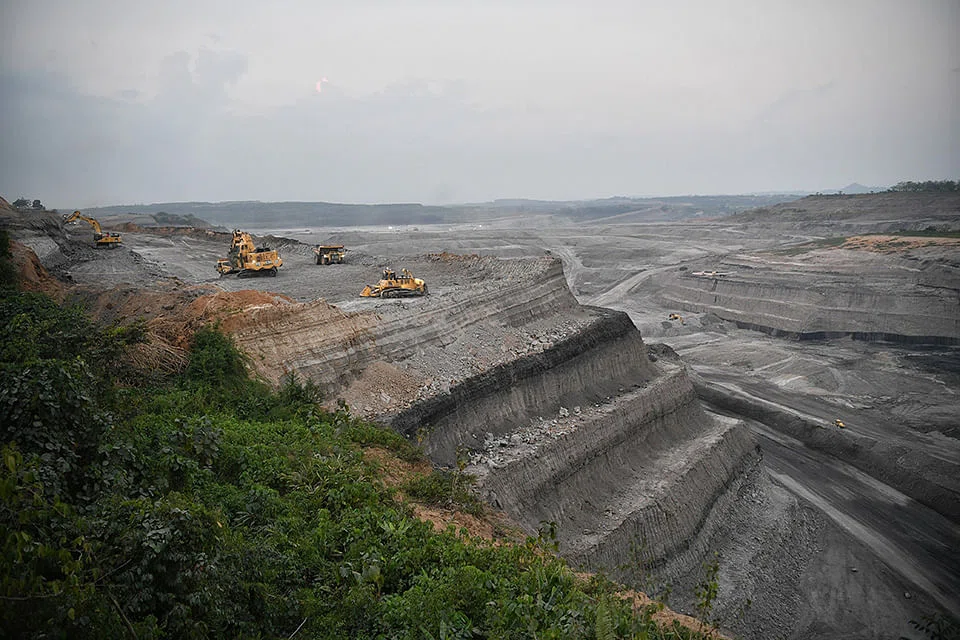
Coal-fired power generation in the region - which boasts of large reserves of fossil fuels - is heavily subsidised. This creates an uneven playing field and therefore a barrier for faster expansion of renewable energy, according to experts.
Hence, the region's growing demand for energy, due to population and economic growth, urbanisation, and increasing access to electricity, has predominantly been met with fossil fuels and, to a large extent, with coal.
Coal is now the largest contributor to power generation, at 43 per cent of the mix. Renewable energy has a 23 per cent share of total generation.
Other traditional renewable energy sources include bioenergy at 3 per cent and geothermal energy at 2 per cent.
The two sources that have the largest potential for expansion - solar and wind - contribute less than one per cent each to the mix in SEA.
Based on policies announced in the region and taking into consideration the impact of the Covid-19 policy responses, assuming the pandemic will be tamed this year, SEA's total electricity generation will double by 2040, the International Energy Agency (IEA) says.
By 2040, fossil fuels are projected to provide 70 per cent of total generation, with coal remaining the dominant fuel, at 39 per cent. Renewables will represent a 30 per cent share of total generation.
"These fossil fuel-heavy projections are optimistic in terms of the renewable energy share because the region's power development plans are not in line with targets," the two authors of the FES report say, adding that SEA would not achieve the share of 35 per cent of installed renewable energy capacity before 2030.
Unlike China, which has a successful electrical vehicle policy that includes purchase subsidies and charging infrastructure, the electrification of transport is not making much progress in SEA, with the partial exception of two- and three-wheelers.
"There are no strong policies to support electric mobility, which would reduce air pollution and support the integration of greater shares of renewable energy," the authors point out.
About half of the world's electric light-duty vehicle fleet and 80 per cent of fast chargers are found in China.
Cost is still a prohibitive factor in the region, despite the falling cost of renewables.
"The capital-intensive nature of renewable energy projects means that financial access remains a critical factor, especially as there is a lack of experience and expertise in some Asean member states in evaluating the risks of renewable energy investments," Mr Yeo says.
Nevertheless, the region is seeing the shift and a strong pipeline of clean energy projects, he adds.
Singapore and Vietnam have accelerated their solar investments, with Singapore meeting its 2020 solar deployment target of 350MWp in the first quarter of 2020, and Vietnam surpassing the 12.5GW solar power target for 2025.
Regional interconnection and trade networks are also being bolstered to shape a low carbon future.
For instance, the Lao PDR-Thailand-Malaysia power integration project has already enabled 100 MW of power transfer from Lao PDR via Thailand to Malaysia. Plans are in place to extend the framework and include Singapore.
Mr Yeo notes that as countries mature and integrate more renewables into the energy mix, they stand to benefit from boosting economic growth while making the transition to a more sustainable, affordable, and resilient energy system.
Studies suggest that doubling the share of renewables will increase global direct and indirect employment in the sector to 24.4 million by 2030, compared to 9.2 million in 2014.
Last year, 63 per cent of all jobs in the renewables sector were recorded in Asia, with these jobs showing greater inclusion and a better balance in gender equality than those in fossil fuels as well.
Governments ultimately play a significant role in encouraging renewables investments, be it in setting tariffs that reward renewables planting or creating regulations that ease the introduction of renewables into the grid.
The transition must be managed well.
"While a green transition will cause structural changes in the level and composition of labour demand, the size of the overall job turnover created by green growth is likely to be relatively small. The challenge for the labour market is thus to be prepared for this transition," Mr Yeo says.
He reckons: "We will need residential, industrial and commercial customers to be willing to optimise self-generation, including rooftop solar, heating and cooling solutions such as heat pumps and micro combined heat and power, and electric-vehicle charging."
This means that technology and digital innovation in the areas of data analytics, blockchain, robotics, carbon capture, utilisation and storage as well as green hydrogen - will be key to driving the sustainability agenda.
READ MORE: DBS, SGX, StanChart and Temasek to launch global carbon exchange