



South-east Asia poised for better growth in 2024, with Indonesia leading the charge
Analysts are cautious on Thailand’s performance due to its weaker-than-expected tourism receipts and merchandise exports


Goh Ruoxue &
Zhao Yifan
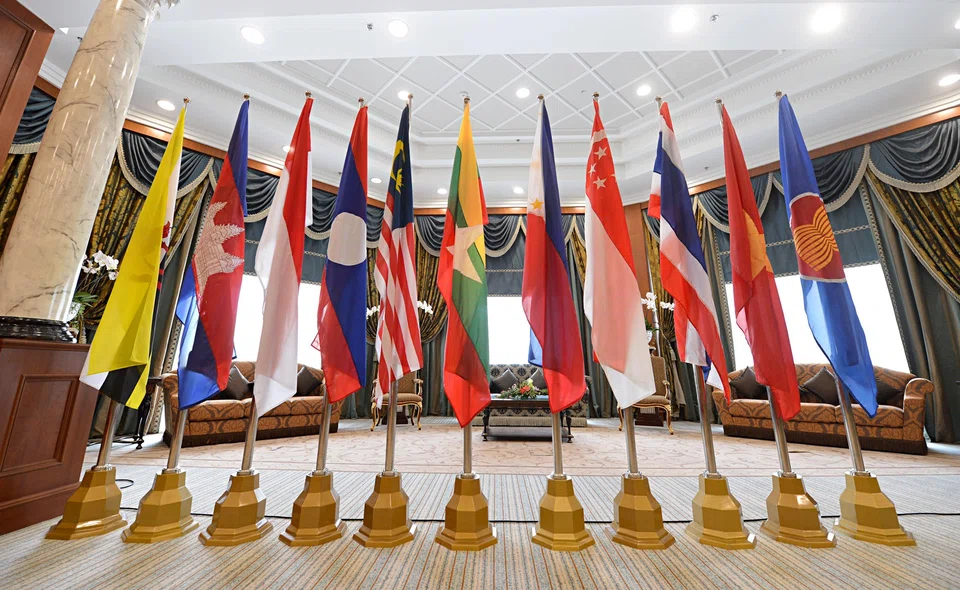
SOUTH-EAST Asia will see improved growth in 2024 amid a gloomy global outlook, with analysts expressing optimism due to a recovery in the electronics sector, steady domestic demand, higher public investment and the ongoing rebound in travel and tourism.
In a recent report, the Asian Development Bank (ADB) projected the region’s gross domestic product (GDP) to expand by 4.7 per cent this year, up from 4.3 per cent in 2023.
Analysts from Nomura Global Research, meanwhile, said they expect GDP for the Asean-5 countries – Indonesia, Malaysia, the Philippines, Singapore and Thailand – to grow by an aggregate rate of 4.5 per cent in 2024, from 3.9 per cent last year.
DBS Group Research has forecast the annual real GDP growth for these five countries, plus Vietnam, to be at 4.7 per cent in 2024, an improvement from 4.2 per cent the year before.
Top performers
Analysts reckon that Indonesia – the largest economy in South-east Asia – will be one of the top performers in the region, with an expected real GDP growth rate of more than 5 per cent in 2024. Indonesian President Joko Widodo said last month that the government has forecast growth of 5.2 per cent as investments pick up steam.
With a presidential election taking place on Feb 14 to pick Widodo’s successor, there is some optimism among observers that there will be a fair amount of policy continuity. The front runner in the election, Defence Minister Prabowo Subianto, is expected to uphold the policies of Widodo’s administration if he wins the poll.
A survey by Indikator Politik Indonesia on Dec 26 indicated that Prabowo and his running mate Gibran Rakabuming Raka had an approval rating of 46.7 per cent.
Coming in a distant second with 24.5 per cent in the opinion polls is former Central Java governor Ganjar Pranowo, who is from the same party as Widodo, which has typically backed the latter’s policies over the past decade that he has been in office.
Analysts from DBS said in a report that robust consumption from the spending for the ongoing election campaign will help fuel Indonesia’s growth in the early part of 2024. For the second half of this year, they said, growth will be supported by an increase in the minimum wage, and higher allocations for social assistance and food security programmes.
Observers noted that Vietnam is poised for an export-led recovery aided by the bottoming out of the electronics cycle, as worldwide demand for electronic products grows after a weak 2023.
Trade-reliant Vietnam, for which exports make up over 90 per cent of GDP, is likely to be a key beneficiary of the electronics sector’s recovery in South-east Asia. The other beneficiaries in the region include Malaysia, Singapore and Thailand.
Latest data showed that Vietnam’s monthly electronics shipments have returned to growth since September 2023. The DBS analysts said this is expected to improve further this year, with the inventory destocking largely completed last year.
Inflationary pressure
Inflation is generally slowing down in South-east Asia as oil and commodity prices ease.
Food inflation plagued the region for most of 2023, with Laos, the Philippines, Singapore and Vietnam experiencing double-digit increases in international rice prices due to supply concerns.
The ADB expects headline inflation in South-east Asia to fall to 3.5 per cent in 2024, from 4.2 per cent in 2023.
But the bank maintains that lower forecasts for Cambodia, Malaysia, Singapore and Thailand will be offset by significantly higher forecasts for Laos and Myanmar, which are both facing sharp currency depreciation and weather-related disruptions in food production.
Similarly, DBS expects inflationary pressures to continue to retreat and remain within target in 2024, albeit with mixed directions, as the likes of Malaysia, Thailand and Vietnam are expected to experience higher headline inflation in the coming months.
Energy subsidies played a role in alleviating inflation in 2023. However, due to the fiscal burden associated with these policies, Malaysia is considering their removal, as signalled in the government’s latest Budget 2024. A reduction in government assistance is also likely in Thailand. These changes may result in an uptick in domestic energy prices, adding to inflationary pressures, said analysts.
Meanwhile, Vietnam’s headline inflation has bottomed out since July 2023. The country’s inflation is expected to average higher in 2024, in line with demand pressures stemming from the ongoing growth recovery.
Burgeoning public debt
Rising public debt burdens continue to loom large among Asean economies, said analysts. Although South-east Asia’s public debt-to-GDP ratio is moderate compared to other regions in the world, it has remained above pre-pandemic levels in several Asean economies.
The region’s debt has also been increasing over the years, especially amid the low-interest-rate environment in the wake of the 2007/08 global financial crisis and more recently, during the Covid-19 pandemic, analysts said.
Among the 10 Asean member states, Singapore has the largest public debt-to-GDP ratio at 168 per cent as of the end of 2022. HSBC analysts estimate that this ratio will increase to 185.4 per cent in 2023 and to 214.5 per cent this year.
But while Singapore’s figure may be high by global standards, the debt largely consists of Special Singapore Government Securities and Singapore Government Securities, which are issued for non-budgetary purposes – such as investment – and not to finance a budget deficit, said the Asean+3 Macroeconomic Research Office in a report on financial stability.
Cautious on Thailand
Thailand, the second-largest economy in South-east Asia, is grappling with a debt problem. HSBC analysts foresee the country’s public debt will increase from 60.5 per cent of GDP in 2022 to 61.8 per cent in 2023, and further to 63 per cent this year.
Likewise, Nomura analysts estimate that the figure will increase from 62.1 per cent in FY2023 to 65.1 per cent in FY2024, and further to 69.2 per cent by FY2027.
The research house noted that Thailand’s public debt ratio is already “surging above regional peers after the pandemic” and anticipates that its fiscal deficit in FY2024 will widen significantly, as the government resolves to implement its digital wallet policy.
“The risk is that credit rating agencies will shift their credit rating outlook from stable to negative as early as the first quarter, because fiscal strength is no longer a support for the credit ratings,” said Euben Paracuelles, Nomura’s chief Asean economist, at a press briefing in December.
Beyond fiscal risks, analysts across the board remain cautious on Thailand against a backdrop of persistent deflationary pressures and subdued external demand.
In its December outlook report, the ADB downgraded Thailand’s growth forecast for 2024 to 3.3 per cent, from 3.7 per cent.
The bank cited weaker-than-expected tourism receipts and merchandise exports, as well as subdued business sentiment and investment, and lower public spending as its factors for the downward revision.
Similarly, Nomura has cut its 2024 growth forecast for Thailand to 3 per cent from 3.8 per cent, and expects the economic performance to remain subpar over the next few quarters.
With tourism as one of its main economic drivers, the drop in Chinese tourist arrivals – coupled with China’s subdued economic performance – is expected to keep a lid on the nation’s growth.
Nomura expects Thailand’s Budget of 3.48 trillion baht (S$132.4 billion) for the 2024 fiscal year, delayed from October 2023 to May 2024, to dampen growth in the first half of 2024.
The government’s 500 billion baht digital wallet policy – said to begin in May this year – is unlikely to boost growth significantly, given that it will be delivered in a digital currency for limited consumption spending, noted the Nomura analysts.
TRENDING NOW

Government to bring forward raising of retirement age, give employers more financial support to create flexi-load jobs

If Europe goes to war, the fallout will be felt in East Asia

Former minister Maliki Osman, Revolut chairman join Asia Gulf Holdings advisory board

Small nuclear reactors could boost the Asean Power Grid: GE Vernova executive

