South-east Asia’s sinking currencies raise spectre of ’97/98 financial crisis
But there is no need to sound the alarm, say pundits, as the pressures this time are external and regional economies are far more resilient

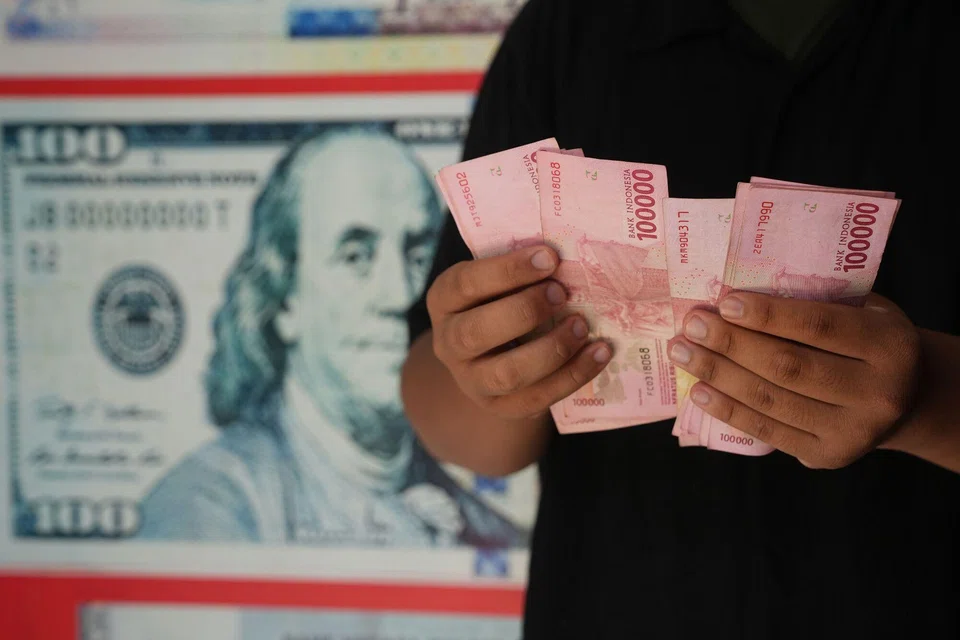
SOUTH-EAST Asian currencies have been whiplashed, losing between 1 and 7 per cent this year against a “smiling” US dollar. Persistent inflation, robust growth in the world’s largest economy, and escalating geopolitical tensions have driven a flight to the safe-haven greenback.
Rising oil prices, a persistently feeble yen and a weak yuan fixing have exacerbated declines, pushing some regional currencies to multi-year lows. If this persists, it could evoke the spectre of the late-90s’ Asian financial crisis (AFC), which was sparked by battered currencies.
But, pundits say, the events unfolding now are not quite the same and a crisis akin to the AFC is unlikely.
For one thing, South-east Asian economies now are much better positioned with strong fundamentals to withstand currency volatility. Policymakers in the region have deepened and broadened their financial systems to strengthen their economies’ resilience to foreign exchange shocks.
Saktiandi Supaat, head of forex research and strategy at Maybank Singapore, said: “The crisis then was driven by different circumstances compared to the situation now (which is) predicated to some extent on US and global inflation and macro factors affecting policy rate differentials – factors that could see a turnaround.”
Vishrut Rana, an economist at S&P Global Ratings, noted that exchange rates are now more flexible, which protects against speculative foreign exchange outflows. Furthermore, central banks have built up stronger foreign exchange reserves and have better-regulated external borrowing.
“Exchange rate depreciation can mean some pain in terms of global purchasing power and investor sentiment, but it will not mean economic crisis,” said Rana.
The rainbow’s end
Even so, there is no light at the end of the tunnel just yet, especially not with the US Federal Reserve hitting the brakes on rate cuts and geopolitical tensions firing up in the Middle East.
On Apr 17, Asian stock gauge MSCI Asia Pacific Index fleetingly erased its year-to-date gain before picking up slightly. Meanwhile, the Bloomberg Asia Dollar Index, which tracks the performance of a basket of Asian currencies against the greenback, fell about 3.2 per cent since the year began.
Across Asean, some currencies are slumping to their nadirs while others are tumbling to fresh multi-year or multi-month lows every other day or so.
The dong registered a fresh record-low of 25,445 against the US dollar as at 6 pm on Apr 19, according to Bloomberg data.
The ringgit is again teetering near its all-time low, hovering around the 4.78 mark as at 6 pm on Apr 19. In February, it breached 4.8 to the USD – a level it last hit during the AFC. Bank Negara Malaysia has reiterated that it stands ready to intervene if required.
Meanwhile, the rupiah crumbled to a new four-year low on Apr 19, hovering at around 16,260 to the US dollar.
Earlier on Apr 16, it breached 16,200 to the greenback as the market reopened after the Lebaran holidays, prompting Bank Indonesia to intervene. Recall that the rupiah fell from 2,600 in early 1997 to a low of 17,000 in mid-1998 at the height of the AFC.
The baht, which has suffered the biggest loss year to date percentage-wise among its Asean peers, slipped to 36.867 against the US dollar as at 6 pm on Apr 19.
The AFC, in fact, began with the sharp devaluation of the baht in the spring of 1997, which set off a deep recession across the region. From around 25 baht to the US dollar before the crisis, the currency plunged to a low of around 56 baht in January 1998.
Greenback rally
Fed chair Jerome Powell hinted at rate-cut delays on Wednesday (Apr 17), citing persistent price pressures. As market expectations shift towards fewer cuts for the year, the US dollar could strengthen, which may drive further “modest depreciation” in Asian currencies, said Rana.
Moreover, should the conflict escalate, with the yuan and yen weakening concurrently, investors will likewise flock to safe-haven assets such as the greenback and away from riskier Asian currencies, which puts Asean currencies in danger of weakening further, noted Saktiandi.
“However, there could potentially be some resilience to some extent seen in regional safe-haven currencies such as the Singapore dollar and net oil exporting and commodity-related currencies such as the ringgit,” acknowledged the Maybank strategist.
Broadly, Asean currencies can only gain respite when the fiery greenback dials back the heat.
Arup Raha, Oxford Economics’ chief economist for Asia, stressed that currency weakness across Asean has largely been driven by a strong greenback bolstered by external factors.
Fixated on US rate trajectory
Hence, an end will likely materialise when the US dollar stops strengthening. For this to happen, “markets need to sight a start to Fed easing, the price of oil needs to moderate and global risk premiums need to soften”, said Raha.
Maybank’s Saktiandi added: “We need to see some shifts in US inflation data and signs that Fed policy-cuts expectations remain on track, as well as some retracement in US treasury yields for Asean currencies vis-a-vis USD to fall back.”
This is because yield differentials continue to play a significant part in the relative weakness of regional currencies, he explained.
For now, Asean central banks are keeping a close eye on global monetary policy developments and are likely to hold off on easing while US interest rates are high, said S&P Global Ratings’ Rana. “This will help cushion against volatile capital flows and sharp depreciation of currencies.”