
South-east Asia set for rocky H2 2023, but recession unlikely: analysts
The trade boost from China’s reopening may be limited, as Asean’s exports are closely related to China’s industrial cycle
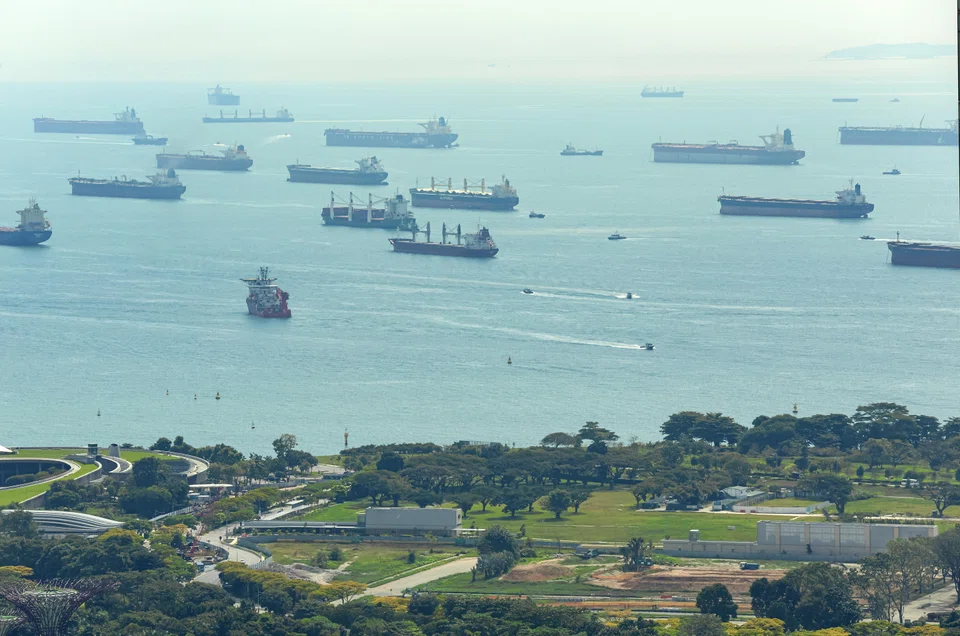
SOUTH-EAST Asian economies are set for a bumpy second half, with slower external demand still a challenge – though a domestic recovery and the services sector should help to avert a recession.
The growth in most major economies in the region moderated in early 2023, and “risks to Asean’s growth outlook are weighted to the downside” in the next six months, said DBS economists Chua Han Teng and Radhika Rao in a joint note to The Business Times.
Growth in gross domestic product (GDP) is expected to slow to 4.2 per cent among the Asean-6 this year, down from the 5.7 per cent posted in 2022, Maybank has estimated. The Asean-6 comprise Indonesia, Malaysia, the Philippines, Singapore, Thailand and Vietnam.
Factory reset
“(Asean’s) GDP growth forecast has been downgraded since the start of the year. The whole region is slowing down,” said Maybank senior economist Chua Hak Bin, adding that the extent of the slowdown depends on the reliance on exports.
Lavanya Venkateswaran, senior Asean economist at OCBC, suggested that Malaysia and Thailand may be among the worst performers in the second half, as they are relatively more open economies. In the Philippines, “we expect the lagged impact of monetary policy tightening in 2022 and early 2023 to feed through onto domestic demand”, she said.
In contrast, Indonesia is tipped to slow down more modestly on support from domestic demand.
Manufacturing and trade have been a drag since late last year, especially in export-dependent economies like Malaysia, Singapore and Vietnam – and this woe is likely to persist.
“While it started with the electronics cycle, weakness has been broad-based, in particular amid an economic slowdown in the US and the European Union,” said Yun Liu, Asean economist at HSBC.
Even Malaysia’s diversified shipment base, which includes electronics products and commodities, has not insulated its trade sector from an export decline, she noted.
“The trade boost from China’s reopening may be limited, as Asean’s exports are closely related to China’s industrial cycle, not (its) consumer cycle,” said Liu. “China’s rebound will not be enough to offset a notable trade slowdown in the US and the European Union.”
Katrina Ell, senior Asia-Pacific economist at Moody’s Analytics, told BT: “On balance, export conditions for South-east Asia are weaker than was envisioned early this year.”
Though the European economy managed to avoid a feared recession in early 2023, “financial conditions have materially tightened” in the US, while China’s post-pandemic reopening was not as strong as expected, Ell noted.
DBS’ Chua and Rao said: “Two key risk areas that we are keenly monitoring include the impact of high interest rates in advanced economies and spillover to the financial sector, as well as the pace of China’s post-pandemic economic recovery.”
Other risks, as identified by UOB research head Suan Teck Kin, included an escalation in the war between Russia and Ukraine, and the possibility of “a more prolonged and deeper electronics downturn”.
OCBC chief economist Selena Ling pointed to “some idiosyncratic risks” closer to home, such as upcoming elections in Malaysia and Indonesia, and Thailand’s election probe into politician Pita Limjaroenrat, the leading candidate for prime minister.
Still, she said, “there is probably no need to be overly bearish” on troubled industries such as electronics, wholesale trade and infocomm technology.
“The global semiconductor downcycle is growing long in the tooth and the restocking cycle may, hopefully, come to an end towards end-2023,” she told BT.
Silver linings
The services sector has been a cushion, with both domestic and external demand.
Ell credited the lifting of Covid-19 restrictions – which “is of particular benefit to the Philippines, Malaysia and Thailand, where service exports comprise a relatively larger share of GDP”.
“We expect Asean’s services recovery to come to partial rescue to offset intensifying trade headwinds,” said HSBC’s Liu. “Part of the reason is the domestic resilience in Asean, thanks to an ongoing labour market recovery. The other part of the equation will come from tourism, especially from mainland China.”
Maybank’s economists observed that Chinese tourism to the Asean-6 countries has grown from 5.6 per cent of pre-pandemic levels last November to 37.6 per cent in April, and has projected a recovery to 70 per cent by end-2023. OCBC’s Lavanya said that the flow of “non-Chinese tourists into the region has offset some of this weakness... to the extent that hotel occupancy rates in Singapore and Thailand have risen quite significantly, and are within earshot of pre-pandemic levels”.
The easing of inflation concerns in South-east Asia also sparked some optimism, thanks to supply-side improvements, weak demand pressure, lower commodity prices and currency stabilisation.
“Most Asean central banks have won the battle against inflation, and can pause their interest rate hikes and monetary tightening cycle,” said Maybank’s Chua.
“In contrast, central banks in many advanced economies are still struggling to bring down inflation to acceptable levels.”
Maybank expects inflation in the Asean-5, which excludes Singapore, to fall to 3.6 per cent in 2023, from 4.5 per cent in 2022. Their central banks are also not likely to raise rates for the rest of the year, with the exception of Bank Negara Malaysia.
“With regional inflation catalysts differing from the West, South-east Asian central banks have generally raised interest rates less than the US Fed,” said DBS’ Chua and Rao.
Tipping dovishness, they do not rule out more rate cuts in Vietnam amid weak growth, and said Indonesia could pivot to an easing cycle in the second half as a base effect brings inflation down.
The long view
Ell from Moody’s noted that inflation “is on a bumpy downtrend”, as cost increases spread from food and fuel to other pockets of the basket.
Inflation is unlikely to reach central bank target ranges until 2024, so central banks may have to stick with policy tightening “for a little longer”, which will keep borrowing costs elevated and contribute to the continued pressure on businesses, she said.
Considering other headwinds, “we cannot discount the risk that business investments and foreign direct investment (FDI) could adopt a wait-and-see mode in the interim”, said OCBC’s Ling.
On the markets front, Maybank’s regional equity research head Anand Pathmakanthan warned that Singapore and Malaysia could be laggards, “given (a) lack of catalysts”.
Indonesia, Thailand, and Vietnam look set to do relatively better, while “the Philippines could be a surprise performer if its inflation numbers start to undershoot”, he said.
Despite the slowdown, the consensus is still for overall growth to remain positive in 2023, with HSBC’s Liu looking for “some punchy boost” from a gradual Chinese recovery in the next six months.
UOB’s Suan described the risk of recession as “relatively low for domestic-driven economies” and “moderate for the more open economies” in Asean.
Singapore, which posted a quarter-on-quarter GDP decline of 0.4 per cent in the first quarter, faces the possibility of a technical recession in the second half, although the Ministry of Trade and Industry has kept its full-year GDP forecast at between 0.5 per cent and 2.5 per cent.
Even that weaker outlook would not create significant contagion risk for the region, Suan added.
He remarked that Asean “remains an attractive destination for foreign investment, given the ongoing risk diversification and the region’s pro-business policies”.
Analysts from Nomura expect Asean, as well as India, to benefit from the continued relocation of global supply chains in the next three to five years.
“Intra-regional trade could promote more economic integration (favourable for supply chains), lower non-tariff barriers and reduce trade policy uncertainty,” they wrote in a Jun 5 report.
“At the same time, greater competition will likely prompt governments to step up efforts to attract more FDI, implement structural reforms and build more infrastructure, which we expect to improve further in India and Asean.”