South Korea’s political turmoil casts shadow over Asean trade and investment
Foreign companies may defer investment plans in the country as political turbulence raises concerns over business stability and disruptions to key sectors

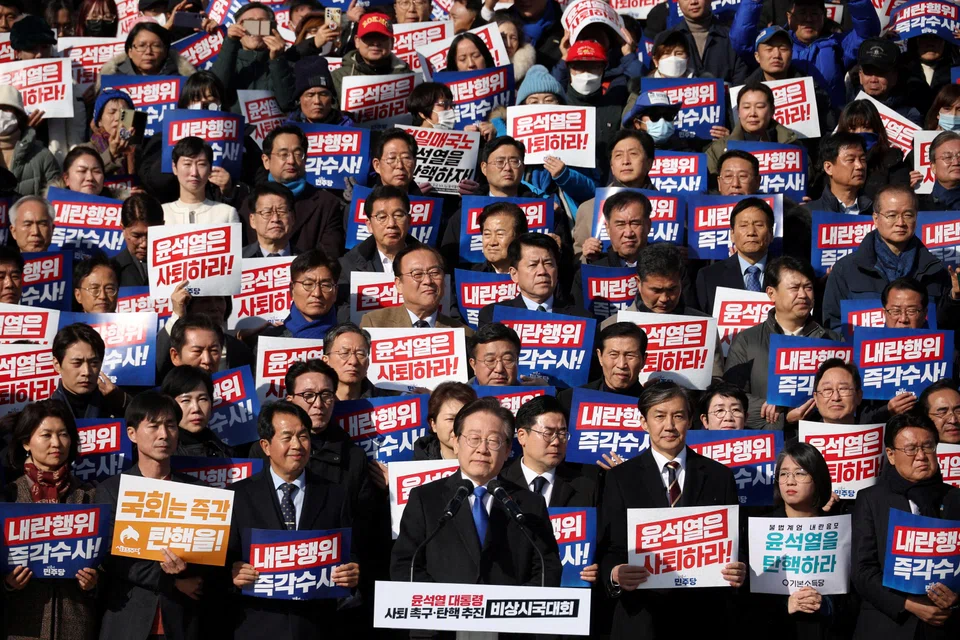
THE lifting of martial law in South Korea has done little to quell political turmoil, with an impeachment motion against President Yoon Suk Yeol adding to concerns about potential disruptions in trade and investment flows between South Korea and Asean.
While South Korea’s foreign direct investment (FDI) into Asean is expected to remain stable, experts warn that the uncertainty surrounding South Korea’s political landscape could temporarily impact investor confidence, particularly in strategic sectors such as chips, batteries and transportation.
South Korea is the Association of Southeast Asian Nations’ fifth-largest trade partner, while the bloc is South Korea’s second-largest trade partner after China.
While the declaration martial law was unexpected, Bernard Aw, chief economist for Asia-Pacific at trade credit insurance and risk management company Coface, described the situation as “not a surprise” given that some opposition lawmakers had already warned about the possibility of such a scenario as early as September.
Although President Yoon lifted the decree within hours, the incident has heightened political and economic uncertainty, according to Min Joo Kang, senior economist at ING.
She noted that the economic impact will depend on how the situation unfolds, pointing out that both consumer and business sentiment were severely affected, leading to a slowdown in economic activity following the last presidential impeachment.
According to AFP, South Korea’s opposition lawmakers have filed a motion to impeach Yoon.
Amid ongoing political uncertainty surrounding President Yoon’s future, Aw suggested that foreign companies may temporarily delay their investment plans in South Korea, though the country’s core investment themes remain solid.
He pointed out that South Korea’s inbound FDI has been largely directed towards strategic sectors such as chips, batteries and transportation. “Given the global shifts in energy and digital transformation, it is unlikely that foreign investors will alter their focus on these key areas,” he added.
Tight trade ties and growing FDI
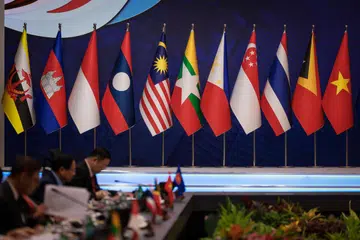
South Korea and Asean share a close trading relationship. At the Asean Economic Ministers-Republic of Korea (AEM-ROK) meeting in September, it was noted that trade between the South-east Asia bloc and South Korea reached US$196.6 billion in 2023.
In terms of FDI, OCBC senior Asean economist Lavanya Venkateswaran noted that South Korea has been a strong source of FDI for countries such as Vietnam, and to a lesser extent Indonesia and Malaysia.
Total FDI flows from South Korea into Asean were valued at US$10.9 billion in 2023, according to a joint media statement of the AEM-ROK meeting.
In recent years, some major South Korean conglomerates have relocated their factories to South-east Asian countries such as Vietnam and Indonesia, and have also ramped up their investments in the region.
For instance, in 2020, South Korean electronics giant LG relocated two of its six TV production lines to Indonesia and has also set up its first overseas research and development centre there.
On the other hand, Samsung stands as Vietnam’s largest foreign investor, with plans to increase annual investments in Vietnam by US$1 billion.
Venkateswaran pointed out that from a fundamental standpoint, Asean countries remain attractive destinations for foreign investment flows.
“Hence, Korean firms that have committed to diversifying and deepening supply chains into Asean will likely continue to do so,” she said.
While this incident highlights that political uncertainties are a global risk, Venkateswaran believes that it is unlikely to change the course of policy direction for the region.
“Asean economies have been deepening intra-country trade and investment relationships for many years, and we expect this trend to continue over the medium term,” she added.
TRENDING NOW
Grab CEO’s wife Chloe Tong on life with Anthony Tan and finding her purpose
Number of listed companies an ‘outdated metric’ of Singapore market’s success: SGX chairman
UOB found ‘grossly negligent’ over Stamford Land rights issue advice, to pay S$1.9 million
Oil climbs after Trump denies he is willing to ease sanctions on Iran