



Southern Alliance Mining shifts focus to rare earths to offset iron-ore volatility
The fundamentals of rare-earth mining are positive because the market demand is structural and long term, says SAM’s group COO

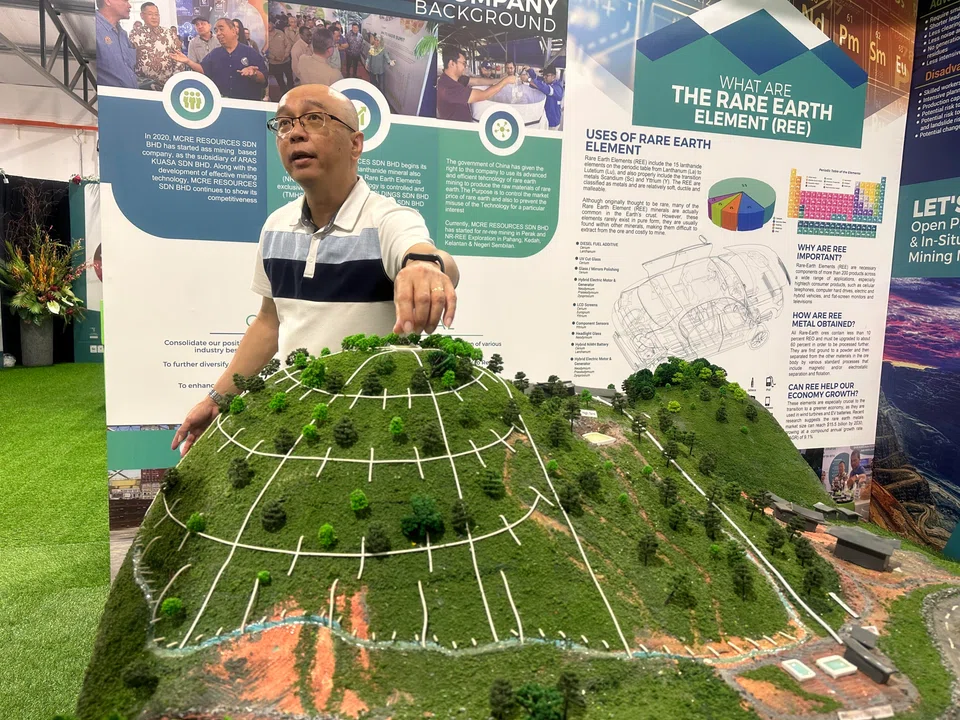
[KUALA LUMPUR] Few motorists travelling the Baling-Gerik highway linking Kedah and Perak know that the nearby forested hills are home to a rare-earth mine central to the recovery of Southern Alliance Mining (SAM).
Unlike the usual image of dusty pits and heavy digging, the site owned by Malaysia-based MCRE Resources, a SAM associate, remains lush and green.
Beneath the trees, pipes deliver the in-situ leaching method: mild chemical liquid pumped through soil to extract rare minerals without blasting or open excavation.
This low-impact operation underpins SAM’s shift to high-value rare earths exploration after the setbacks from volatile iron ore prices.
The Singapore-listed miner views rare earths as FY2026’s key earnings driver, with over RM100 million (S$31.9 million) invested in its 2,161-hectare Gerik site.
In September 2025, SAM acquired a 40 per cent stake in MCRE through its wholly-owned SAM Advance Minerals Holding; directors Pek Kok Sam, Teh Teck Tee and Lee Tek Mook hold the remaining 60 per cent.
Executive director and group chief operating officer Lim Wei Hung said that the joint-operation structure allows a line-by-line consolidation of revenue and costs, not just profit-sharing.
“Because we consolidate every line from revenue to pre-tax profit, this will meaningfully boost results,” he told The Business Times during a recent site visit, noting that the management anticipates stability from H1 FY2026, offsetting weakness elsewhere.
In FY2025, SAM posted a 20 per cent rise in revenue to RM199.5 million, aided by new bauxite sales.
However, its net loss widened to RM27.3 million, the result of a 66 per cent drop in gross profit, driven by weaker iron ore prices and lower steel industry selling prices.
Phased expansion
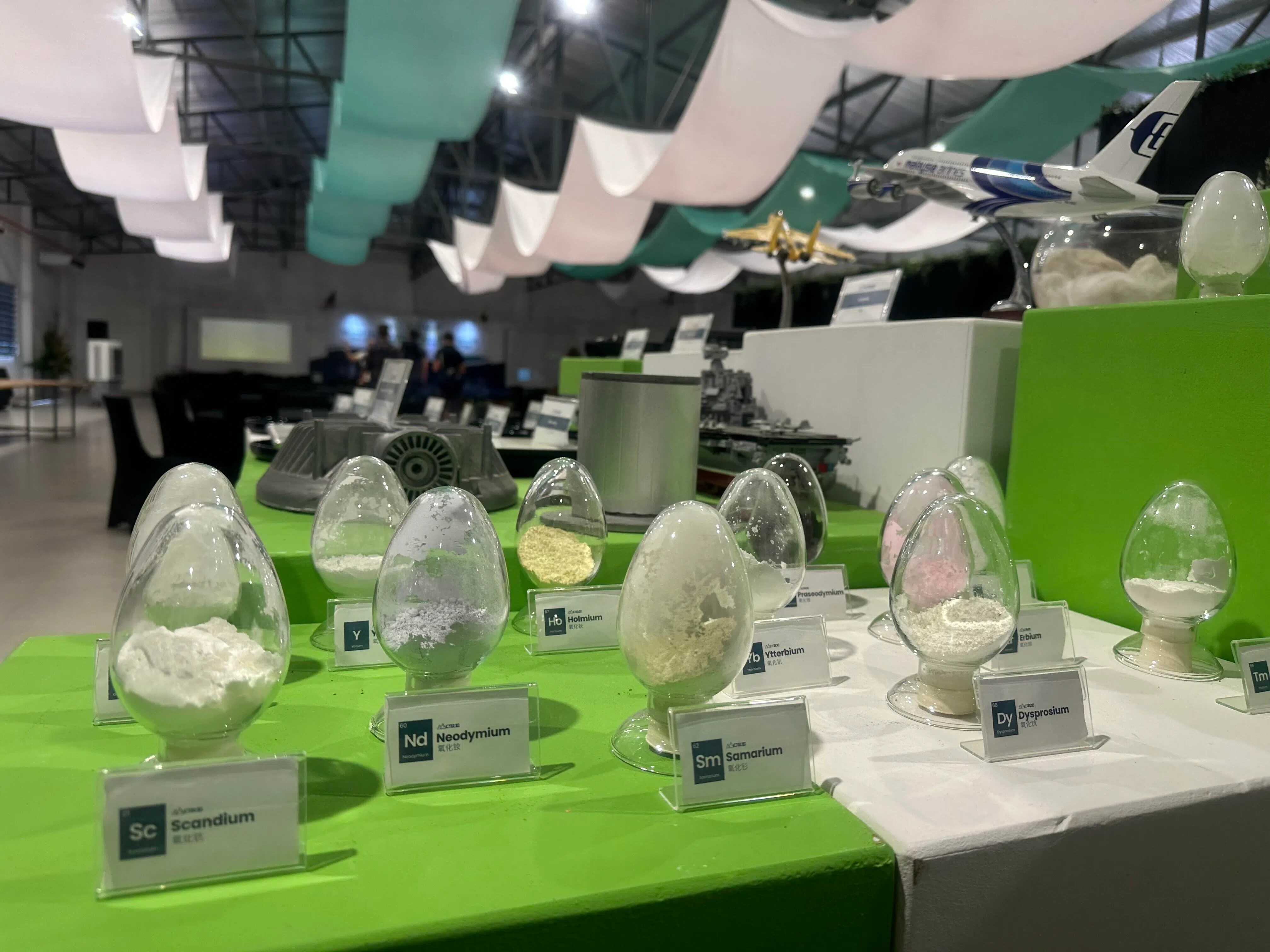
Lim said that the 212.8-hectare Parcel One in Gerik has an estimated annual production of around 2,500 tonnes of rare-earth oxides (REO).
The Gerik site comprises seven parcels, which are able to sustain the company’s operation in next 10 years.
He noted that the company has allocated an investment of around RM20 million to RM30 million for the development of new parcels, through which production is expected to double once Parcel Two and Parcel Three start operating.
“Once Parcel Two and Three come onstream, we are looking at more than 5,000 tonnes of REO production annually... this will give us long-duration cash-flow visibility,” he added.
SAM did not begin as a rare-earth producer. Founded by Pek Kok Sam in 2001, the company started as Honest Sam Development, a limestone mining subcontractor.
A major turning point came in 2008, when it secured the Chaah Mine in Johor, where high-grade iron ore suitable for subsea pipe coating in the oil and gas industry was discovered. The mine established the group as a notable player in Malaysia’s iron-ore sector.
In 2013, the company expanded into iron-ore concentrates, capitalising on a global price boom. It was rebranded as Southern Alliance Mining in 2019, and listed on the Singapore Exchange in June 2020, despite the Covid-19 pandemic.
Beyond rare earths and iron ore, SAM continues to pursue gold exploration, although progress has been measured as management prioritised scaling its rare-earth operations.
Not bulk commodities
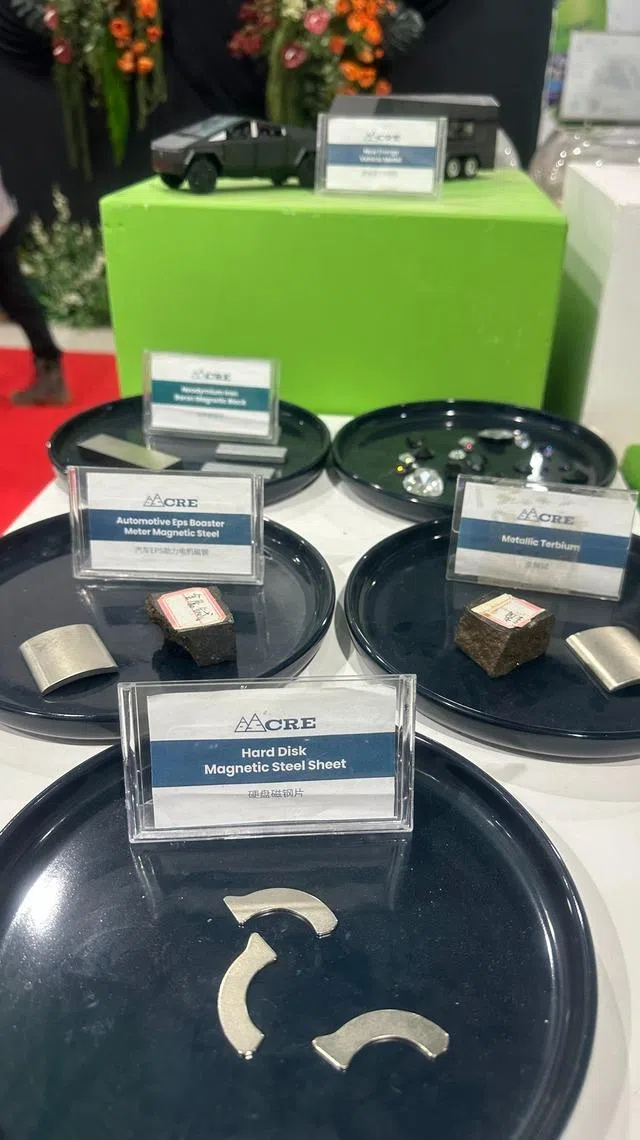
SAM’s edge is its heavy rare-earth exposure, used in high-performance magnets for EVs, defence and electronics. It is thus less tied to the volatile pricing of neodymium-praseodymium (NdPr).
NdPr prices refer to the market value of neodymium and praseodymium, key materials for making powerful magnets used in electric vehicles and electronics. Their prices fluctuate widely due to changing demand, limited supply and shifting government export or mining policies.
“Rare earths shouldn’t be seen as bulk commodities… They’re used in small quantities, but significantly enhance performance in everyday products. That’s where their value lies, even at lower volumes,” said Lim.
Currently, the company’s rare earths output is sold primarily to China. Lim said this is not by choice, but because only China has the refineries capable of processing them; in other markets, these plants are still limited to pilot-scale runs.
While Lim did not give specific margin guidance, he said that a combination of secured sales channels, heavy rare-earth exposure and line-by-line earnings consolidation will help deliver more stable and visible revenue as production scales.
Environmental safeguards and challenge
Operations at the MCRE site were briefly suspended in November 2025 when the company was one of two suspected of being behind the pollution that discoloured a river; the suspension was lifted on Jan 15 after an official investigation cleared MCRE of blame.
Lim emphasised that the company’s rare-earth operations minimise environmental disruption, compared to that associated with conventional hard-rock mining.
“Unlike open-pit methods requiring blasting and excavation, the process targets ionic clay deposits through in-situ leaching, swapping rare-earth ions with ammonium ions to recover minerals without disturbing hillsides or land contours,” he said.
Pre-mining baseline studies on the flora, fauna, soil and water – part of environmental impact assessments – enable ongoing monitoring and mitigation.
A parcel-by-parcel approach limits active footprints, allows progressive rehabilitation, and permits the pipes in the mines to be reused after the ores are depleted, he added.
The company also collaborates with regulators, sharing data for government studies near forest reserves to prove responsible mining is viable. Lim said this data-driven model is crucial for Malaysia to tap rare earths without bearing past environmental pitfalls.
Lim noted that Malaysia’s rare-earth operations face policy hurdles that often offset geological potential.
Citing the national rare-earth roadmap report published by Akademi Sains Malaysia in 2013 and updated in 2023, he said earlier industry studies advocate a staged “mine-to-market” approach.
However, overlapping state and federal jurisdictions, combined with shifting regulations, complicate project approvals and capital planning.
“Rare-earth mining is more complex than many think, but the fundamentals remain positive because the market demand is structural and long term. If we can align policy with industry realities, this can be sustainable and beneficial for the country,” he added.
TRENDING NOW
Prima to move out of historic Keppel Road flour mill building in 2028
Temasek-related Azalea, SeaTown, Seviora Capital to merge in 2027

Family offices see more tailored products, leverage ‘collective firepower’ for direct deal access

Singapore room rates soar, but hotels seeing mixed demand from F1 race and events

