


Structural changes will keep Asian economies resilient despite expected US Fed tightening
 Add BT as a preferred source
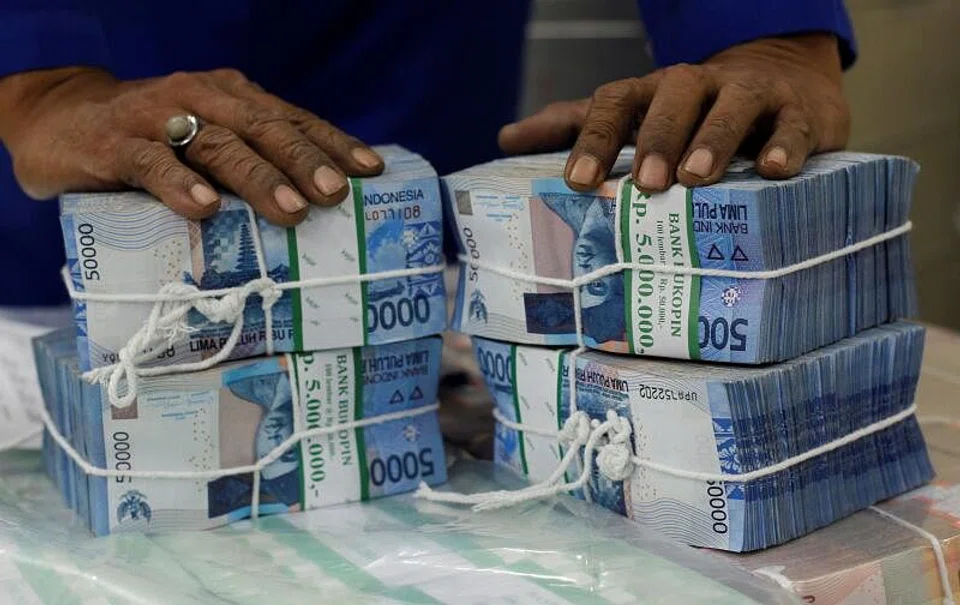
ASIAN currencies are expected to fare better in the face of the upcoming anticipated US Federal Reserve policy tightening than they did in 2013, when the Fed tapered off its asset purchases and sparked a market rout.
Lower reliance on external financing and significant foreign reserves put Asian economies in a stronger position than before, with currencies such as the Singapore dollar and Taiwan dollar in good stead, a report has argued.
The potential reduction in the Fed's balance sheet is unlikely to cause sharp depreciation in Asian currencies or the resulting spike in Asian interest rates, Sian Fenner, Oxford Economics' lead Asia economist, wrote on Friday.
"This will give Asian central banks some room to keep interest rates at record lows, supporting their post-pandemic economic recoveries."
Ms Fenner warned that the foreign exchange outlook may be threatened by factors such as a sharp depreciation in the yuan, which "could lead to significant contagion on other Asian currencies", especially amid the ongoing debt crisis at major property developer China Evergrande.
Still, the house's forecast for now is for all Asian currencies to make gains against a softening US dollar (USD) as economic growth picks up into 2022.
Navigate Asia in
a new global order
Get the insights delivered to your inbox.
Indeed, Eric Mok, a portfolio manager at Franklin Templeton Emerging Markets Equity, said in a separate note on Friday that "we expect a very strong rebound" across South-east Asian economies in the year ahead as they reopen.
Ms Fenner believes the Singapore and Taiwan dollars lead Asia for resilience, on the basis of strong current account surpluses and substantial foreign reserves, which are expected to act as a strong buffer against capital outflows.
Meanwhile, Malaysia has a narrower buffer because of rising external debt, but "most of its short-term debt is held by banks, which also have large counter-balancing external assets" that should protect central bank reserves.
Structural current account deficits in Thailand, the Philippines and Indonesia, as well as India, will likely force their currencies to weaken against the USD by year-end, Ms Fenner noted. This comes as these economies need foreign portfolio flows and remittances to fund their deficits.
But she added that the depreciation should be capped by factors such as "substantial foreign reserves which can be drawn upon to support their currencies", as well as under-valuation of the baht, ringgit and rupiah.
Meanwhile, Mr Mok said "there is significant room for a consumption upgrade and smartphone penetration and also opportunities in the technology, e-commerce and financial sectors" and added that long-term, secular trends, such as supply chain diversification, offer investment opportunities in Asean.
Such structural changes could see Malaysia enlarging its footprint in the global semiconductor supply chain, while Thailand may benefit in consumer electronics, and Indonesia in automobile manufacturing, he suggested.
Chetan Sehgal, director of portfolio management at Franklin Templeton Emerging Markets Equity, added that the investment firm "is attracted to countries with strong potential on technology and manufacturing ... with a preference to invest more in mainland China, Taiwan, India and Vietnam".
Decoding Asia newsletter: your guide to navigating Asia in a new global order. Sign up here to get Decoding Asia newsletter. Delivered to your inbox. Free.
Copyright SPH Media. All rights reserved.

