Succession is about passing the mission, not assets: Sariguna makes a splash in Indonesia’s water market
The company credits its agility to having gained a strong foothold in South-east Asia’s largest consumer market

Inside Asia’s family empires: How they are transforming to seize the next stage of growth
[JAKARTA] Two years into her tenure at Sariguna Primatirta, Melisa Tanoko has leaned on her father’s advice: for a smaller player, agility and speed can be the sharpest edge against giant rivals.
She has put that mantra to work on TikTok Live Shopping, driving Sariguna’s near-daily sales of bottled still water and helping the company gain a foothold in one of South-east Asia’s most fiercely contested consumer markets.
“Agility is our guiding principle,” said the 41-year-old president director of the Indonesian listed bottled water producer in an interview with The Business Times. “We operate on a single mission: making our products available whenever and wherever consumers need them.”
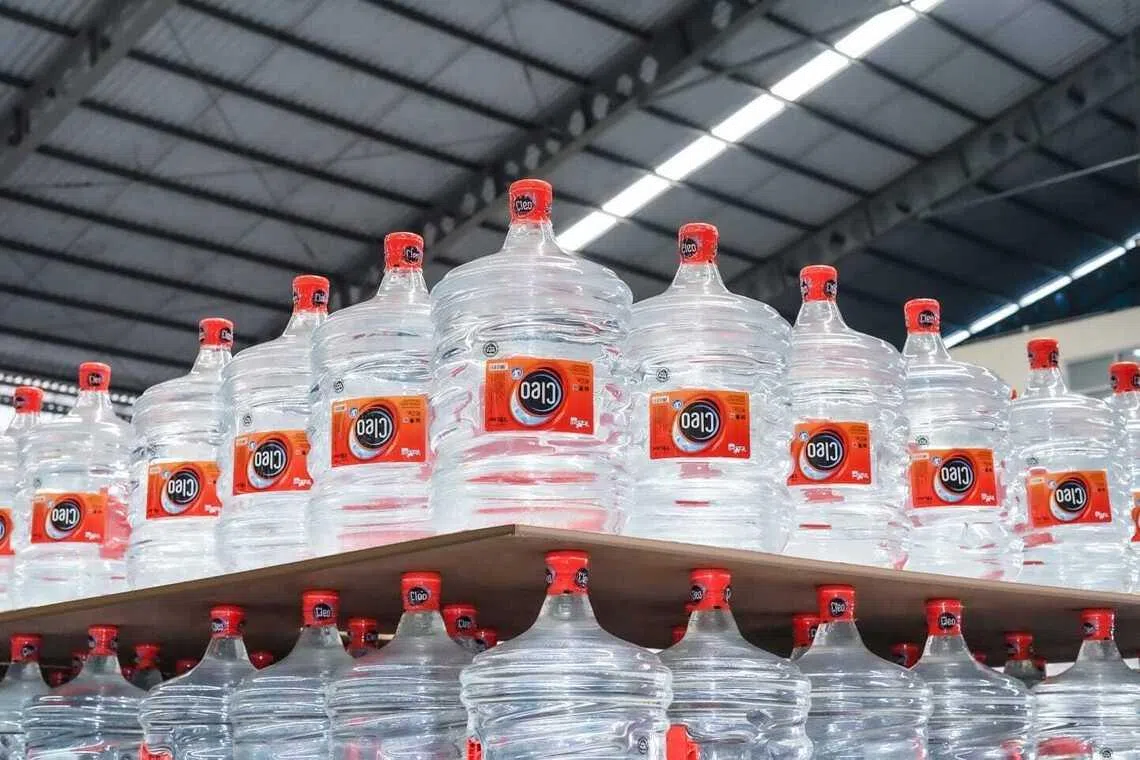
The same instinct to stand apart shows up on store shelves. Sariguna’s flagship brand Cleo comes in a bright orange bottle, topped with a cone-shaped cap that doubles as a drinking cup in a segment where products are largely blue – a colour long associated with freshness and cleanliness.
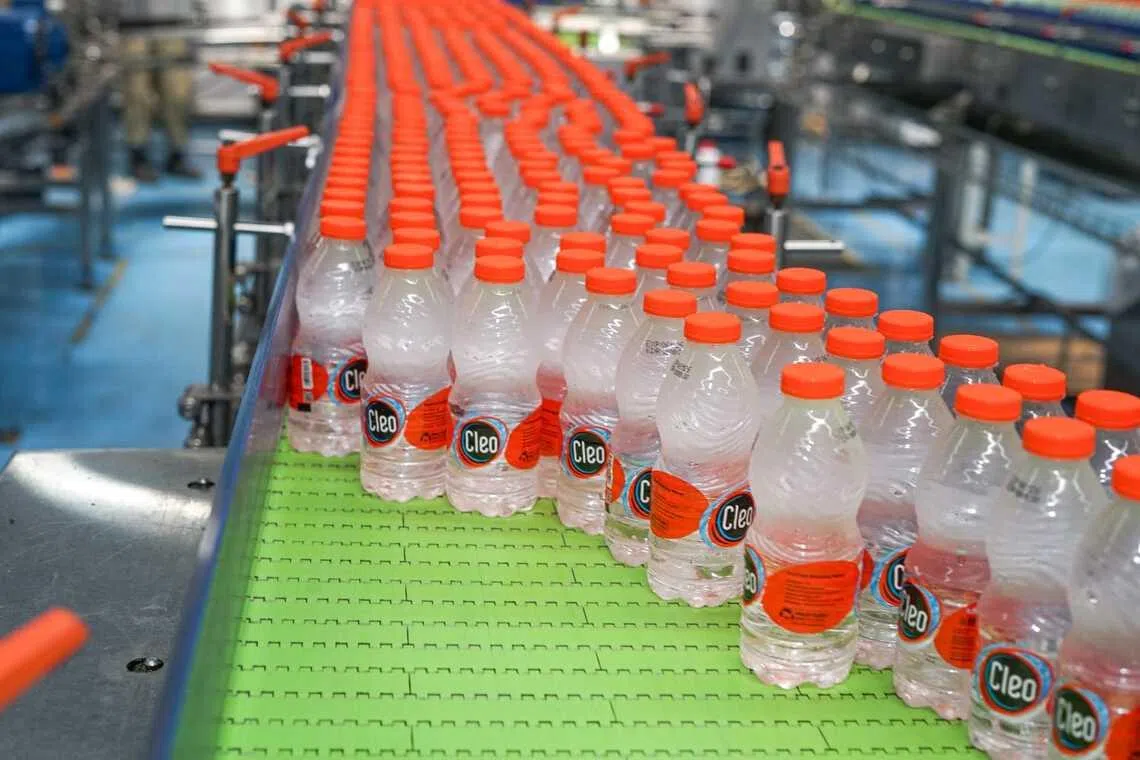
Cleo now offers one of the category’s widest ranges from cups and small bottles to 1-litre packs, 5-litre bottles and gallon containers, emerging as one of Indonesia’s top five still water brands.

Stand out, be seen
For Tanoko, however, the orange bottle is no accident. It is a calculated strategy to catch consumers’ eye on crowded shelves.
Sariguna’s gallon product was the first in Indonesia to come with a built-in handle, making the dispenser easier for consumers to lift and carry. The feature proved distinctive enough for the company to secure a patent.
“We chose to be different from day one, in both the content and context of the product,” Tanoko said.
Pure water
Over the past two decades, Indonesia’s bottled water market has grown rapidly and is now highly saturated. More than 7,700 brands from 1,032 companies are registered with the country’s Food and Drug Supervisory Agency. Many are supported by global investors and conglomerates.
Industry leader Aqua Golden Mississippi, a Jakarta-based subsidiary of France’s Danone, is a pioneer in Indonesia’s bottled still water market, with a market share of more than 27 per cent.
Access to safe water remains a challenge for about 190 million Indonesians, or two-thirds of the population, indicated non-profit organisation Water.org.
Rural supplies are often distant and costly, while urban tap water is avoided due to concern of hygiene. Before bottled water gained popularity, Indonesians typically boiled their piped water once or twice, while those who used well water would let the sediment settle overnight before drinking.
As government infrastructure expanded, households and businesses that could afford it increasingly relied on bottled water.
Sensing an opportunity, Sariguna, based in Sidoarjo, an industrial hub in East Java, has steadily expanded its reach through its flagship brand Cleo. Launched in 2004, Cleo later shifted production to ultra “pure” water using nano-filtration, with total dissolved solids below 10 parts per million (ppm), effectively stripping out nearly all salts, minerals and metals.
Its lighter taste quickly carved out a niche among health-conscious urban consumers, a strategy fuelled by Indonesia’s growing middle class and rising health awareness.
The decision to pivot to ultra pure water came amid rising rates of obesity and diabetes in Indonesia, which have driven consumers towards healthier options such as low-calorie and mineral-rich bottled water.
“Water is actually affordable for all segments, but educating consumers about quality encourages them to switch to a better product,” Tanoko said.
The company was also among the earliest in Indonesia to commit to BPA-free packaging, including for reusable gallon bottles, at a time when competitors still relied on polycarbonate materials.
From side gig to family grind
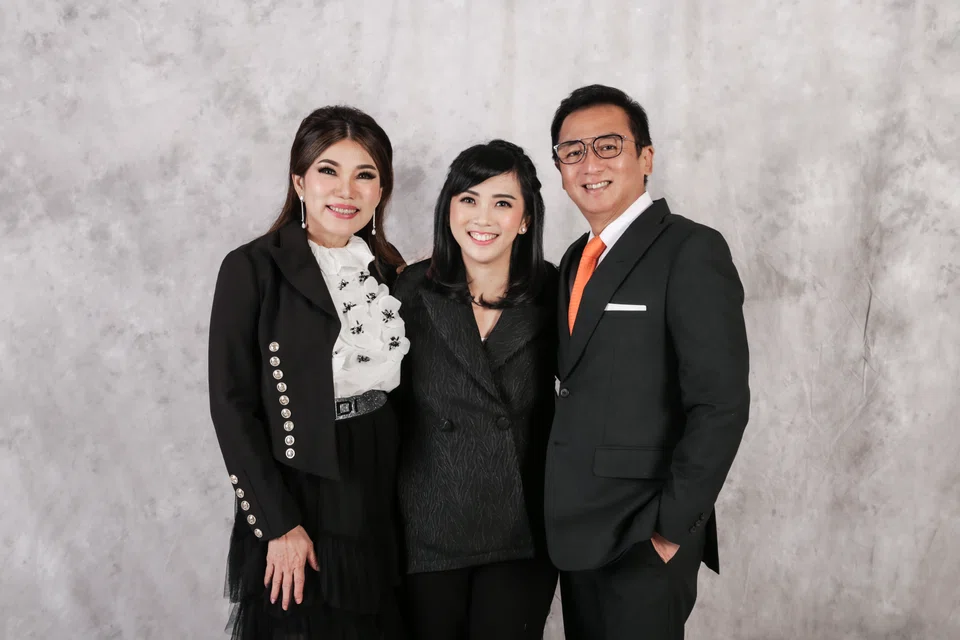
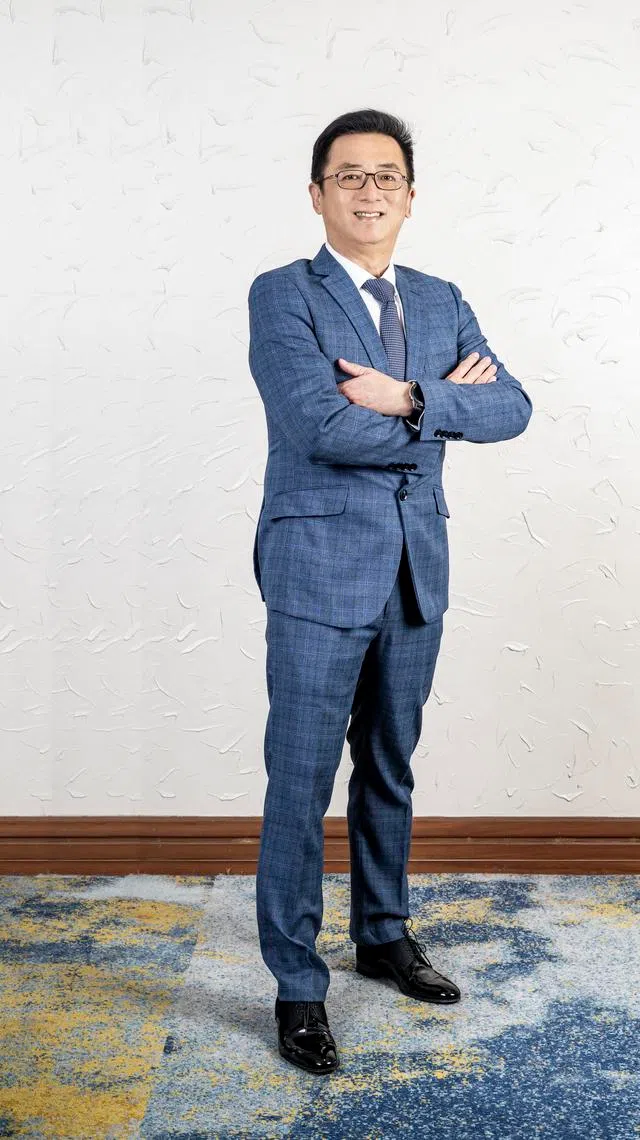
Sariguna was founded in 2001 by Melisa Tanoko’s father, Hermanto Tanoko, a second-generation owner of Avia Avian, Indonesia’s second-largest paint producer. Avia Avian’s stock market debut in 2023 made Hermanto Tanoko a Forbes-listed billionaire, with an estimated net worth of US$7 billion.
The 63-year-old businessman controls Tancorp Group, a conglomerate with interests in consumer goods, property and fashion.
Following Sariguna’s debut on Jakarta’s stock exchange eight years ago, the water business, originally a side venture, quickly became a key pillar of the Tanoko family’s consumer goods empire. Hermanto Tanoko’s wife, Sanderawati Joesoef, also played a crucial role in building the company.
After graduating from the University of Western Australia, Melisa Tanoko returned to Indonesia in 2006 and spent two years at her family’s paint business, helping her father manage production and marketing.
“I initially thought I would work in paints, so I studied chemistry, maths and commerce at the same time,” she recalled.
But in 2009, newly married, she joined Sariguna. “At first, I did everything – sorting bottles, checking production, helping with distribution,” she said. “We called it being ‘chief of everything’.”
She was appointed president director in 2023, succeeding her older sister, Belinda Tanoko, who now manages the family’s property portfolio.
Fast as a splash
Operating as a family owned business, Melisa Tanoko noted, gives them an edge by sidestepping the layers of bureaucracy common in multinational firms.
For instance, when Bali introduced a regulation this year promoting minimum 1-litre packaging, Cleo swiftly responded. The company partnered hotels across the island to provide larger-sized drinks for tourists just one day after the policy was announced.
“We aim to cut through unnecessary bureaucracy. In business, it’s like a battle, if red tape slows you down too much, you risk getting taken out before you even get a chance to fight,” she explained.
Today, Sariguna operates 32 factories nationwide, and has built a distribution network that reaches even the most remote parts of the archipelago.
Cleo positions itself firmly in the premium tier, but Sariguna hedges its exposure with two additional brands: Anda (lower-end) and SuperO2 (medium).
Despite its premium positioning, the company has sustained strong growth.
Since its 2017 market debut, Sariguna has posted a net sales compound annual growth rate of more than 21.7 per cent, well above the industry average of 8 to 10 per cent, according to analysts.
By 2025, the company had captured about 10 per cent of the market, up from just 2 per cent a decade earlier. Sales reached 1.4 trillion rupiah (S$107.3 million) in the first half of this year, up 5.4 per cent from the same period last year, despite macroeconomic challenges from weak household demand.
While multinational brands have strong national marketing muscle, Sariguna’s competitive strength lies in its extensive general trade network.
General trade still accounts for 74 per cent of its sales, far outpacing modern retail (16 per cent) and special outlets such as hotels and offices (10 per cent).
Java, Indonesia’s most populous island, accounts for around 80 per cent of the company’s total revenue.
To reduce logistics burdens and expand regional reach, the company is building new plants beyond Java, including a facility currently under development in Sulawesi.
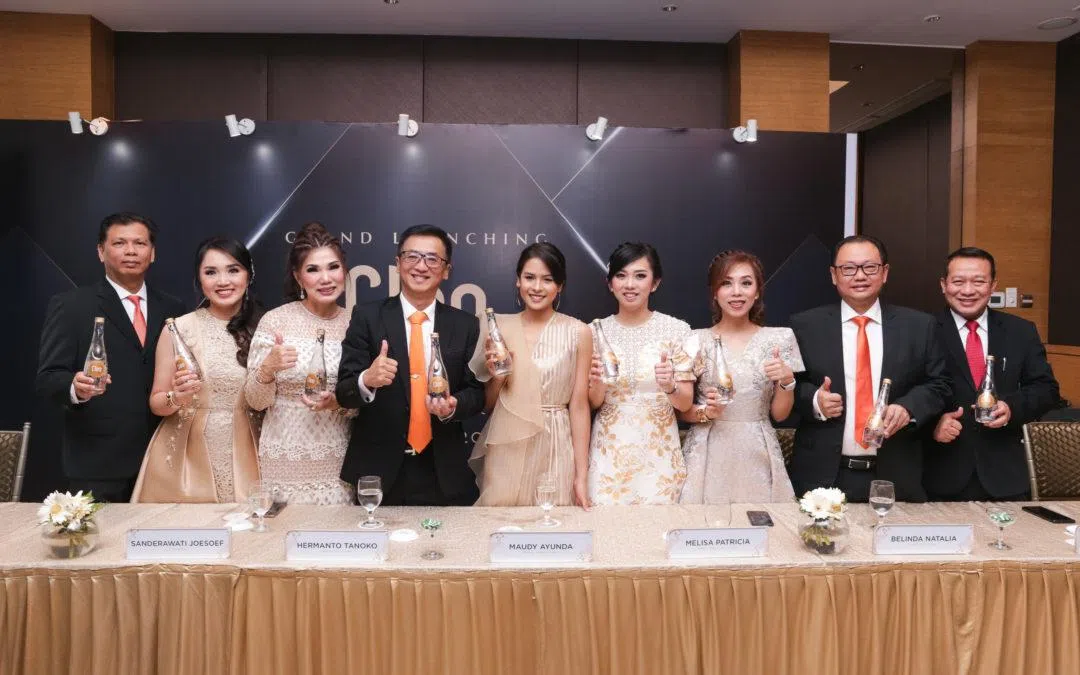
As the company ramps up capacity outside Java and doubles down on premium branding, its long-term ambition is clear: to compete more directly with the market leader.
“We have a brand for every segment, and with 32 plants across Indonesia, we can be highly adaptive in facing regional competition,” said Melisa Tanoko.
Cleo expects a rebound in sales in 2026, supported by new product launches and marketing initiatives involving social media influencers.
Passing the baton
Like many Indonesian family businesses, Sariguna started out as a closely held, family run operation, but has steadily professionalised its governance. Today, sales, finance and operations are overseen by seasoned directors, many with decades of experience within the company.
“Cleo can run without me because the systems and people are strong,” Melisa Tanoko said.
Yet, both she and her father remain engaged at the strategic level. Hermanto Tanoko attends monthly meetings, providing guidance while slowly stepping back from day-to-day decision-making.
For him, succession is not simply a transfer of title, but a transfer of purpose. “Many founders fail because they think succession is about assets,” he told BT. “It’s about passing the mission.”
He cited Cleo’s longstanding commitment to responsible innovation, from rejecting BPA-based gallon packaging in 2004 to pioneering recycled PET initiatives a decade later, as core principles the next generation must protect.
“My task doesn’t end when I hand Melisa the leadership role,” he said. “It ends when I know the purpose burns even brighter in her hands.”