



Surging property prices put Vietnam’s major cities among the least affordable in S-E Asia
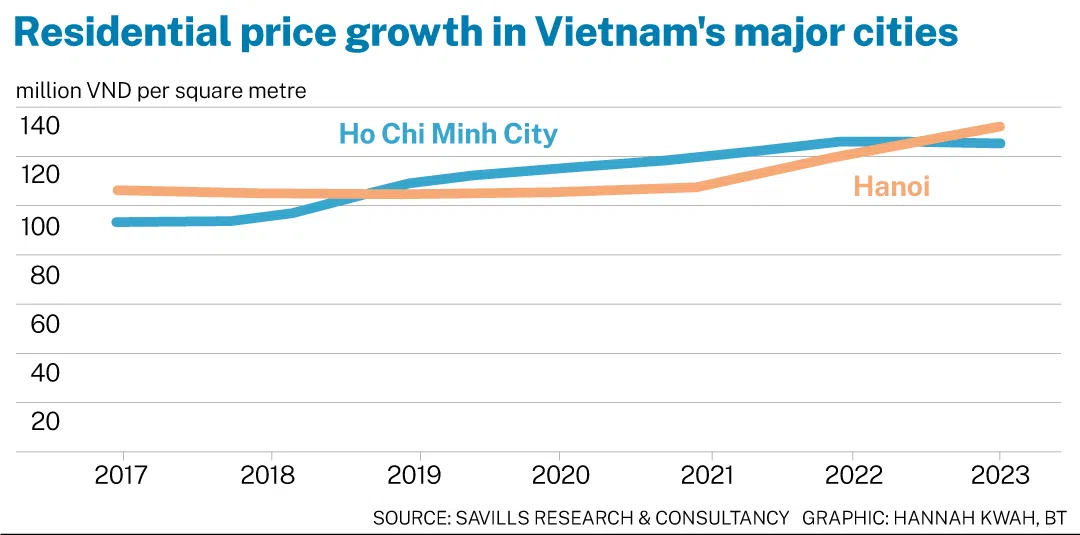
The rising cost of homes in Ho Chi Minh City and Hanoi are being fuelled by a severe supply crunch and speculative buying
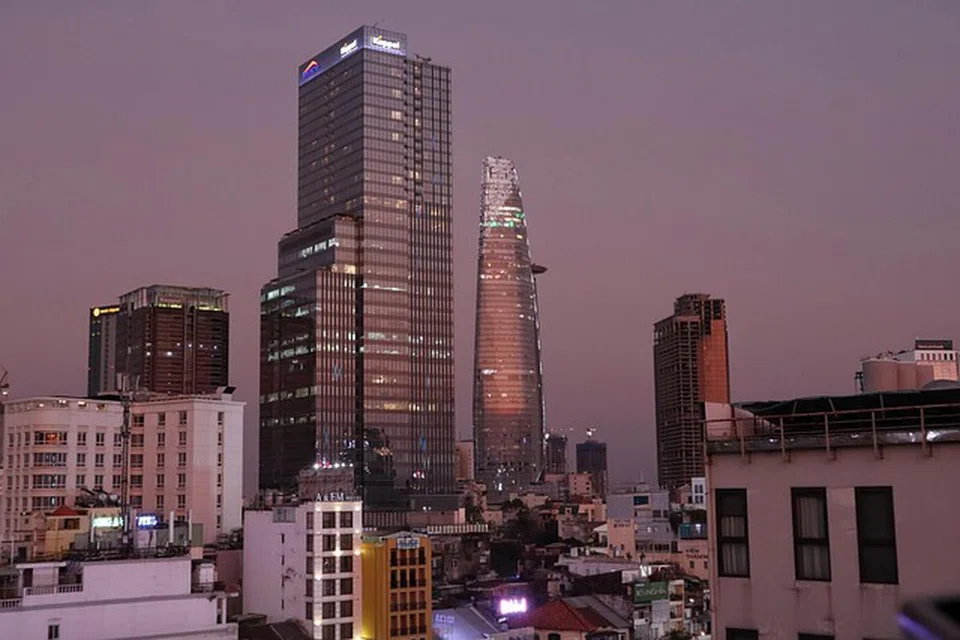
[HO CHI MINH CITY] Vietnam’s housing market is under immense pressure as prices continue to soar, with Ho Chi Minh City – the country’s business and financial hub – now one of the most unaffordable cities in South-east Asia for locals, surpassing the likes of Bangkok, Jakarta and Singapore.
A growing population, speculative buying and stagnant supply are pushing prices far beyond income growth – mirroring challenges faced by some of the world’s major cities.
“There is definitely a historically low supply of residential stock in Ho Chi Minh City,” said Savills Vietnam’s deputy managing director Troy Griffiths.
He pointed to a combination of legal constraints, issues of developers, a turbulent financial market, and stalled government decision-making.
Savills, a London-based property consultancy, projects a shortfall of over 18,000 homes in Ho Chi Minh City between this year and 2026. Less than 5 per cent of the anticipated supply over the next three years will be priced affordably, which it defines as units that cost below three billion Vietnamese dong (S$157,290).
In the capital Hanoi, rising property prices and overpriced apartments have also fuelled frustration among homebuyers.
This discontent sparked the creation of a Facebook community group, “The Community to Stop Buying Homes in Hanoi to Avoid Price Gouging”, which has attracted over 100,000 members since its launch in April this year.
Furthermore, the new land price lists, introduced in various localities in Vietnam after amendments to the Land Law and aimed at aligning prices with the market, are causing some alarm.
The construction ministry warned in a report released in September that these adjustments could push home prices up by 15 to 20 per cent due to rising development costs.
A draft land price list for Ho Chi Minh City, unveiled in late July but still pending approval, indicated that land prices could spike by five to 10 times. Some areas are even looking at an increase of as much as 50 times compared to the previous five-year fixed price framework.
In Vietnam, land use fees often account for between 7 per cent and 20 per cent of the development costs for high-rise apartment projects, and between 25 per cent and 50 per cent for townhouses and villas.
“The recently amended Land Law will hopefully enable greater availability of clean developable land, but private sector developers still require viable returns so there will always be pricing tension,” said Griffiths.
Since mid-2022, Ho Chi Minh City and Manila have ranked as the most unaffordable cities in South-east Asia for local households to buy an apartment, according to Numbeo, a crowdsourced global database. In Ho Chi Minh City, it now takes over 32 years of median disposable income for a family to afford a 90 square-metre apartment.
Last year, Ho Chi Minh City also surpassed Singapore in having the largest gap between average house prices and estimated rent across city centres in South-east Asia, making it more cost-effective to rent rather than buy in the downtown area.
However, industry experts note that the house price-to-income ratio may exaggerate the affordability crisis in Vietnam’s major cities, as most Vietnamese do not rely solely on their salaries for income.
Vietnam is also characterised as an investment market, where people typically favour equity over debt. Many buyers purchase properties without relying on bank loans, thus maintaining strong demand and fuelling the residential cycles.
Despite rising prices, real estate transaction volumes in the country could increase by as much as 35 per cent year on year in the first nine months of 2024, according to estimates by Vietnam-based investment firm VinaCapital.
On Batdongsan.com.vn, a Vietnamese real estate portal under Singapore’s PropertyGuru, searches for land, private houses and apartments in the third quarter of this year rose 49 per cent, 25 per cent and 24 per cent from a year ago, respectively.
Slow thaw
Vietnam’s real estate sector entered a slump in 2022 and only returned to growth in the first quarter of 2024.
However, construction credit – short-term loans used to finance building projects – had still not caught up with the overall credit growth recovery as of May, while bond issuance in the first half of the year remained low, according to BMI, a Fitch Solutions company.
“Vietnam’s real estate sector appears to be bouncing after a long slump, but we think that the economically vital sector will take two to three years to back to pre-slump growth rate,” it wrote in a note on Sep 12.
It believes the country’s supply and demand housing imbalance will take time to normalise, as there is a lag in constructing and delivering affordable homes to address the shortage. Investors and homebuyers also remain wary following recent revelations of financial fraud and increased government scrutiny of real estate companies.
Still, there is optimism that recent reforms under the 2024 Land Law, 2023 Real Estate Business Law, and 2023 Housing Law will help address issues of ineffective land access for project development and provide incentives for social housing, gradually paving the way for a more positive outlook for the sector.
“The government has a number of tools it can use to propel the economy, such as increased infrastructure spending and facilitating the further thawing of the real estate sector,” noted Eric Levinson, head of institutional partnerships at VinaCapital.
“A more robust real estate market would almost certainly improve consumer sentiment and consumption in Vietnam, which has been somewhat subdued in 2024,” he added.
In addition, developers are also looking to neighbouring provinces of major cities to tackle the undersupply of affordable houses. Provinces near Ho Chi Minh City – such as Binh Duong, Dong Nai and Long An – offer developers low-priced land that also benefits from improving infrastructure and connectivity.
“The affordability crisis worsens with each year of housing undersupply. Therefore, accelerating cooperation between the public and private sectors is vital for addressing this issue at scale,” said Griffiths from Savills Vietnam.






