



In Vietnam’s narrow, congested roads, tariff-free US cars won’t find much traction with buyers
American SUVs remain a tough sell in motorbike-heavy Vietnam, where compact, fuel-efficient Japanese and South Korean cars are a better fit

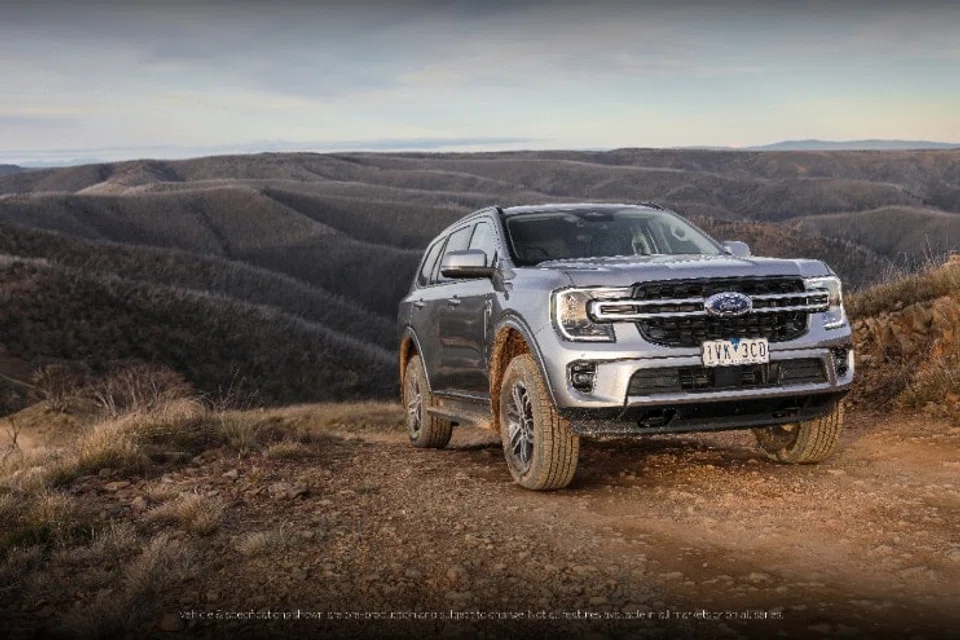
[HO CHI MINH CITY] Tariff-free or not, American sport utility vehicles (SUVs) face a tough road in Vietnam where nearly half of all car sales go to SUVs, as buyers are likely to still favour leaner, fuel-efficient models from Japan or South Korea over the bulky and petrol-guzzling US rides.
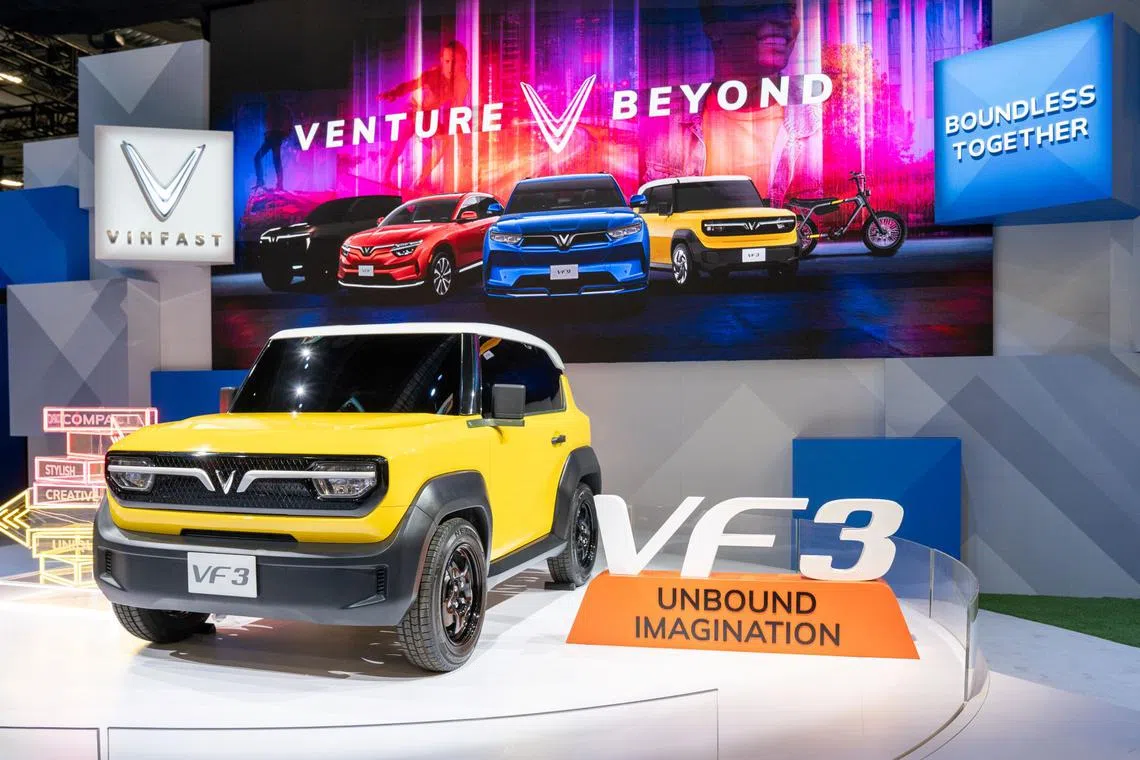
In addition, electric vehicle (EV) manufacturers such as home-grown company VinFast and some Chinese players are gaining an upper hand in Vietnam, bolstered by recent domestic policies that will restrict fossil fuel-powered vehicles in major urban traffic routes in the coming years.
So while US President Donald Trump may tout the SUV as a “wonderful addition” to US exports to Vietnam following a bilateral trade pact struck earlier this month, road realities suggest it may do little to drive demand for these large-engine vehicles shipped from halfway around the world.
“US brands would still face limits to their market share,” said BMI automobiles analyst Koketso Tsoai.
This is due to “persistent non-tariff barriers, weaker after-sales networks, consumer concerns about maintenance, and the strong presence of local and Chinese brands in the entry and mid-range SUV segments”, he adds.
The large engine vehicle that “does so well in the US”, as Trump noted on his Truth Social post announcing the trade deal with Hanoi on Jul 2, has little traction in Vietnam, where drivers often navigate dense traffic and narrow streets ill-suited for bulky SUVs.
“American SUVs are often oversized for Vietnam’s roads and infrastructure, which are not built to accommodate vehicles of that size,” said Nguyen Phuc Lam, chief executive at Sencar Mobility, a car-sharing service provider in Vietnam.
“For EV brands like Tesla, the limited charging infrastructure remains a major obstacle,” he added.
Who rules the road?
Based on a report by Asian Automotive Analysis, Vietnam’s total car sales surpassed 450,000 units last year, marking an 18.8 per cent increase from the previous year. SUVs accounted for 46 per cent of the total.
Vietnam’s total car sales lag regional peers such as Indonesia, Malaysia and Thailand, and its streets are still dominated by motorbikes rather than cars. As at end-2024, the country had 77 million registered motorcycles – roughly 11 for every one of the country’s 6.8 million registered cars, according to the Vietnam Register.
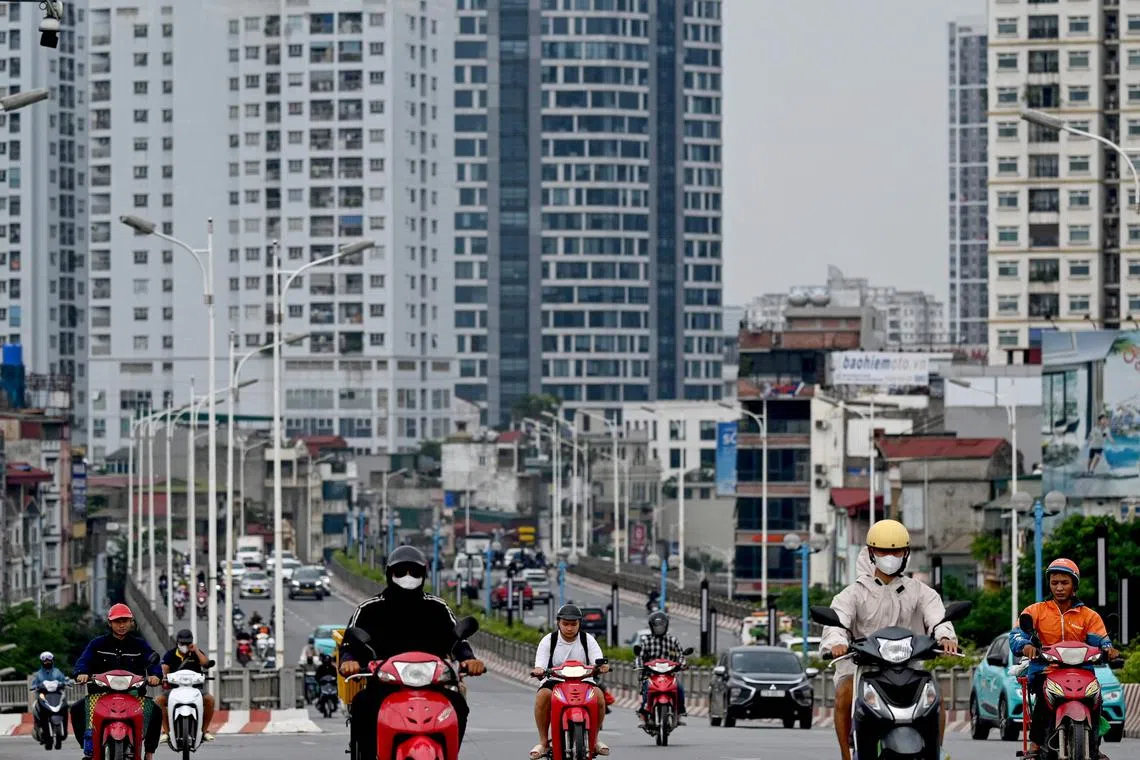
Yet the country is becoming increasingly attractive to global carmakers wanting to expand, thanks to a growing middle class, low car ownership rates and recent curbs on petrol-powered motorbikes.
Nguyen Quoc Binh, administrator of OF.FB, an online community for Vietnamese car lovers with nearly 1.6 million members in its Facebook group, noted that some of the largest models favoured by Vietnamese drivers include Japan’s Toyota Land Cruiser and Lexus LX600 – both well-suited to local road conditions.
“American SUVs are often too bulky and fuel-slurping. Even though a few are not overly expensive, people are generally not that interested in them,” Binh stated.
Furthermore, he noted that US-made cars entering Vietnam still face a multi-layered cost structure, including special consumption taxes and logistics fees. Even with import tariffs fully scrapped, retail prices would only fall by about 15 to 20 per cent. This is unlikely a game-changer for car buyers willing to splurge on niche, premium models.
Customising to local market preferences is key, Binh said, pointing to several Ford pickup models with smaller engines that are assembled in Vietnam and priced competitively against some Japanese rivals.
“Their smaller models are well-built and continuously updated to match local consumer preferences, which is why Ford achieved quite impressive sales,” he said.
Backed by its local factory, which has been operating for nearly three decades, Ford is currently the only US car manufacturer to have secured a significant market share in Vietnam, selling more than 42,000 units in 2024.
However, its sales still trail behind domestic manufacturer VinFast, South Korea’s Hyundai and Japan’s Toyota.
Binh believes that certain mid-range Ford models produced in the US with engine capacities below 3,000 cc could benefit from the tax cut from 50 per cent to zero as several dealers have indicated they are ready to import these vehicles to offer more competitive options to customers.
But such small additions are unlikely to significantly shift the automotive landscape in Vietnam.
Overall, US brands struggle to compete in the compact car segment, dominated by Toyota and Hyundai, and in the EV market, where VinFast holds a clear advantage, said Chris Liu, senior automotive analyst at global technology advisory group Omdia.
Fight against pollution
As part of a sweeping initiative to combat worsening air pollution, Prime Minister Pham Minh Chinh ordered Hanoi to ban all fossil fuel-powered motorbikes and mopeds from Hanoi’s downtown Ring Road 1, an inner urban beltway, starting Jul 1 next year.
The restriction will expand in 2028 to include private petrol-powered cars within both Ring Roads 1 and 2. Meanwhile, Ho Chi Minh City is also considering similar restrictions in areas facing high pollution.
Such policies are expected to benefit VinFast, which currently holds a leading position in Vietnam’s EV and motorbike market.
Lacking economies of scale
Aside from Ford, US carmakers are unlikely to establish local production facilities in Vietnam to compete more effectively, as limited sales volumes do not justify such investments in the short term.
More established automotive hubs in Asean can also serve as re-export centres to Vietnam without incurring import duties, making local production even less attractive.
“Vietnam’s market is fragmented; even top models sell only 10,000-15,000 units per year,” said Akshay Prasad, principal of automotive practice in South-east Asia at global management consulting firm Arthur D Little.
“Setting up facilities, whether for fully or semi knocked-down vehicles, requires a US$50 million to US$100 million investment, (which is) hard to justify without regional scale.”
The most notable failure was the withdrawal of General Motors’ Chevrolet from Vietnam in 2018, when it transferred local operations to VinFast.
Chevrolet later exited other South-east Asian markets as well, largely due to poor sales and unprofitable operations.
A statement regarding the US carmaker’s exit from Indonesia in 2020 offered insight into its rationale: to “focus on markets where there is a clear pathway to sustainable profitability”.
In addition, US brands such as Ford also already source from neighbouring Thailand to enjoy duty-free access to Vietnam under the Asean Trade in Goods Agreement. Cars originating from the European Union are also benefiting from phased tariff cuts to zero by 2030, thanks to the EU-Vietnam Free Trade Agreement.
“In terms of building export-oriented plants, the (previous) lack of a US-Vietnam free trade agreement makes the country less competitive than Korea or Mexico,” Omdia’s Liu noted.
“However, auto parts stand out as a bright spot, with Vietnam becoming a credible hub for labour-intensive component making,” he added.
TRENDING NOW

Government to bring forward raising of retirement age, give employers more financial support to create flexi-load jobs

If Europe goes to war, the fallout will be felt in East Asia

Indonesia stocks suffer worst plunge in nearly 30 years as MSCI proposes standalone status

Vietnam’s northern provinces, not Hanoi or Ho Chi Minh City, are powering near 10% GDP growth

