Jollibee’s cafe-buying spree brews a showdown with startups
JFC has long served brewed coffee in Jollibee and its other fast-food outlets, but it had no dedicated coffee brand until it began acquiring them
THE scent of butter and coffee drifts onto High Street Cafe, a food hall located in Metro Manila, Philippines. Inside, bakers stack croissants and kouign-amanns as baristas fire up espresso machines.
A month in, Tiong Bahru Bakery’s first outpost outside Singapore is buzzing. The crowd? Young, well-heeled, and eager for the flaky pastries served on blue and teal ceramics.
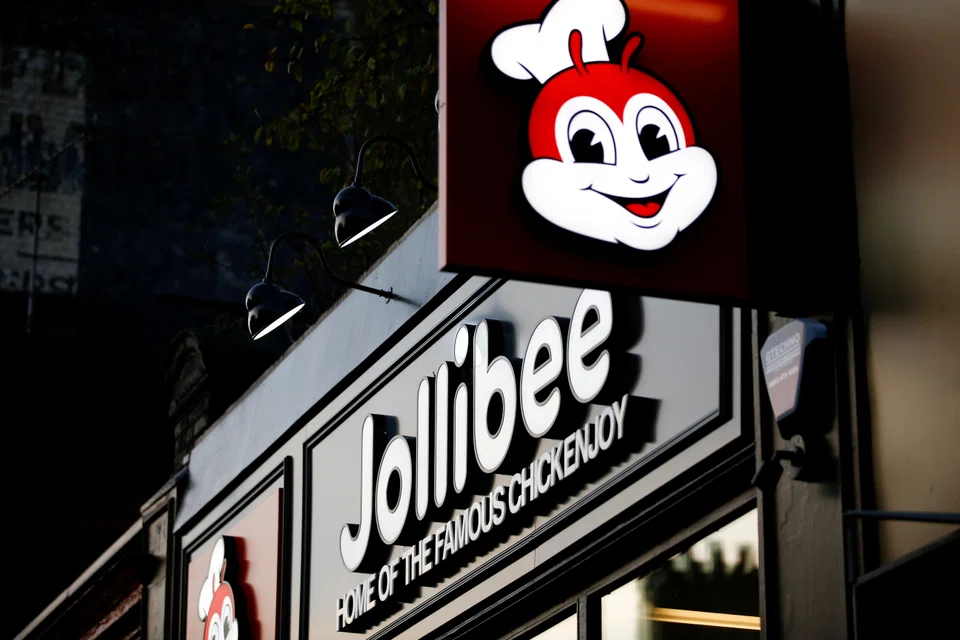
Behind the bakery sits a familiar sight – an outlet of Jollibee, the Philippines’ largest fast-food chain famous for its Chickenjoy fried chicken.
What do these food and beverage brands have in common? They share the same parent firm.
Valued at US$4.5 billion, Jollibee Foods Corporation (JFC) has made some notable moves into the cafe scene lately.
Besides Tiong Bahru Bakery, the company also launched Singapore’s Common Man Coffee Roasters in the Philippines last year. In 2024, JFC bought the majority controlling stake in South Korea-based Compose Coffee for US$238 million.
This deal follows the F&B giant’s US$350 million purchase of Coffee Bean & Tea Leaf six years ago. So why is JFC still doubling down on trendy coffee brands?
Betting on “affordable luxury”
Earlier this week, the company reported a 17.7 per cent net income for 2024, fuelled by strong domestic demand and its acquisition of Compose Coffee.
The Korean coffeehouse chain accounted for 7.9 per cent of the growth in JFC’s international business’ system-wide sales (SWS), the company said.
Of course, the acquisition quickly added 2,629 stores to JFC’s global footprint, which could explain the high contribution.
Its coffee and tea business, which includes Compose Coffee and Coffee Bean & Tea Leaf, opened 361 shops in 2024 and currently has a total of over 5,000 stores. The unit “saw strong sales and operating profit growth in 2024”, noted Richard Shin, JFC’s group chief financial and risk officer in the latest earnings release.
JFC did not respond to Tech in Asia’s requests for comment. But Ernesto Tanmantiong, JFC’s president and CEO, said in a 2024 interview with Forbes that he wants to double the group’s coffee retailing revenue to 30 per cent by 2030.
JFC has long served brewed coffee in Jollibee and its other fast-food outlets, but it had no dedicated coffee brand until it began acquiring them. In September 2024, it launched Jollibrews, a pop-up coffee shop that served as a venue for JFC to get feedback on the brand’s name and products.
“For a long time, people had to choose between premium brands like Starbucks or low-cost options from convenience stores and fast food chains such as McDonald’s and Jollibee,” said Anurag Verma, former chief of food delivery service Zomato Philippines. He is now the CEO of Lamudi, a local proptech platform.
“For Jollibee to retain its leading F&B market share, growing its coffee business is not optional anymore,” said Koko Tamura, who co-founded The Scales Coffee and was most recently the head of Philippine operations for per cent Arabica, a high-end Japanese coffee chain.
Many of JFC’s brands, including Vietnam-based Highlands Coffee and fast-food chain Chowking, are considered “legacy” names since they were established in the 1980s and 1990s, according to Kristoffer Li, a partner at FoodLabs Venture Studio and Investments.
“Now, they have to shore up a younger market with these acquisitions, or they will become less relevant,” he said.
Beyond industry giants such as Starbucks, local coffee startups such as Pickup Coffee and But First Coffee also want to capture the Philippines’ US$7.28 billion coffee market.
Foreign startups do not want to miss out, either. Zus Coffee, which is reportedly eyeing an IPO in its home market of Malaysia, plans to launch 150 stores in the Philippines this year. Indonesia’s Kopi Kenangan announced its Philippine expansion in August 2024.
Joan Yao, general partner at Kickstart Ventures, notes that many middle-income coffee drinkers are making the transition from at-home instant brew to take-away or delivery coffees.
Gen Z consumers and the rising middle class “are looking for ways to treat themselves,” she said. “Coffee is a relatively affordable luxury that they can enjoy on a daily or weekly basis.”
Jollibee takes on coffee startups
While JFC relies on scale and acquisitions to expand in the coffee market, startups must stay agile to compete with the F&B giant’s deep pockets, ex-Zomato executive Verma said.
Over the past three years, coffee startups in the Philippines have attracted a young, middle-income market demographic that wants something more than just a caffeine fix from a fast-food joint.
According to Verma, Pickup Coffee and Zus Coffee are leading in this new segment because of their “location strategy, kiosks and truck-style stores, and online delivery.”
These startups have managed to “keep drinks affordable while tweaking flavours to match the Filipino preference for sweeter, milkier drinks”, he said.
For example, a majority of items at Pickup Coffee are priced at 150 pesos (US$ 3.50) at most. In comparison, drinks at high-end brands such as Starbucks and Common Man start at around 200 pesos (US$ 3.50). Coffee startups will usually offer even more promotions and discounts on their own online platforms.
Li from FoodLab Venture cautions that coffee startups must stay ahead of evolving consumer preferences. If the economy strengthens, “demand will tip towards Common Man and Starbucks,” he said. “Customers of Pickup Coffee could ‘graduate’ to these brands later on”.
However, retaining customers is no easy task, pushing startups to find other ways to stand out. For example, Pickup Coffee sells merchandise and collectibles and offers coffee cart services at events such as fun runs to keep its brand top of mind.
The company also uses its mobile app for promotions such as raffles as well as rewards programmes, which allow consumers to earn points from their purchases that can then be exchanged for items such as planners and mugs.
Some coffee startups in the Philippines initially focused on rapid expansion. Pickup Coffee took it up a notch in 2023 by setting up shop in Mexico, where the company aims to expand further.
But growing competition and rising rents are making it harder to secure new locations, according to industry experts.
“The key now will be shutting down underperforming stores fast,” said Verma.
However, Pickup Coffee locations could inevitably cannibalise each other, Gentree Fund partner Mark Sng told Tech in Asia. An investor in the coffee startup, Gentree is the venture arm of the Sy family, one of the wealthiest families in Asia.
“The best-performing Pickup stalls are the ones set up outside BPOs,” Sng said, referring to buildings that host business process outsourcing companies. He added that these branches often pull in over US$1,000 in average daily sales, more than double the industry average.
Pickup Coffee, which raised US$40 million in its most recent funding round in 2023, declined to participate in this story.
Who will win over the mid-market?
Most industry experts believe the Philippine market is large enough for coffee startups to coexist with JFC’s coffee portfolio.
“It won’t be physically possible for giants to serve specific niches all at the same time,” said Tamura of The Scales Coffee.
Still, a “battle for the mid-market” is unfolding, attracting young, sophisticated coffee drinkers. “Startups will be forced to focus on customer retention” as bigger brands push consumers towards pricier, more upscale options, he said. TECH IN ASIA