



Vietnam’s fintech sector enters a post-MoMo reality
The country has close to one million active enterprises, the vast majority of them SMEs
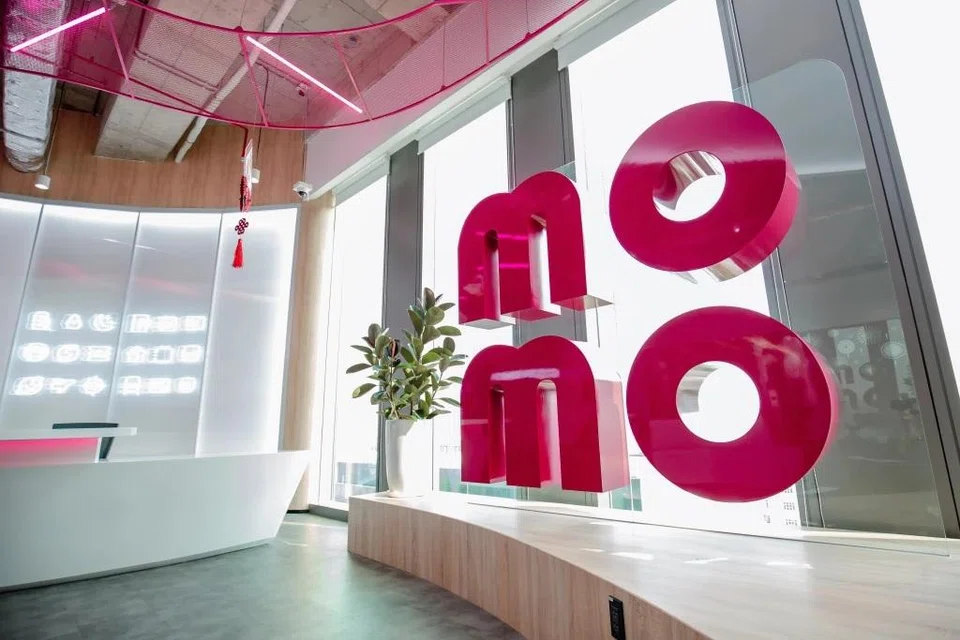
IF THERE was one company that defined the first chapter of Vietnam’s fintech journey, it would be MoMo.
What began in 2010 as a simple mobile wallet is now a firm that serves over 30 million users and is at the centre of a market projected to reach US$83 billion by 2031. MoMo’s scale is undeniable, processing 5.5 billion transactions in Q1 2025 and hitting profitability in 2024.
More importantly, the company reshaped consumer behaviour: It accelerated cashless payment adoption in Vietnam. Nationwide, non-cash transactions rose 43.4 per cent year on year, with values up 24.2 per cent, as Internet and mobile payments expanded strongly.
QR payments are a key driver of Vietnam’s cashless transition, with transition volumes increasing by over 60 per cent and total value rising by 150.7 per cent. More than 60 per cent of Vietnamese consumers now use QR codes for payments.
It also normalised peer-to-peer transfers that dominate over 60 per cent of flows and made digital bill settlement part of daily life.
Between 2018 and 2022, Vietnam’s fintech narrative was simple: user growth, transaction growth, and e-wallet growth. Now, though, retail payments are no longer frontier territory. The next battleground is shifting towards SME services and B2B financial infrastructure.
The state of retail payments
Vietnam’s non-cash ecosystem has reached critical mass.
In a report earlier this month, the State Bank of Vietnam said total non-cash payment value in 2025 hit 28x the country’s GDP. Internet transactions grew 31.92 per cent in value, while mobile payments jumped 52.55 per cent. QR code payments led the charge, soaring 128.15 per cent in value.
This scale and ubiquity bring a new reality: payments are becoming commoditised.
E-wallets have lost their exclusivity, as instant bank transfers are now free, mobile banking apps are polished, and VietQR has become ubiquitous. Consumers now don’t depend on a single payment app but choose the most convenient option at the moment of the transaction.
Margins in retail payments are also thin, and growth now depends on monetising existing users through adjacent financial services.
Not so super
The super-app model works best when one platform can lock in users and expand outward into commerce and finance. China was the archetype, but Vietnam is structurally different.
First, the ecosystem is fragmented. Vietnamese consumers are comfortable using multiple apps – one for banking, another for shopping, another for ride-hailing, another for payments. There is no single platform that controls digital life end-to-end.
This is reflected in the data: In food delivery, Hanoi tilts heavily towards ShopeeFood, which commands a 56 per cent market share, while GrabFood trails at roughly 35 per cent to 40 per cent. In Ho Chi Minh City, the balance shifts: GrabFood controls around 50 per cent of the market, overtaking ShopeeFood in the country’s largest commercial hub.
In ride-hailing, Xanh SM has 52 per cent of the market, compared to Grab at 44 per cent.
Second, banks in Vietnam have aggressively digitised, narrowing the traditional advantage of standalone e-wallets. Today, more than 87 per cent of adults hold bank payment accounts, and many banks report that over 95 per cent of their transactions are conducted through digital channels.
With widespread mobile banking apps, real-time interbank transfers, and standardised QR interoperability across banks, core payment functions are now embedded directly within bank ecosystems.
Third, the economics of subsidy-driven growth are increasingly unsustainable. While promotions and cashbacks can temporarily boost user engagement, long-term profitability depends on expansion into lending, insurance, or investment services, which are capital-intensive and tightly regulated.
MoMo reported its first profitable year in 2024, suggesting early signs of operational scale and monetisation effectiveness. However, amid intensifying competition, high customer acquisition costs, and margin pressure in a maturing payments market, the sustainability of such profitability remains an open question.
Rather than failing, super apps in Vietnam have entered a phase of maturity. As market penetration deepens and the core user base has largely been captured, growth is shifting from user acquisition to monetisation and higher value per user.
Instead of building an all-in-one monopoly, success will mean owning specific high-frequency moments, deepening engagement, and layering services such as lending, insurance, B2B payments, and embedded finance.
The next chapter
If the first era of Vietnamese fintech focused on consumers, the next era will zoom in on businesses.
Vietnam has close to one million active enterprises, the vast majority of them SMEs. Many participate in cross-border ecommerce, regional supply chains, or digital services exports, but financial infrastructure for SMEs remains fragmented and inefficient.
Common pain points include managing multiple accounts across currencies, high foreign exchange conversion costs, manual reconciliation processes, and limited access to working capital linked to real-time cash flow. Yet the opportunity is real: 58 per cent of SMEs say digitalisation helps them reach international markets as trade with partners such as the US and China expands.
At the same time, the broader regional opportunity is large. South-east Asia’s B2B payments market was valued at US$44.5 billion in 2024 and is projected to reach US$105.6 billion by 2033.
Unlike consumer payments, B2B transactions are higher in value, invoice-based, and deeply integrated with credit, compliance, and enterprise systems, making infrastructure and workflow integration more critical than e-wallet scale alone.
This is where the new fintech battleground lies.
Rather than competing for app downloads, the next generation of fintech players is building financial rails – infrastructure that enables businesses to operate more efficiently.
Key components include multicurrency business accounts, cross-border settlement and foreign exchange optimisation, virtual accounts for automated reconciliation, embedded finance within marketplaces and ERP systems, and supply chain financing linked to platform data.
One example is Airwallex, a global payments fintech firm that focuses on enterprise financial infrastructure. The company recently signed an agreement to acquire Vietnam-based CTIN Pay to strengthen its local payment capabilities.

A similar infrastructure-driven dynamic can be seen in the recent collaboration between Singapore-based Thunes and a Vietnamese licensed fintech company, FinFan. Rather than launching a consumer wallet, Thunes connects Vietnam to its global cross-border payment network spanning more than 130 countries.
The partnership focuses on real-time settlement, compliance integration, and treasury optimisation, reinforcing Vietnam’s role within regional financial infrastructure rather than retail fintech competition.
These moves signal that value is accumulating in licensed and compliant back-end infrastructure, not front-end consumer interfaces.
Airwallex’s model illustrates that the future of fintech in Vietnam may be about becoming the invisible layer that powers thousands of Vietnamese businesses moving money domestically and globally.
Infrastructure defines the future
MoMo’s legacy is real and significant. The company proved that Vietnamese consumers could adopt digital finance at scale and catalysed lasting behavioural change.
But fintech ecosystems evolve in stages, from adoption to optimisation. We believe Vietnam is entering the latter stage, as retail payments are settled and super apps are mature, leaving the next wave of value creation to come from the rails that power business cashflow, not consumer apps.
The companies that shape Vietnam’s next fintech chapter will likely be less visible than MoMo was at its peak. They will compete for enterprise contracts, API integrations, and cross-border transaction volume.
In the long run, plumbing beats polish. And in Vietnam’s fintech story after MoMo, the plumbing is where the real growth lies. TECH IN ASIA
TRENDING NOW

Grab CEO’s wife Chloe Tong on life with Anthony Tan and finding her purpose

Hwa Seng Builder, two China companies win S$1.2 billion Tuas Road Viaduct phase two contracts

Deal between tycoon friends sparks scrutiny of Philippine power sector

Canada is upping oil flows to Asia, but South-east Asia’s refineries aren’t ready to handle them yet

