Telkom Indonesia aims to give users shopping, travel experiences in the metaverse

TELKOM Indonesia has its eyes on a slice of the metaverse, and is planning investments in manpower and infrastructure to build its own virtual world.
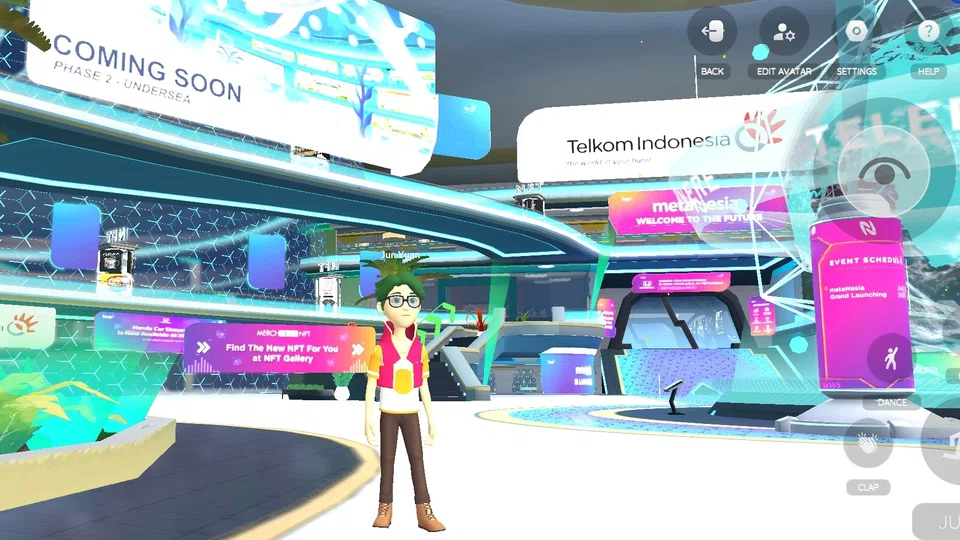
On Aug 1, the Indonesian telco announced plans to launch “metaNesia”, a virtual world to promote the country’s micro, small and medium-sized enterprises.
In an interview with The Business Times, the telco’s chief digital and innovation officer (CDIO), Fajrin Rasyid, said the project will build the telco’s capabilities in the field.
“A big (part of the) investment will be in the people, to build the capabilities … to model something in 3D, and to animate it,” he said, adding that further investments will also have to be made in infrastructure needed to power the metaverse.
To this end, the telco will be investing to hire “a few dozen” experts in user experience and 3D animation to build the virtual world.
In April this year, Telkom Indonesia also signed a memorandum of understanding with Singtel to collaborate in building a regional data-centre platform.
No killer use cases have emerged for such a metaverse at the moment, but the former Bukalapak president appears to be adopting a build-it-and-they-will-come strategy. He said it is important to first build an ecosystem that will be attractive to brands, which will then come and set up shops within the metaverse.
Telkom Indonesia currently has merchant partners such as Bank Indonesia, carmaker Honda and state-owned vaccine manufacturer Bio Farma. It is also partnering with virtual reality (VR) solutions provider smarteye.id.
“For me, a metaverse is (only) as good as the elements within it. Similar to mobile technology, if no one built apps for mobile, then mobile itself would not be as useful as it is today.
“It’s not just a metaverse product from us, because we want to actually work together with a lot of people out there,” Rasyid said.
A potential use case for companies could be a car dealership that opens a virtual store and allows customers to test drive cars in the metaverse.
Revenue could then be generated from commissions on purchases made in the metaverse, as well as advertising that is visible in the virtual world.
In addition, the telco is looking to bring in novel use cases, such as virtual concerts and virtual travel tours to faraway places such as the Taj Mahal.
In his ideal world with an operational metaverse, Rasyid imagines that people could check into the metaverse just as they would use their phones to check for messages and watch videos during lunch.
“During your spare time, you’ll probably want to go into a shopping mall in the metaverse to see if there’s anything interesting…you can actually explore travel places and join concerts or any other interesting events,” he said.
Yet, he is also wary of the potential regulatory hurdles that need to be overcome before certain use cases are built.
“For example … can I put the Merlion statue in the metaverse? Or should I get a licence from the Singaporean government? That’s something that we need to be aware of as well,” he said.
While Rasyid acknowledged that the average individual may not be able to access the virtual world through advanced virtual reality glasses, he noted that it will be made accessible via browsers and mobile devices too.
“In the first few years, it won’t be accessed through the headset because it is not cheap, and also not really convenient for most people, especially to use for quite a long period of time,” he said.
Already, the metaverse is accessible via Windows, Mac OS and Android, with an iOS app in the works too.
Android app users can walk around with their avatars in a virtual mall and visit some partners’ stores, although they currently appear to be empty. There is also a showroom with Honda cars that users can view and test drive on a virtual track.
As a whole, Rasyid sees the metaNesia project as one of a number of initiatives to drive innovation at Telkom Indonesia, even if history is littered with technological innovations that failed to gain traction.
“We are trying to adopt a startup mentality…so we spend the money incrementally and based on the result that we see, we really want to see the ROI (return on investment) in every activity, including the innovations,” he said.