



Thai Airways navigates some turbulence on flight to recovery
Once ranked among the world’s top airlines, the carrier filed for bankruptcy protection in May 2020 after years of heavy losses from 2017 to 2019
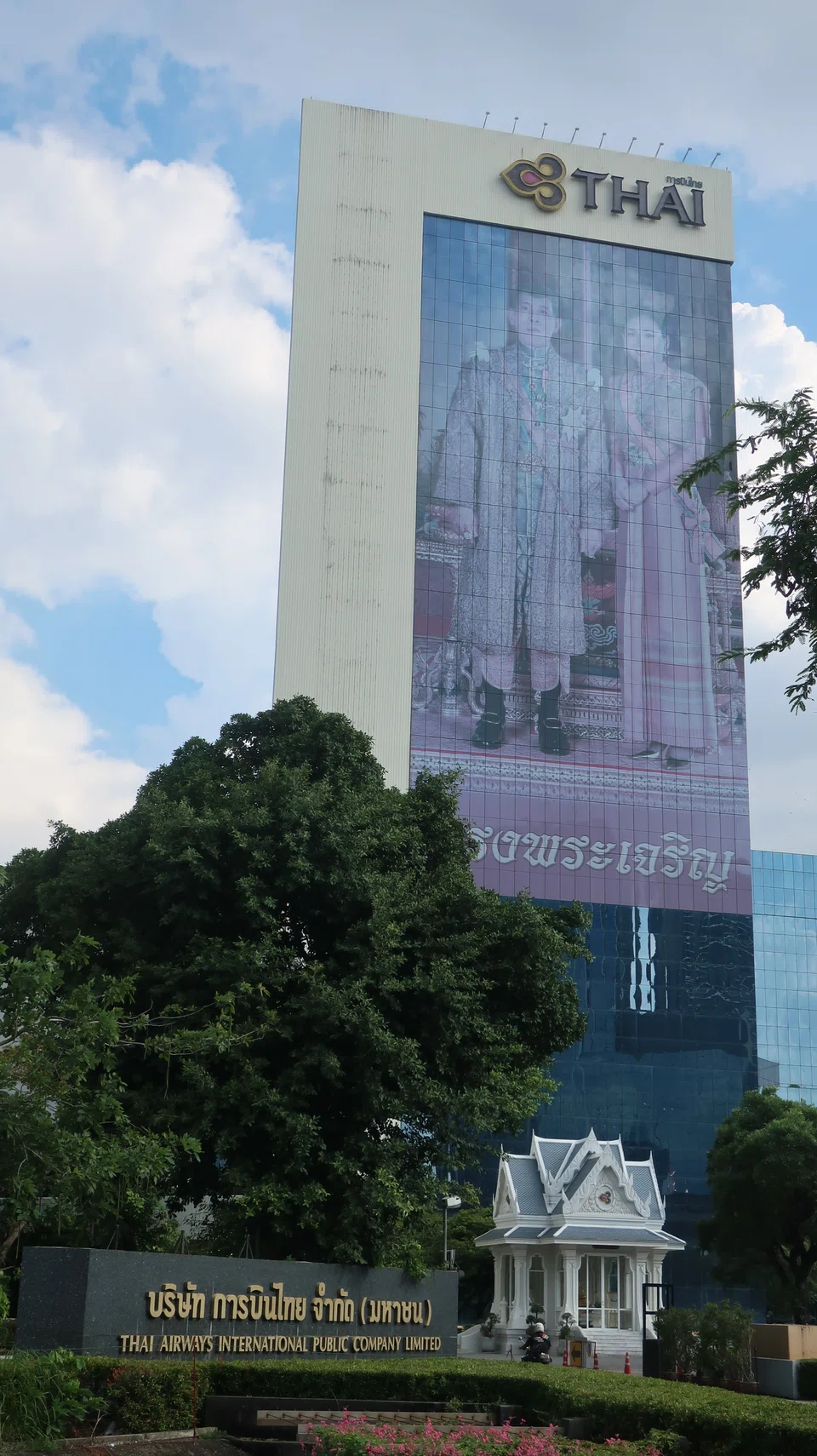
[BANGKOK] Nearly five years after filing for bankruptcy protection, Thai Airways International is on schedule to exit its rehabilitation programme and relist on the Stock Exchange of Thailand (SET) by the second quarter of 2025.
It has been a turbulent journey, and observers said the path to recovery for Thailand’s national carrier promises to be anything but smooth.
Once ranked among the world’s top airlines, Thai Airways filed for bankruptcy protection in May 2020 after years of heavy losses from 2017 to 2019.
Decades of mismanagement, corruption scandals, and questionable plane purchases, largely attributed to political interference tied to its former status as a state enterprise, led to its decline. Thai Airways lost its state enterprise status in 2020.
Whether the carrier can avoid political interference after its relisting remains uncertain, as the finance ministry and two state-run banks are expected to hold a 40 per cent equity stake. Before 2020, the airline was 51 per cent owned by the finance ministry, which classified it as a state enterprise.
Entering bankruptcy proceedings in 2020 shielded Thai Airways from repaying its debt of 128 billion baht (S$5 billion), yet the airline was still obligated to pay wages to its 29,500 employees, even as the pandemic grounded its fleet.
“The only way to do that was to negotiate with the employees for a reduction in wages – voluntarily – and ask them to voluntarily leave the company,” said Piyasvasti Amranand, chairman of Thai Airways’ rehabilitation plan administrator.
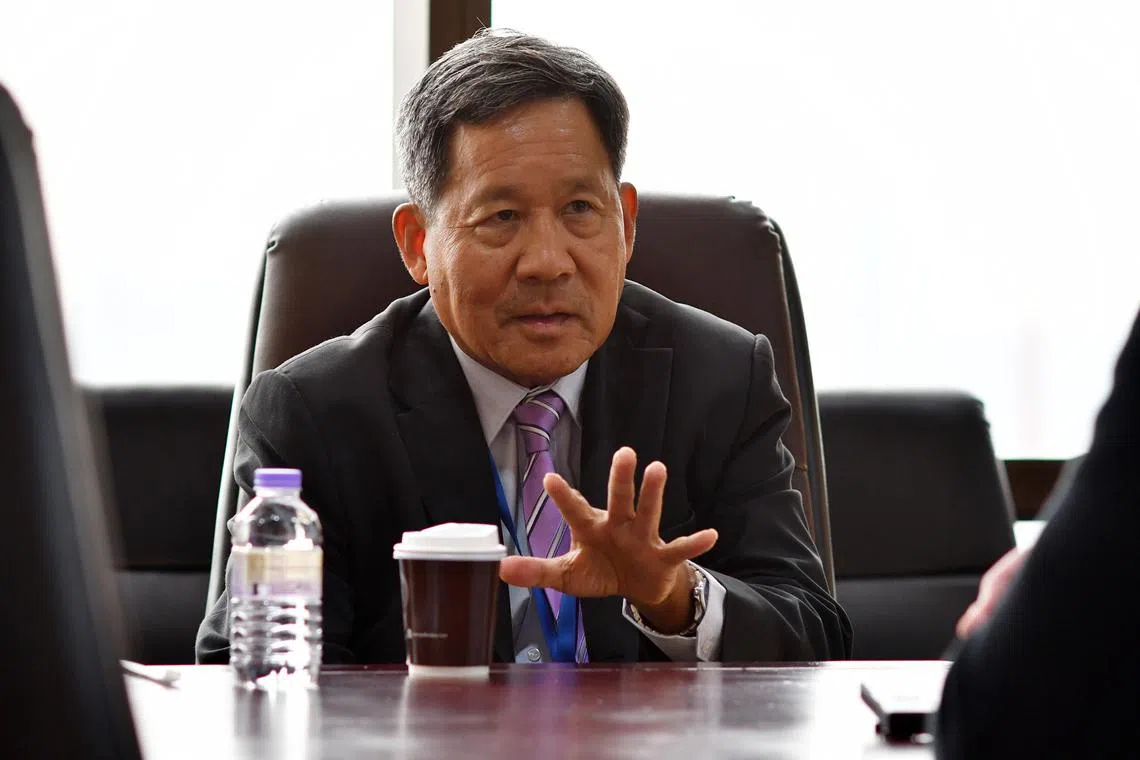
Under the rehabilitation plan, the carrier was required to lay off half of its workforce within the first year. However, Thai labour law mandates that laid-off employees receive a lump sum of 11 to 12 months’ wages, a cost the airline could not afford.
“We asked the employees who left the company if we could pay their compensation over a period of 12 months, and almost everyone agreed,” said Piyasvasti in a recent interview with The Business Times.
To cover daily expenses, Thai Airways sold 10 billion baht worth of assets, including real estate and old airplanes, helping the airline stay liquid during the worst months of the Covid-19 pandemic. “Otherwise, we would have gone bankrupt,” he added.
It gradually began earning revenue again with the reopening of the tourism sector, and resumption of long-haul flights, especially to Europe.
In 2023, Thai Airways reported a profit of 28.2 billion baht. In the first two quarters of 2024, the airline continued to show modest profits, with a net profit of 2.7 billion baht in the first half of the year, despite facing increased expenses and operational challenges.
The airline’s new business strategy has been to provide better networking, using Bangkok as its hub, rather than relying on point-to-point flights as in the past. “We had connecting flights in the past, but the ticket prices, reservation process and connection times were not friendly enough,” noted Piyasvasti.
The company’s growth prospects are tied to Thailand’s tourism sector, which is expected to see 36 million foreign tourist arrivals this year, compared with 28 million in 2023.
Luzi Matzig, chairman of travel agency Asian Trails Group, said: “Since Thailand’s tourism is booming, Thai Airways has good prospects for further growth. Their cabin crews are much friendlier than (those of) the European or American carriers, and their food and services are very good now.”
To capitalise on the tourism revival, Thai Airways plans to double its fleet from 77 aircraft at present to 150 planes in 10 years’ time. It has acquired 12 second-hand planes since 2021 under operating leases.
Piyasvasti said: “We will continue to obtain second-hand planes under operating leases for the next few years, before the new planes start to come in from 2027 onwards. These will be Boeing aircraft with GE engines, which we have signed contracts for already.”
Rolls-Royce became embroiled in a scandal following recent allegations that the British company used bribes to secure engine sales to airlines, including Thai Airways.
But Thai Airways must exit its rehabilitation plan and relist on the SET before it can proceed with fleet expansion.
Under the rehabilitation plan, the airline aims to convert 24.5 per cent of its debt – some 30 billion baht owed to Thai banks and 73 billion baht to bondholders – into equity by this month.
Additionally, about nine billion new shares will be issued to creditors and existing shareholders. This strategy is expected to restore the airline’s equity to a positive standing, paving the way for its relisting on the SET in the second quarter of 2025.
Chalie Kueyen, a bank sector analyst at KGI Securities, noted that the debt that banks lent before the rehabilitation plan will be partially converted to equity, while the remaining debt will have its payment term extended in two tranches – 12 years and 15 years – with an interest rate at 1.5 per cent per annum.
After the debt-to-equity conversion, Thai Airways’ shareholding should be split 60 per cent to private-sector entities and individuals, and 40 per cent to public entities. The latter comprises a 31 per cent held by the Ministry of Finance, and about 9 per cent by state-owned Krung Thai Bank and Government Savings Bank.
A key initial step for the carrier’s new shareholders will be to elect a fresh board, expected to guide the airline away from past missteps.
Many observers link Thai Airways’ financial collapse to undue political interference, excessive perks for influential figures, and politically appointed boards and managers – issues stemming from its former status as a state-owned enterprise.
A creditors’ meeting that was scheduled for Nov 8 – intended to finalise the airline’s exit strategy and address the finance ministry’s controversial appointment of two new executives to oversee the process – has been postponed to Nov 29, according to company sources.
These appointments have raised concerns among opposition politicians, who suspect the ministry of attempting to dominate the airline’s transition.
“It will not be a state enterprise (in the future), but the issue is, how much shareholding the finance ministry will have, and how much control the government will have,” said Piyasvasti. “That’s the issue.”






