Thai baht rally at risk as central bank curbs, elections weigh
A stronger currency risks hurting the country’s key export and tourism sectors
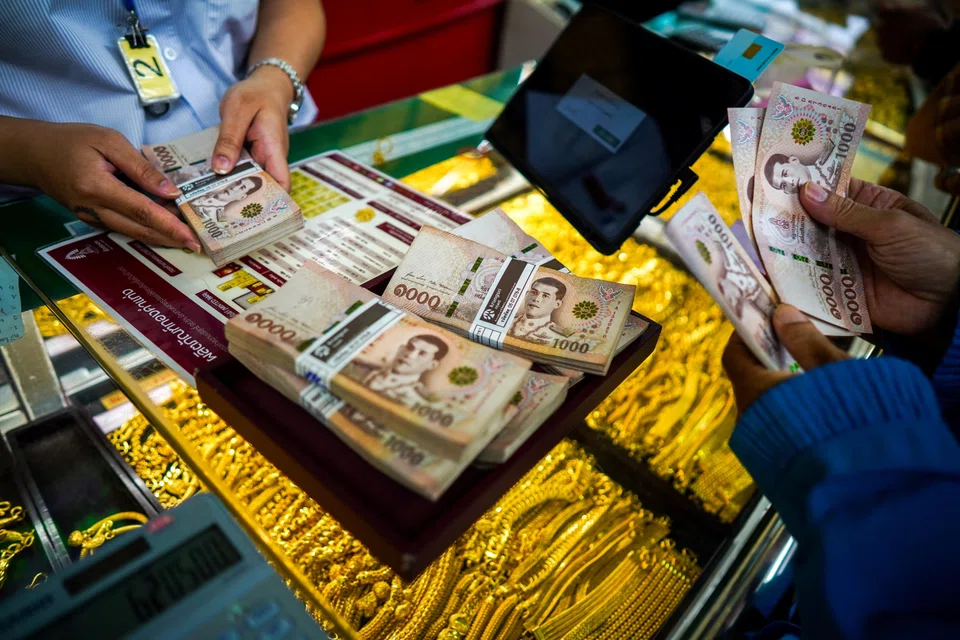
[SINGAPORE] The Thai baht’s rally may be losing steam as the central bank steps up efforts to curb the currency’s strength and election risks reemerge, according to strategists.
The baht is likely to weaken to 32.1 per US dollar in the first quarter of 2026 from around 31.51 in early trading on Monday (Jan 5), according to the median forecast of a survey of analysts compiled by Bloomberg.
The currency halted a six-week winning streak after the Bank of Thailand (BOT) instructed financial institutions to report foreign-currency transactions of at least US$200,000 in a bid to manage the baht’s gains.
An 8 per cent rally in 2025 helped seal the baht’s status as Asia’s second-best performer but those very gains are putting analysts on guard after policymakers warned that the advance has outpaced the currency’s fundamentals.
The growing prospect of official intervention to slow the ascent, coupled with a slew of other factors, is fuelling calls for a reversal.
“Tightening of checks on foreign exchange inflows, stricter scrutiny of gold-related baht inflows are some of the measures that should restrain the baht’s excessive strength going into first quarter 2026,” said OCBC FX strategist Christopher Wong. A sharp unwinding of gold prices and weak growth momentum would also weigh on the currency, he said.
The baht’s recent gain has been supported by expectations of further policy easing by the Federal Reserve, a seasonal peak in visitors to Thailand and a more than 60 per cent surge in the price of gold last year. A stronger currency risks hurting the country’s key export and tourism sectors.
BOT governor Vitai Ratanakorn said last month that the central bank would opt for gradual measures to manage the currency. Authorities have ordered stricter checks on foreign-exchange transactions involving US dollar sales, particularly those linked to gold trading, to rein in inflows.
The central bank is also in talks with gold traders to explore ways to curb the metal’s outsized influence on the baht. Vitai said that foreign exchange flows related to gold trading have risen “significantly”, at times accounting for as much as 20 per cent of total market activity and adding to upward pressure on the currency.


Intervention watch
In addition, strategists said that a recent sharp correction in the South Korean won following policymakers’ comments has put traders on watch for a similar move by the BOT.
“The dislocation in the Korean won has been addressed, leaving the Thai baht as the next potential target for a reversal,” said Wee Khoon Chong, a senior Apac market strategist at BNY.
There are other reasons to expect that the baht’s rally may lose momentum.
The central bank may ease policy again if economic conditions deteriorate or deflation risks intensify. Investors will be watching inflation data due Jan 7, with economists surveyed by Bloomberg estimating that December consumer prices fell 0.3 per cent year-on-year after declining 0.49 per cent in November.
Political risks are another dampener after Prime Minister Anutin Charnvirakul dissolved parliament, paving the way for elections to be held on Feb 8.
The move leaves Thailand under a caretaker government with limited fiscal capacity, potentially clouding the outlook for policy support and economic growth.
“As we approach the election campaign period, domestic factors may potentially start to play a larger role in driving the baht, depending on how the situation develops, which remains fluid,” said OCBC’s Wong. BLOOMBERG
Decoding Asia newsletter: your guide to navigating Asia in a new global order. Sign up here to get Decoding Asia newsletter. Delivered to your inbox. Free.
Share with us your feedback on BT's products and services