



Thai central bank says rate cuts not a quick fix for sluggish economy
THAILAND’S “uneven” economic recovery cannot be fixed only by adjusting interest rates, the central bank said on Monday (Jan 15), hitting back at the government’s calls to ease monetary policy to help revive sluggish activity.
Bank of Thailand (BOT) assistant governor Piti Disyatat said at a briefing its rates were already very low compared with global rates and that cutting them would not help an economy being battered by external factors such as slowing global demand.
“The fact that the economy has not recovered comprehensively, these are all things that monetary policy cannot easily solve as a quick fix because many things require treatment that matches the root of the problem,” Piti said.
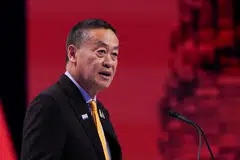
His comments came after Prime Minister Srettha Thavisin last week met central bank officials to urge them to cut the policy rate, which is at a decade-high of 2.5 per cent.
The central bank left its policy rate unchanged in November after raising it by 200 basis points since August 2022 to curb inflation. It will next review policy on Feb 7.
Srettha, who is aiming to kickstart the economy with a raft of stimulus measures, has said people and businesses were “suffering” from high rates, while his deputy has said the central bank’s rate increases were “a bit too fast, too aggressive”.
Headline inflation has been negative for three consecutive months to December, when it came in at -0.83 per cent, making it the eighth straight month that it was below the central bank’s target of 1 to 3 per cent. In November, the BOT forecast headline inflation of 2 per cent this year and 1.9 per cent in 2025.
On Monday, Piti said falling prices do not indicate deflation and that negative inflation is being driven by government subsidies. Growth is expected to be more balanced in 2024, while inflation is seen being negative until February but should be within target this year, he added.
Prime Minister Srettha has said the Thai economy, driven in large parts by manufacturing, domestic consumption, exports and tourism, is in crisis. In response, his government has rolled out measures such as debt suspensions for farmers, a minimum wage hike, and a signature US$14.3-billion handout scheme.

“Interest rates cannot give us more sophisticated, high-tech exports or the ability to increase the attractiveness of tourism,” Piti said on Monday, adding that BOT wants the key rate at a neutral level and is ready to adjust its monetary policy stance if the economy changes.
Decoding Asia newsletter: your guide to navigating Asia in a new global order. Sign up here to get Decoding Asia newsletter. Delivered to your inbox. Free.
Share with us your feedback on BT's products and services
TRENDING NOW

Looking beyond looming CEO succession, should UOB potentially pursue a transformative merger?

Once staunchly pro-China, Malaysian Chinese businesses are now distancing themselves from Beijing

Family offices ‘kept captive’ by relationship managers turn to independent advisers, direct deals
MAS holds monetary policy settings, pausing after two straight tightenings

