Thai elections: Voting done, now more politics
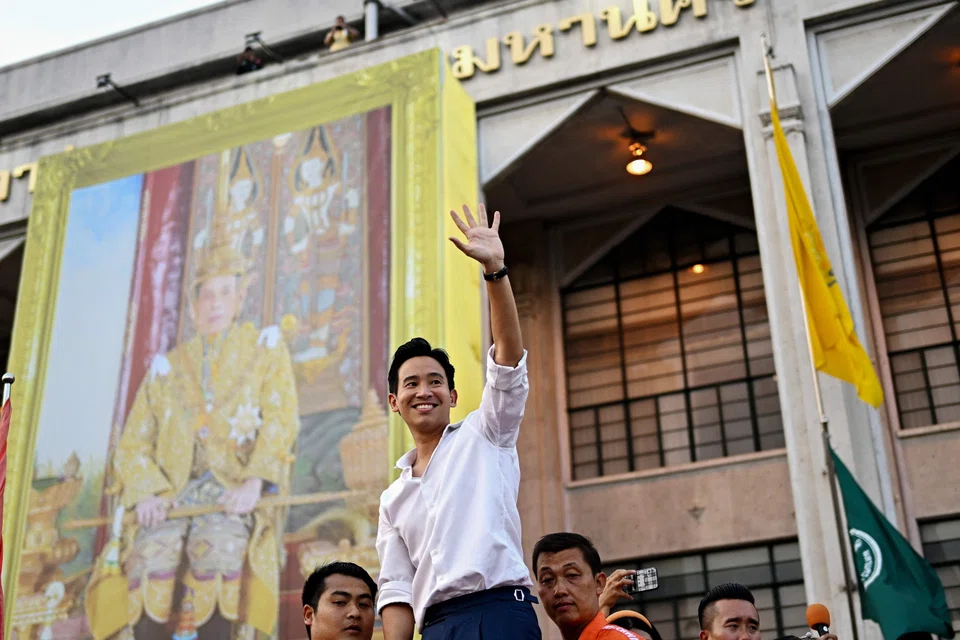
IN THAILAND’s general elections on Sunday (May 14), the popular preference of some 50 million voters was clear, choosing reformist pro-democracy parties over those led by former generals. But Thai constitutional arrangements are complex, as is the influence of the establishment and the military. Even as vote winners celebrate in the spotlight, intense politicking will be ongoing behind the scenes.
Companies and investors in the country should be watchful at this important juncture in Thailand’s economic recovery. Possibilities swirl about who will form the next government, and there is the risk of continuing uncertainty, with contestation and possible conflict.
Clear vote, constitutional complexity
The pro-democracy parties – Move Forward and Pheu Thai – are clearly the people’s choice in the contest for the 500 seats in the House of Representatives. But there is also the 250-seat Senate which also counts in the vote for the next leader. Taken together, there are 750 votes, requiring a majority of at least 376.
At this time of writing, a Move Forward-Pheu Thai coalition falls short of that. Even combined with smaller parties, their number is said to be 309 seats. Additional votes are needed.
Efforts are being made to woo individual senators. But there is some doubt, as the Senate was appointed under the pro-establishment and military-backed government of Prime Minister Prayut Chan-o-cha. Another possibility is to bring other political parties into the coalition.
The Bhumjaithai Party (BJT) – which won 70 seats – is a potential kingmaker. They already played that role following the 2019 elections, backing the coalition led by PM Prayut. BJT party leader Anutin Charnvirakul was appointed a deputy PM, and notably pushed the controversial decision to legalise cannabis.
At present, there appears to be reluctance to woo the BJT, which will demand significant portfolios and authority. Move Forward’s leader, Pita Limjaroenrat, has made it clear that he wishes to lead the coalition government and has said that they will not compromise.
Promises and compromises
Yet questions of compromise do arise. One lightning rod is Move Forward’s pledge to amend lese majeste laws under Article 112, to allow questions about the monarchy. Others may see this as a red line – even the Pheu Thai has not supported abolition.
Questions also swirl about former PM Thaksin Shinawatra, still seen as the moving force behind the Pheu Thai, now fronted by his daughter. Suspicions were fanned that a new government might pave the way for his return from exile when the elder Shinawatra tweeted he was looking forward to seeing his grandchildren in person.
Most felt that this did not help the party’s campaign. The military coup in 2006 targeted Thaksin, and his sister Yingluck was ousted in 2014 after seeking his amnesty. Many want this cycle to end, and it remains to be seen how attitudes around this personality have shifted.
If winners push hard for reforms, the risk of pushback rises from the establishment. Incumbent Deputy Prime Minister Wissanu Kreangam was reported as saying that the incoming government is likely to face protests and resistance. Such street-level confrontation may not however be the preferred option.
Options for the establishment
There is instead talk about a “judicial coup”. The Elections Commission and the Constitutional Court can enforce laws and regulations to disqualify individuals or even dissolve entire parties. The Future Forward party – the first version of Move Forward – suffered this fate in 2020, with their top leadership banned from politics. So did the Thai Rak Tai – antecedents of the Pheu Thai – back in 2007.
Today, while official results are pending, there are already allegations of vote-fixing. Complaints have been lodged against certain parties. Move Forward’s Pita faces investigations about shares in a media company – and similar complaints felled his predecessor.
The establishment has options if the Move Forward-Pheu Thai-led coalition should falter and fail. While the two military-backed parties did not fare well, there is an outside possibility that the current government coalition could come back.
Combined with conservative parties such as the BJT and Democrats, the incumbent coalition could muster 191 seats. If added to Senate votes, the required majority could be coaxed to form a government, although it would be a minority in the House. However, any such move would defy the clear choice of voters for change – especially among the young, in the rural north, and in Bangkok itself. Large-scale and long lasting popular protests could be triggered.
Another pro-establishment option would be to select a more seasoned leader as a compromise PM. The Constitution allows for a premier who is outside the parties, or indeed not even an MP. Move Forward, the largest vote winners, clearly want their leader to have the top seat. But the Pheu Thai, the second largest bloc, has a penchant for deal-making and might prove more amenable.
Stability and the economy
The pandemic and loss of tourism severely hit the Thai economy, which is yet to recover to pre-pandemic levels. Whoever takes charge of the country will have a busy and urgent agenda. Yet the timeline to form a new government could stretch.
A first joint meeting of the House and Senate to elect the Speaker will be held only 15 days after the official announcement of the election results. Only then will the process to appoint the prime minister begin. There is no explicit deadline, and the process could drag for months with much horse trading, while the current government continues in the interim.
The general election clearly decided against returning the generals. Yet without them and establishment acceptance, it remains to be seen whether the Thai political system can deliver certainty which the markets and investors hope for. Open contestation cannot be ruled out, especially if there is impasse. The vote is done, another bout of politics now begins.
Simon Tay is chairman of the Singapore Institute of International Affairs