Thai headline CPI unexpectedly dips in March, to rise sharply in Q2 as oil prices increase
The central bank unexpectedly cut its key rate in February to support South-east Asia’s second-largest economy
[BANGKOK] Thailand’s headline consumer price index (CPI) unexpectedly fell by 0.08 per cent in March from a year earlier, following an annual fall of 0.88 per cent in the previous month, but the commerce ministry said on Tuesday (Apr 7) that prices were expected to rise significantly in the second quarter of the year.
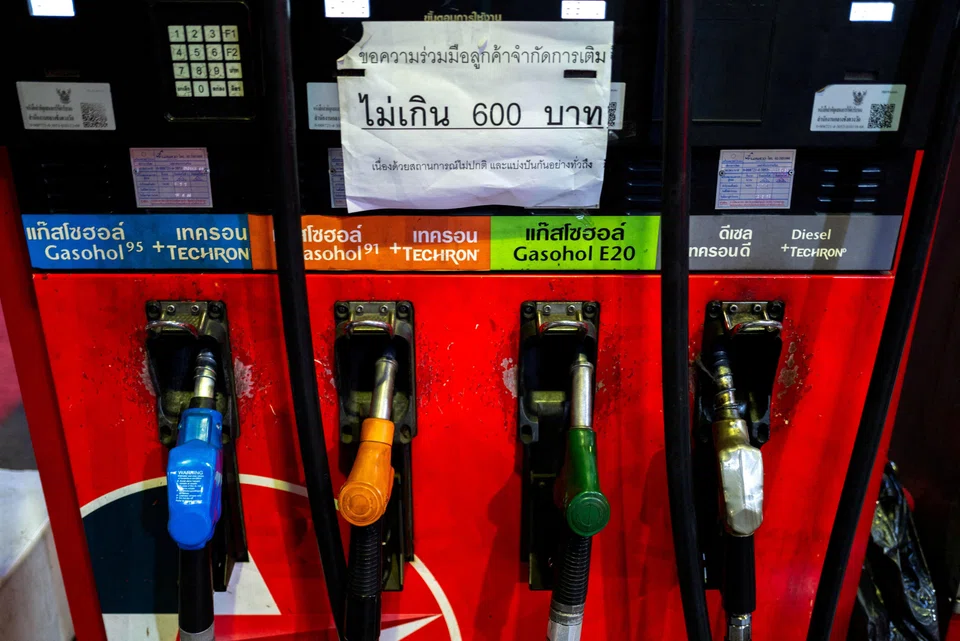
Despite the rise in global oil prices in March, retail prices in Thailand were curbed in the first half of the month. Electricity prices continued to fall, helping keep overall inflation low even though there were price increases in prepared food, beverages and some daily necessities, the ministry said.
The March reading was below a forecast rise of 0.20 per cent in a Reuters poll, and remained well below the central bank’s target inflation range of 1 to 3 per cent. The annual CPI dropped 0.54 per cent in the first quarter, and has fallen for 12 consecutive months.
Average inflation could rise to 3.67 per cent in the second quarter if oil prices stayed high for two months, and hit 5.78 per cent if high oil prices lasted for three months, Nantapong Chiralerspong, head of the Trade Policy and Strategy Office, told a briefing.
The ministry now predicts headline inflation to be between 1.5 to 2.5 per cent in 2026, he said, adding there were no signs of stagflation yet as investment and exports were still increasing.
The core CPI, which excludes volatile energy and fresh food prices, rose 0.57 per cent in March from a year earlier.
Bank of Thailand governor Vitai Ratanakorn said last week there was no need for a drastic monetary policy change at the moment, although inflation could reach 3 per cent this year.
The central bank unexpectedly cut its key rate in February to support South-east Asia’s second-largest economy. The next policy review is on Apr 29.
The government is planning an oil tax cut, a borrowing guarantee for an oil subsidy fund and other support measures, to mitigate the impact of rising oil prices.




Prime Minister Anutin Charnvirakul said on Tuesday that the government is also rolling out energy conservation measures, including tighter control of fuel use, while restructuring fuel and electricity prices to lower household energy costs. REUTERS
Decoding Asia newsletter: your guide to navigating Asia in a new global order. Sign up here to get Decoding Asia newsletter. Delivered to your inbox. Free.
Share with us your feedback on BT's products and services