



Thai Q1 growth unexpectedly accelerates on spending, exports
GDP in the three months through March rises 2.8% from a year earlier
[BANGKOK] Thailand’s economic growth unexpectedly accelerated in the first quarter, though officials warned the conflict in the Middle East will spur inflation and damage tourism.
Gross domestic product in the three months through March rose 2.8 per cent from a year earlier, the National Economic and Social Development Council (NESDC) said on Monday (May 18). That exceeded the median estimate of 2.4 per cent in a Bloomberg News survey, and the 2.5 per cent expansion of the fourth quarter of last year.
The better-than-expected reading was driven by improved government spending, private investment and exports, while household consumption remained steady, the NESDC noted in a statement. But it sounded a warning as the US war on Iran drives up costs for the South-east Asian nation, which imports much of its energy from the Middle East.
“The Middle East conflict will be the main risk this year weighing on the global economy and Thailand,” NESDC chief Danucha Pichayanan said in a briefing in Bangkok.
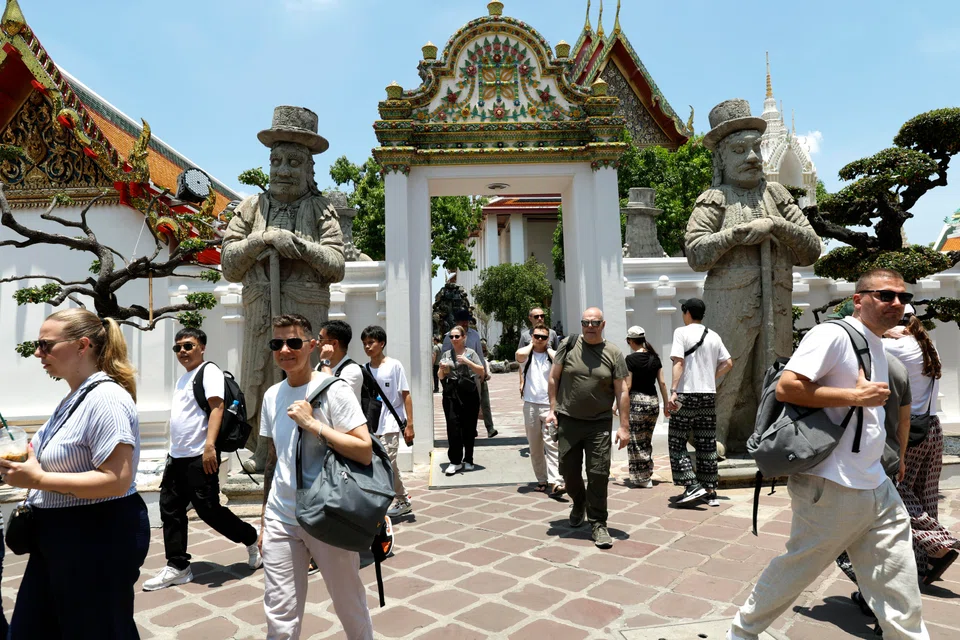
The conflict will push up the cost of living and inflation, while also hurting exports and tourism. The council cut its forecast for foreign tourist arrivals to 32 million people from 35 million, meaning it expects fewer visitors for a second year running.
The baht was 0.2 per cent weaker against the US dollar, while Thai stocks were little changed.
Thailand’s strong Q1 print is positive news for Prime Minister Anutin Charnvirakul, who won re-election in February with a vow to revive the economy, including through new borrowing and investment.
The government on Monday detailed plans to drastically cut red tape in a bid to woo more foreign investors.
The growth means that Thailand’s economy, a perennial laggard in the region, matched the Q1 pace of the Philippines. It trails other South-east Asian economies including Singapore, Vietnam, Malaysia and Indonesia.
SEE ALSO






The NESDC maintained Thailand’s 2026 growth forecast in a range of 1.5 to 2.5 per cent. That forecast takes into account the impact of the war, as well as an additional 400 billion baht (S$15.7 billion) in borrowing, Danucha explained, noting that improved private investment and government spending will be main drivers for the economy this year. The global technology boom should lift the export sector.
“Thailand has not seen this kind of private-sector investment growth in many years,” said Koraphat Vorachet, an investment strategist at Krungsri Securities, noting the Board of Investment had approved several large projects “which we expect will continue to support the Thai economy going forward”.
Still, headline inflation is set to average 2 to 3 per cent this year, a significant acceleration from the -0.3 to 0.7 per cent earlier predicted.
The council also cut the forecast for foreign tourist revenue to 1.49 trillion baht from 1.65 trillion baht, though the figure is still up from 2025 thanks to rising per-capita spending. The nominal decline in tourism numbers is bad news for a country which suffered a disappointing year for travel in 2025, due to the impact of an earthquake, political instability and concerns over tourist safety.
On a quarter-on-quarter basis, the economy expanded 0.7 per cent from the previous three months, compared with the 0.3 per cent estimate in the survey. The unemployment rate was 0.91 per cent.
Growth will likely to slow in the second quarter due to the impact of higher oil prices stemming from tensions in the Middle East, according to Koraphat.
“We expect the conflict to gradually ease within the quarter, allowing oil prices to decline over time, which should become a positive factor for the Thai economy in the periods ahead,” he added. BLOOMBERG
Decoding Asia newsletter: your guide to navigating Asia in a new global order. Sign up here to get Decoding Asia newsletter. Delivered to your inbox. Free.
Share with us your feedback on BT's products and services
TRENDING NOW

Once staunchly pro-China, Malaysian Chinese businesses are now distancing themselves from Beijing

Looking beyond looming CEO succession, should UOB potentially pursue a transformative merger?

Could stablecoins be the future of money?

Grab CEO’s wife Chloe Tong on life with Anthony Tan and finding her purpose

