Thailand defies court challenge to push through crisis borrowing
The plan includes cash handouts for about 13 million welfare cardholders
[BANGKOK] Thailand’s government is pushing ahead with a controversial 400 billion baht (S$15.6 billion) emergency borrowing plan despite a court challenge that threatens to complicate its response to surging energy costs and slowing economic growth.
Prime Minister Anutin Charnvirakul’s administration, which has been in office for less than two months after winning February’s election on promises to lower living costs, plans to use the funds for cash handouts, fuel relief and subsidies, while also accelerating Thailand’s transition from fossil fuels to renewable energy.
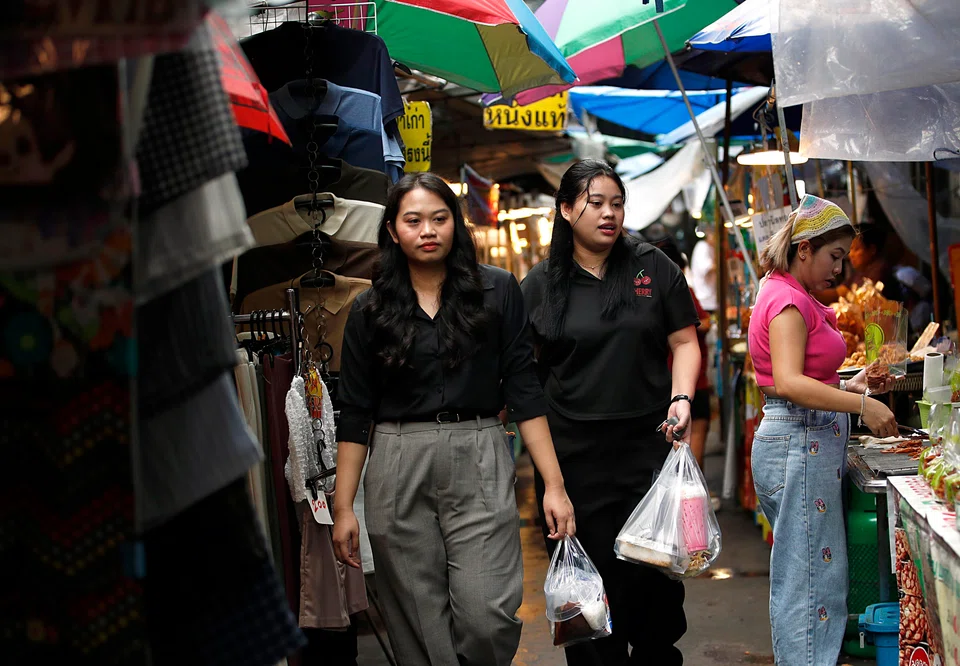
As the first step under its crisis borrowing plan, the Cabinet on Tuesday (May 19) approved a 175 billion baht relief package that includes cash handouts for about 13 million welfare cardholders and a four-month consumption programme covering roughly 30 million people, under which the government would subsidise 60 per cent of essential purchases and consumers would pay the remaining 40 per cent.
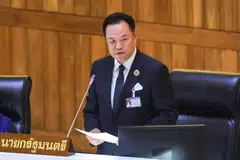
“This is a cost-of-living crisis. We need to keep the economy running so everyone can get through it,” Finance Minister Ekniti Nitithanprapas said at a briefing on Tuesday in Bangkok. “The measures will help ease the burden on low-income earners, workers and taxpayers, and most importantly provide a lifeline for struggling small businesses nationwide.”
The package is a response to the fallout from the Middle East conflict, which has driven up global oil prices and disrupted trade and tourism – two of Thailand’s main economic engines. But critics argue that emergency borrowing should not be used to finance long-term investments such as the energy transition, for which about 200 billion baht of the package has been earmarked.
On Monday, Thailand’s charter court agreed to review whether the emergency decree, which allows the Finance Ministry to raise funds without parliamentary approval, meets constitutional requirements for urgent necessity, following a petition from 133 opposition lawmakers.
Such court interventions are not unusual in Thailand, where judges and independent agencies wield broad powers and have frequently shaped or delayed major government policies.
The case adds uncertainty to Thailand’s economic response at a time when policy room is already constrained. Public debt is approaching the government’s self-imposed ceiling of 70 per cent of gross domestic product, while household debt remains among the highest in Asia at roughly 90 per cent of GDP.
Economists say the government faces growing pressure to support an economy already losing momentum before the latest oil shock. Nomura Holdings chief Asean economist Euben Paracuelles said the first-quarter growth data released on Monday showed the economy had weakened significantly.
SEE ALSO




“Fiscal measures from the government’s emergency borrowing decree will provide some offset, in my view, and therefore warranted,” Paracuelles said. “However, these are likely to be mostly in the form of short-term handouts to households and SMEs, which already have weak balance sheets, so they are unlikely to turn growth momentum around sustainably.”
According to a Suan Dusit poll released this month, more than 44 per cent of respondents said the emergency loan was their biggest concern, citing fears over rising national debt.
“The measures are essentially painkillers designed to ease the burden of rising living costs,” said Burin Adulwatana, managing director at Kasikorn Research Center Co. “If the same amount of money were directed toward addressing the country’s structural problems, it could generate much stronger long-term benefits. That is the opportunity cost the nation is paying.” BLOOMBERG
Decoding Asia newsletter: your guide to navigating Asia in a new global order. Sign up here to get Decoding Asia newsletter. Delivered to your inbox. Free.
Share with us your feedback on BT's products and services