Thailand eyes measures on ‘huge’ gold trading volumes amid baht surge
The currency has now reached its highest level against the US dollar in more than four years
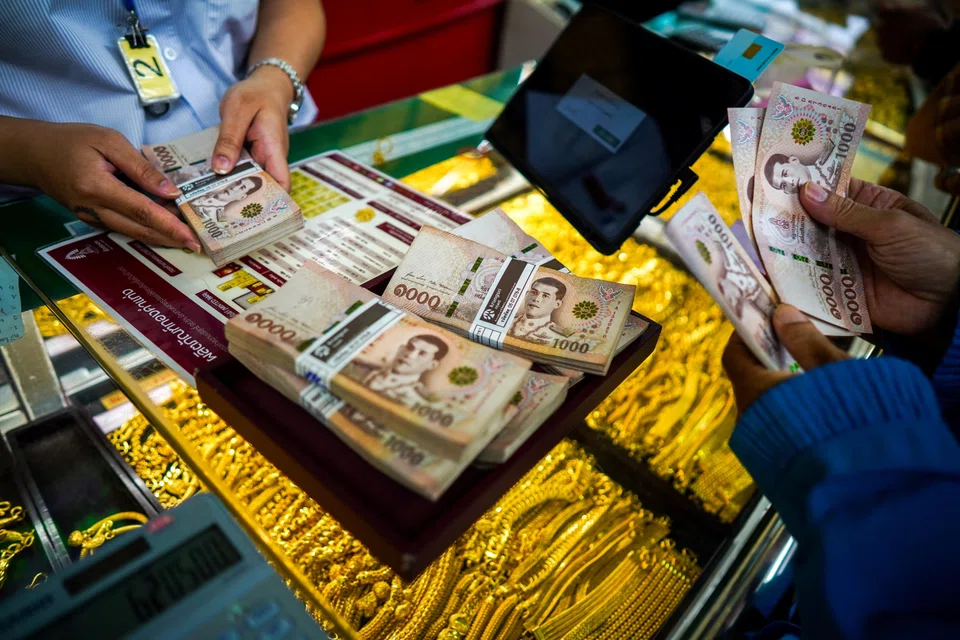
[BANGKOK] Thailand’s finance ministry is considering a tax on online gold transactions and will explore measures to limit trading volumes by the biggest traders, officials said on Tuesday (Dec 23), as they try to tackle a surge in the baht currency.
The baht has gained by 10.3 per cent against the US dollar so far this year to become Asia’s best-performing currency, and it is now at its highest level against the US dollar in more than four years.
The baht’s rapid appreciation has undermined the competitiveness of the export and tourism sectors in South-east Asia’s second-largest economy, which has been struggling with multiple challenges like US tariffs, high household debt, a border conflict with Cambodia and political uncertainty ahead of elections on Feb 8.
Traders selling gold, which has climbed more than 70 per cent this year, in US dollars in foreign markets are then selling the US currency for baht.
Senior finance ministry official Lavaron Sangsnit said the revenue department would look into imposing a specific business tax on gold trading conducted via online platforms, and would also consider new rules to force such platforms to report transaction data to tax authorities, similar to existing e-commerce platforms.
The central bank will also study measures to cap the volume of transactions on digital gold trading platforms, he said.
Gold tax could hurt sector, might not cool baht surge
Gold traders have expressed their opposition to any tax on gold trading, saying it would harm the sector.
“If a tax is imposed, gold trading will likely decline, and there could be a broad impact as online trading is very large,” said Jitti Tangsithpakdi, president of the Thai Gold Traders Association.
“There was no mention of this yesterday,” he said, referring to a meeting the association held with the central bank.
SEE ALSO




Poon Panichpibool, market strategist at Krungthai Bank, said that while the measures might help the baht somewhat, they would not solve the problem.
“Even if a tax is imposed, if people still see upside, they will keep trading,” he said. “It depends on how strong the upside for gold will be. If I have to predict, next year gold trading will likely drop anyway because the upside is reducing”.
Baht’s rise ‘not reflecting economic fundamentals’
The Thai baht’s gains against the US dollar are being driven by “huge” gold trading volumes, with its rise not in line with fundamentals, Central Bank governor Vitai Ratanakorn told the same briefing.
“The trading volumes are immense, and the baht’s rise is not reflecting economic fundamentals,” he said, adding gold transactions by large traders could be equivalent to 50 per cent of GDP this year.
“We have to admit that the strong baht is impacting the economy. Our current approach is very proactive,” Vitai said.
The central bank will manage unusually large gold transactions conducted in baht and expects to set limits on gold trading volumes for major traders around the middle of next month, Vitai said, adding the measures will not affect traditional gold shop transactions.
Vitai reiterated that there were no plans to impose any aggressive capital control measures and said the central bank was hopeful that the measures on gold trading would help ease the currency’s strength.
The central bank said earlier that it had moved to contain the rapid gains in the baht, ordering tighter scrutiny of foreign exchange transactions linked to gold trading and instructing commercial banks to closely monitor foreign currency inflows.
Earlier, Finance Minister Ekniti Nitithanprapas said the baht was too strong and was hurting Thailand’s economy. REUTERS
Decoding Asia newsletter: your guide to navigating Asia in a new global order. Sign up here to get Decoding Asia newsletter. Delivered to your inbox. Free.
Share with us your feedback on BT's products and services