



Thailand to introduce gold trade cap to curb baht rise, central bank chief says
Daily gold trading through online platforms will likely be capped at 50 million baht or 100 million baht per account
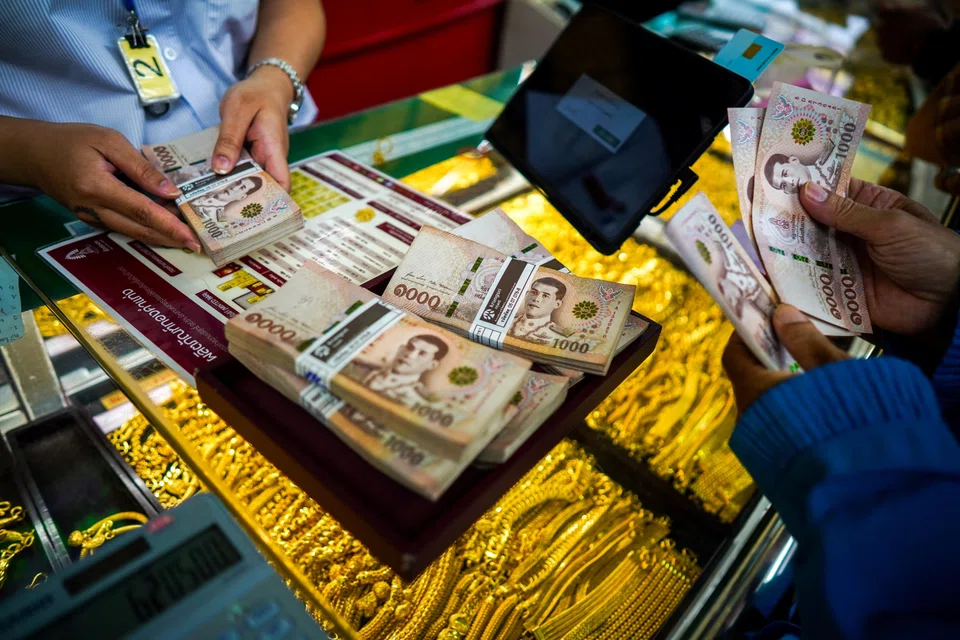
[BANGKOK] Thailand will introduce a cap on online gold trading by Jan 29 in a bid to stabilise its surging baht currency, the central bank said on Wednesday (Jan 21).
The central bank has blamed gold trading for driving up the baht, which has gained 1.2 per cent against the US dollar so far this year after a 9 per cent rise in 2025, threatening the competitiveness of the export and tourism sectors.
Daily gold trading through online platforms will likely be capped at 50 million baht (S$2.1 million) or 100 million baht per account, Vitai Ratanakorn told reporters.
The rules will not take effect immediately as gold traders are given time to upgrade their applications.
The new rules are expected to reduce volatility and upward pressure on the baht, but they might not weaken the currency immediately, Vitai said.
The central bank will assess the impact of the gold measures before considering whether a specific business tax on gold trading is necessary, he said.
“If it’s not necessary, (we) prefer not to use tax measures,” he said.
The central bank wants the baht to weaken and align with the country’s economic fundamentals, Vitai said, adding that it has already been purchasing US dollars.
But its capacity to intervene is limited due to rules about currency manipulation, with the bank only able to operate in the onshore market, which accounts for just 40 per cent of total foreign exchange transactions, Vitai said.
SEE ALSO


He said the sharp appreciation of the baht over the past three to four days has been driven by gold trading and foreign fund inflows.
But fundamental factors, including geopolitical developments and an ongoing shift away from the US dollar, remain the key drivers behind the baht’s recent strengthening, he added.
On Tuesday, the central bank also eased income repatriation rules, raising the threshold to US$10 million per transaction from the previous US$1 million to ease upward pressure on the baht. REUTERS
Decoding Asia newsletter: your guide to navigating Asia in a new global order. Sign up here to get Decoding Asia newsletter. Delivered to your inbox. Free.
Share with us your feedback on BT's products and services
TRENDING NOW

Once staunchly pro-China, Malaysian Chinese businesses are now distancing themselves from Beijing

Looking beyond looming CEO succession, should UOB potentially pursue a transformative merger?

Could stablecoins be the future of money?

Grab CEO’s wife Chloe Tong on life with Anthony Tan and finding her purpose

