



Thailand lifts cap on forex repatriation to temper baht rally
Thai individuals and businesses can now retain up to US$10 million per transaction in overseas income
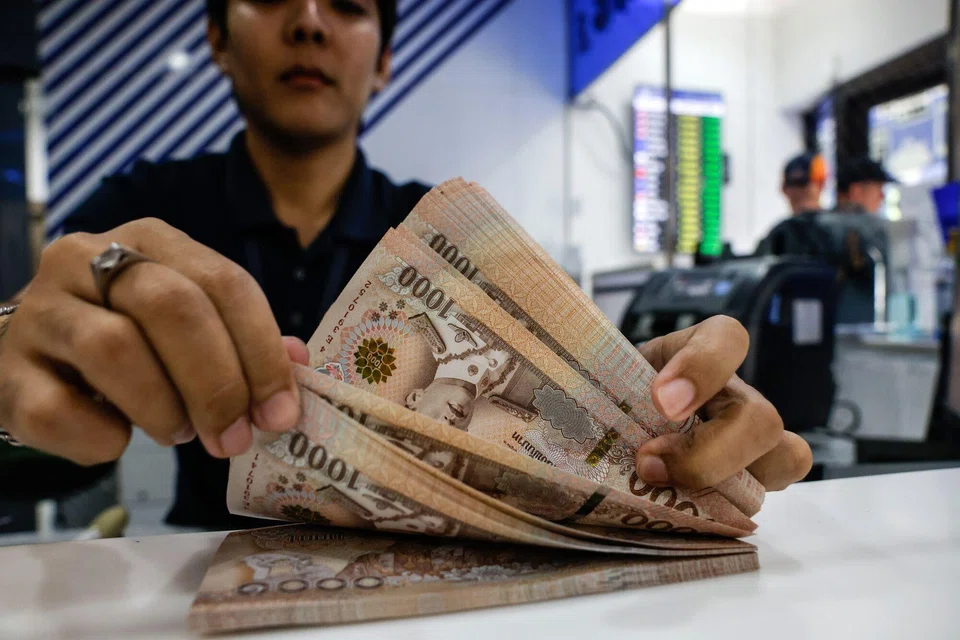
[BANGKOK] Thailand is loosening rules on bringing foreign earnings home, lifting the threshold by tenfold as authorities step up efforts to rein in the baht, which is trading near a five-year high.
Thai individuals and businesses can now retain up to US$10 million per transaction in overseas income, up from US$1 million previously, Pimpan Charoenkwan, Bank of Thailand’s (BOT) assistant governor for the financial markets group, said in a statement on Tuesday (Jan 20). Transactions below the new threshold account for about 92 per cent of the total export value, the bank said.
The change, effective on Jan 19, enables earnings in the US currency to be managed without immediately converting them into baht, helping ease pressure on the Thai currency, cut cross-border transaction costs and improve flexibility, the central bank said.
“This measure will help reduce upward pressure on the baht, as businesses can use US dollars to pay for goods or hold onto them for further management without having to convert US dollars into baht,” Pimpan said in the statement.
The move is part of a broader push by the Bank of Thailand to restrain baht strength that it views as not aligned with economic fundamentals. The currency has climbed 1.4 per cent against the US dollar to emerge as the best performer in Asia so far this year, extending its 8 per cent gain last year. The baht held gains of 0.6 per cent against the US dollar after the BOT announcement.
The central bank has already tightened scrutiny of foreign-currency inflows and stepped up oversight of gold transactions, citing concerns that the baht’s close correlation with bullion prices has been a factor behind the currency’s rally.
SEE ALSO



Pimpan said the bank is moving to empower foreign-exchange control officers to request information on gold trading.
It’s also considering setting daily caps of between 20 million to 100 million baht per customer on baht-denominated bullion trading through online platforms to ease pressure on the local currency. BLOOMBERG
Decoding Asia newsletter: your guide to navigating Asia in a new global order. Sign up here to get Decoding Asia newsletter. Delivered to your inbox. Free.
Share with us your feedback on BT's products and services
TRENDING NOW

Once staunchly pro-China, Malaysian Chinese businesses are now distancing themselves from Beijing

Looking beyond looming CEO succession, should UOB potentially pursue a transformative merger?

Could stablecoins be the future of money?

Grab CEO’s wife Chloe Tong on life with Anthony Tan and finding her purpose

