



Thailand pushes EU free trade deal to reduce US reliance
Years of political instability have slowed the South-east Asian country’s trade agenda
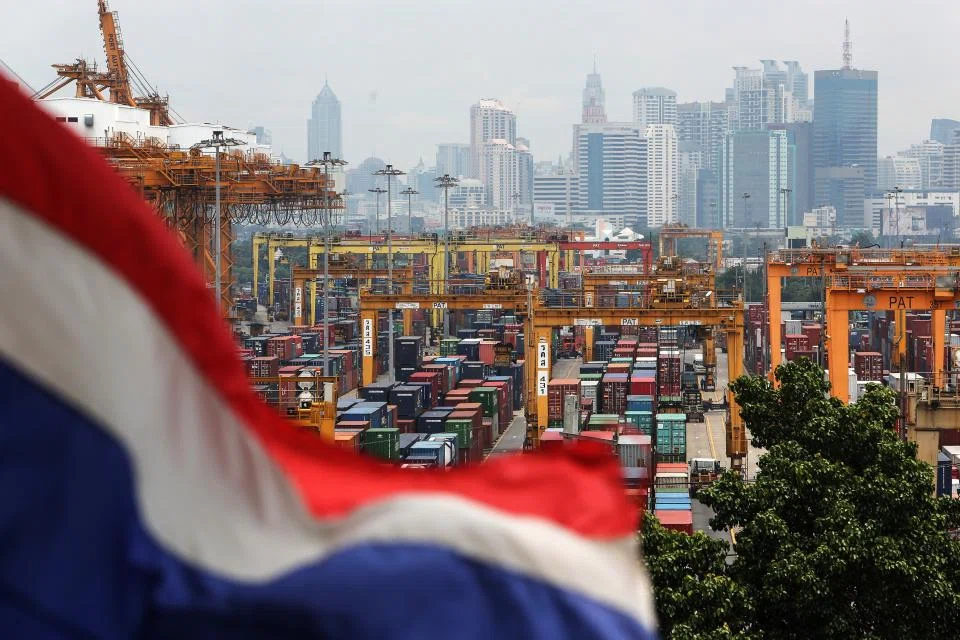
[BANGKOK] Thailand is racing to secure a free-trade agreement (FTA) with the European Union as uncertainty over US tariffs pushes countries to forge new economic partnerships, according to a top trade official.
“The reason why we are accelerating the EU FTA so much is because we want to diversify as quickly as possible,” Thai Trade Representative Werapong Prapha said in Bangkok. “Less reliance on Chinese supply chains and US supply chains.”
His comments offer one of the clearest indications yet that Thailand views an EU agreement as part of a broader strategy to navigate an increasingly fragmented global trading system shaped by geopolitical tensions and levy disputes.
Thailand is currently negotiating with US President Donald Trump’s administration over tariff measures and is hoping to secure treatment comparable to other South-east Asian economies. But Werapong said that the broader lesson from recent trade tensions is the need to build alternative partnerships.
“The largest exporter has weaponised exports and the largest importer has weaponised imports,” he said, referring to escalating trade tensions among major economies. “The rest of the world has to be very adaptive.”
For Thailand, that means moving quickly to secure access to large, stable regions such as the EU, home to more than 450 million consumers versus about 340 million in the US, Thailand’s largest export market. The EU is Thailand’s fourth-largest trading partner.
Thai Prime Minister Anutin Charnvirakul’s government is aiming to reach a conclusion on the agreement by the end of the year. Negotiators are set to meet in Brussels later this month for a ninth round of talks. So far, Thailand and the EU have completed negotiations on 11 of 24 chapters.
“We have done the base camp,” Werapong said. “The final peak will be four or five issues that are going to be very challenging.”
The toughest things left to negotiate include government procurement, intellectual property, agricultural market access, manufacturing and energy, he said. Pharmaceutical patent protections and agricultural tariffs remain particularly sensitive, and Thailand will seek transition periods and support measures for sectors that could face increased competition.
“We have six more months. Full steam ahead,” he said, while stressing that speed cannot come at the expense of national interests.
The push also reflects concerns that Thailand risks falling behind regional peers that already enjoy preferential access to Europe. Vietnam and Singapore already have trade agreements with the EU, while Indonesia reached a political agreement with the bloc last year. Malaysia and the Philippines are also moving towards completion.
Years of political instability have slowed Thailand’s trade agenda. Negotiations made little progress during recent periods of domestic political uncertainty, Werapong said, adding the government is now trying to regain momentum.
“When I say Thailand is back, we are back to engage at the political level,” he said. “We do not want to be someone who sits back and says the world changed but Thailand did nothing. We want to be at the table.” BLOOMBERG
Decoding Asia newsletter: your guide to navigating Asia in a new global order. Sign up here to get Decoding Asia newsletter. Delivered to your inbox. Free.
Share with us your feedback on BT's products and services
TRENDING NOW

Once staunchly pro-China, Malaysian Chinese businesses are now distancing themselves from Beijing

Looking beyond looming CEO succession, should UOB potentially pursue a transformative merger?

Could stablecoins be the future of money?

Grab CEO’s wife Chloe Tong on life with Anthony Tan and finding her purpose

