



Thailand sees weaker growth, higher inflation on Middle East crisis
Headline inflation will average 3% this year, the top end of the central bank’s 1%-to-3% target range
[BANGKOK] Thailand expects the Middle East conflict to weaken economic growth and fuel inflation, underscoring the need for more fiscal support to shield consumers and businesses from a worsening energy crisis.
The Finance Ministry slashed its growth estimate for this year to 1.6 per cent from the 2 per cent it predicted in January, as officials sharply raised the forecast for crude oil prices to US$91 per barrel from US$57.5.
Headline inflation will average 3 per cent this year, the top end of the central bank’s 1 to 3 per cent target range, the ministry said on Tuesday (Apr 28), adding a stagflation scenario was unlikely given the positive momentum in trade and state spending supporting growth.
The baht extended its losses, falling 0.7 per cent against the US dollar, after the ministry cut its growth forecasts. The Thai currency has weakened more than 4 per cent since the start of the Iran war, the second-worst performer among emerging-market currencies, due to the country’s heavy reliance on oil imports.
The downgrade came a day before the Bank of Thailand is scheduled to decide on interest rate with all participants in a Bloomberg survey expecting the central bank to stand pat. On Tuesday, Finance Minister Ekniti Nitithanprapas said the government is working on a cash handout to boost consumption and support the broader economy.
For Thailand, the Middle East conflict is translating into a familiar external squeeze, with higher oil and gas prices feeding directly into import costs, as the country relies heavily on foreign energy. Surging fuel bills are eroding real incomes and weighing on domestic demand just as growth is already softening, limiting policymakers’ options.
The finance ministry and the central bank are closely monitoring inflation to coordinate their policy response, Vinit Visessuvanapoom, director-general of the Fiscal Policy Office, said at a briefing. Continued expansion in exports and government spending are helping cushion the impact of the Middle East war on the economy, he said.
“Fiscal policy is expected to play a more important role in supporting growth,” the ministry said in a statement. “While adhering to fiscal discipline, the government stands ready to adopt accommodative measures if necessary,” it said.
Thailand’s merchandise exports may grow 6.2 per cent this year, more than the 1 per cent predicted in January, while imports may climb 13.9 per cent.
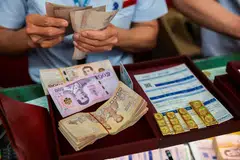


The current account surplus is set to narrow to US$6 billion from US$12 billion previously projected and US$15.9 billion last year, which may weigh on the foreign exchange rate. The baht is seen to average 32 per US dollar for 2026, compared to 31.78 so far this year. The currency was at 32.51 per US dollar in early afternoon trading on Tuesday.
Thailand’s tourism sector, a key pillar of the economy, is set to face headwinds due to a declining number of visitors from the Middle East and Europe, as well as increasing competition from countries like Vietnam and South Korea. Foreign tourist arrivals are expected to total 33.5 million, down from 35.5 million the finance ministry predicted in January. BLOOMBERG
Decoding Asia newsletter: your guide to navigating Asia in a new global order. Sign up here to get Decoding Asia newsletter. Delivered to your inbox. Free.
Share with us your feedback on BT's products and services
TRENDING NOW
Companies still in search of AI use cases with worthwhile ROI, says Broadcom’s CEO

Malaysian king buys stake in Singapore-listed mining firm expanding into rare earths

Once staunchly pro-China, Malaysian Chinese businesses are now distancing themselves from Beijing
Singapore’s wealth management success should extend to everyday families

