Thailand signals baht intervention room after US puts it on currency watchlist
The central bank still retains the ability to curb excessive foreign-exchange volatility
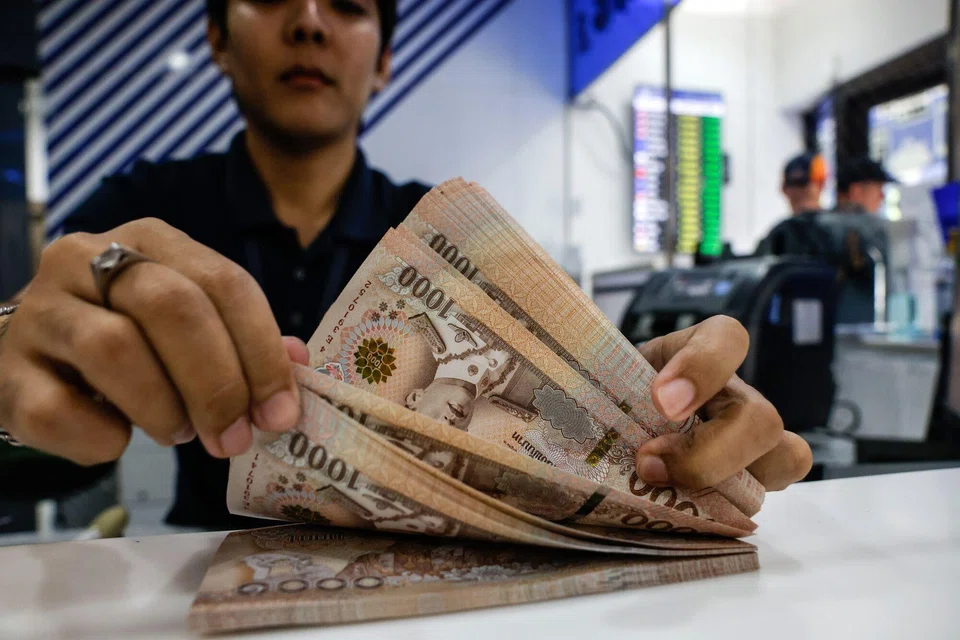
[BANGKOK] Thailand’s central bank said it still has scope to manage the baht even after the US added the country to a monitoring list for potential currency manipulators.
Bank of Thailand (BOT) assistant governor Chayawadee Chai-Anant told reporters on Friday (Jan 30) in Bangkok that “it may be quite difficult” for Thailand to be designated as a currency manipulator, and that the central bank has maintained regular communication with the US Treasury.
Her comments followed the US’s decision to place Thailand on its list of “major trading partners whose currency practices and macroeconomic policies merit close attention.”
Thailand met the criteria because of its trade and current-account surpluses, Chayawadee said, adding that the bank still retains the ability to curb excessive foreign-exchange volatility.
“According to the US Treasury, Thailand’s approach to foreign exchange intervention since 2021 has indeed been broadly symmetrical, with the Bank of Thailand entering the market to resist sharp swings in both depreciation and appreciation pressures,” Rohit Garg, a strategist at Citigroup wrote in a note to clients. “This should help reduce the focus on BOT’s FX interventions for the time being.”
Gold trading
Separately, the Bank of Thailand said it is tightening rules for online gold trading to curb speculative activity that can amplify swings in the baht.
The move comes as rising gold prices and a weaker US dollar have spurred gold selling by Thai investors, boosting foreign-currency inflows and adding upward pressure on the currency.
Under the new rules, effective Mar 1, online platforms will face stricter settlement and reporting requirements, including bans on net settlement and short selling. Investors will be required to sell only gold they physically own, transactions must be settled electronically, and cash payments will be prohibited.
The central bank said the measures are aimed at improving transparency, ensuring trades are backed by real assets and limiting risks to financial stability.
SEE ALSO



Starting Mar 1, the bank will also cap baht-denominated online gold trading at 50 million baht a day. BLOOMBERG
Decoding Asia newsletter: your guide to navigating Asia in a new global order. Sign up here to get Decoding Asia newsletter. Delivered to your inbox. Free.
Share with us your feedback on BT's products and services