As Thailand’s EV adoption grows, its automotive market wrestles with aftershocks
China EVs have brought price wars, consumer uncertainty and infrastructure concerns


[SINGAPORE] Imagine buying a car only to see the price slashed by 30 per cent months later.
That is the conundrum that Thailand’s consumers are facing.
China’s electric vehicles (EVs) are commanding an increasing share of the kingdom’s market by offering new technologies at low prices – growing their slice of the pie even as Thailand’s automotive market shrinks amid high household debt, tighter credit lines and macroeconomic headwinds.
This influx is proving to be a disruptive force in one of South-east Asia’s largest auto markets, where China EVs have sparked a price war and ignited concerns over asset depreciation and brand longevity.
The inflow of EV makers also means that Thailand’s predominantly internal combustion engine-focused manufacturing ecosystem – a major contributor to the economy – could be left behind in an industry that is changing rapidly.
China drives change
Based on data from the Federation of Thai Industries, EV sales accounted for around 17 per cent of vehicle sales, or 81,381 units, in the first nine months of 2025. This was out of a total of 477,969 vehicles.
The proportion was also up from 11.9 per cent of 572,675 vehicles registered in 2024, and 9 per cent of the 775,780 cars in 2023.
Chinese EVs account for over 75 per cent of EVs sold in Thailand, the International Energy Agency indicated. Sales are expected to surpass 100,000 units this year, helped by new model launches and aggressive pricing.
Thailand wants to become a major EV producer by 2030, with 30 per cent of its automotive output electric.
Under its EV policy, launched in 2022, the kingdom allowed duty-free imports under the condition that the domestic EV output of automakers matched the number of imports by 2024.
In 2025, this ratio stands at 1.5 units for every imported unit, and it is expected to rise to 3:1 in 2027.
This has lured Chinese carmakers to begin production in the country. BYD, Great Wall Motor and Neta began manufacturing units in Thailand in 2024, and Changan Automobile and Chery are expected to begin this year.
But China’s carmakers have brought unwanted baggage with them, including intense competition that could end up forcing smaller players out and hurting consumer confidence.
Neta is a key example. At its peak in 2023, it sold around 13,000 cars and took about 20 per cent of the EV market in Thailand. But in 2024, its sales plunged to around just 7,900 vehicles.
It has also struggled with after-sales services and spare parts shortages. Some customers have reportedly waited more than six months for repairs or insurance claims to be resolved.
In June, Neta’s dealer network was said to have shrunk to 53 from 66, with one dealer closing more than eight showrooms or service locations. Some dealers have also taken legal action as vehicle deliveries faltered.
Thailand could be Neta’s final play in the region, too: It has already ceased sales in Singapore and Malaysia. “You need to scale and have the breadth to sustain all the infrastructure costs to sustain a brand. I think that’s the part where being sub-scale really hurts you,” said Eugene Hsiao, the head of China equity strategy for China autos at Macquarie Bank.
He explained that while automakers could simply make cars in China and sell them in Thailand or even produce them in the South-east Asian country – as in Neta’s case – they also need to be able to weather the costs of building up after-sales service support for consumers. This ranges from maintenance to insurance.
Losers of the price war
In Thailand, China’s EV brands are replicating strategies from their home market – such as boosting sales through price wars.
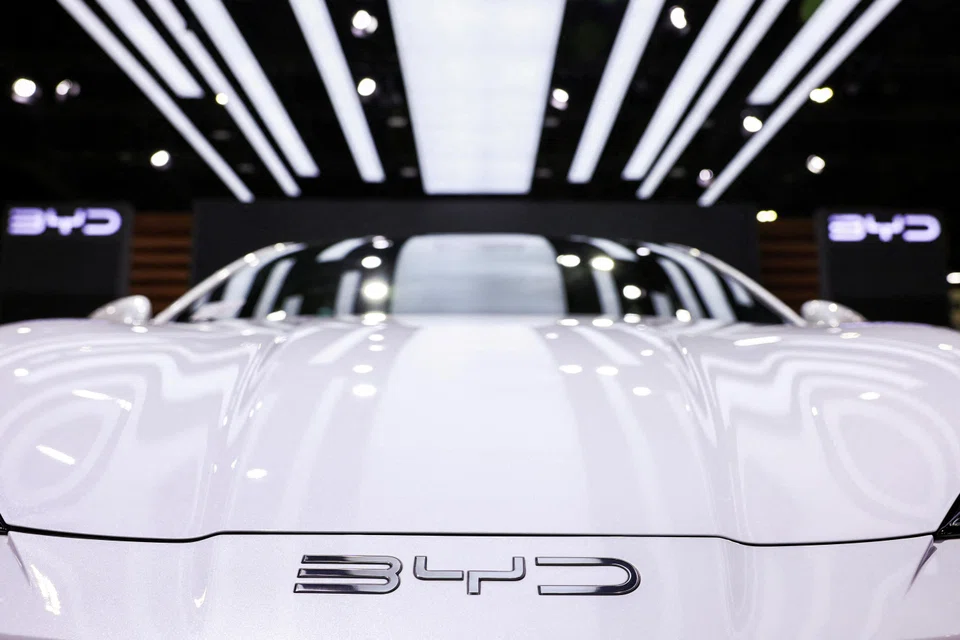
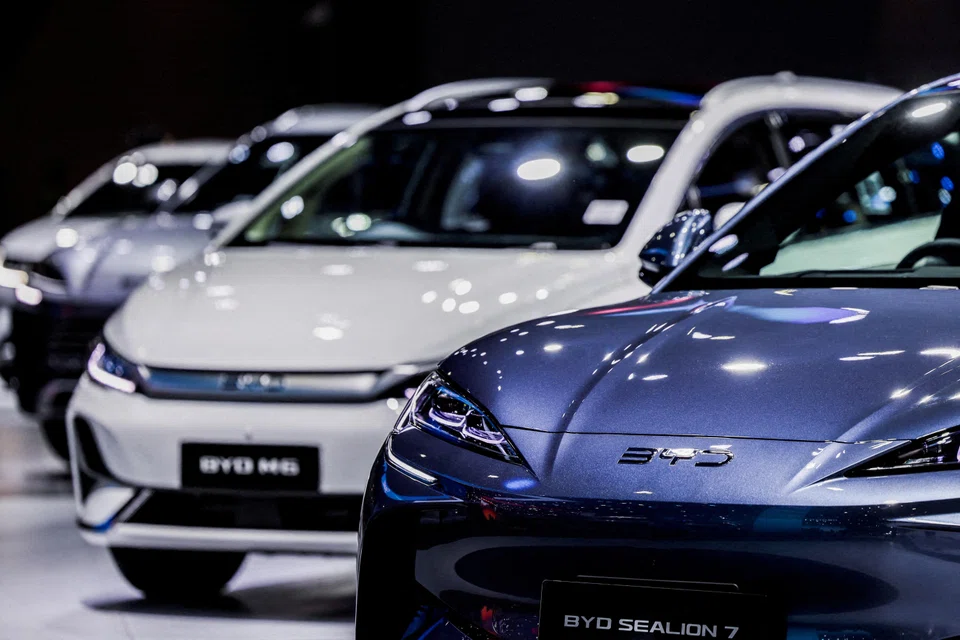
On Oct 2, EV market leader BYD slashed the prices of its imported Seal electric sedan by as much as 36 per cent, with the car’s price starting from 849,900 baht (S$33,752).
Media reports in June said Neta was selling its V-II electric hatchback for less than half of its 569,000 baht list price to clear its stock of the units.
“For situations like Neta’s, if you asked me, are people worried? I would say yes. However, in this price range, the value they’re getting from the car is attractive enough to take the risk,” said Aticharn Cherngchavano, editor of Thai automotive and tech publication spin9.
While China carmakers may have started the price war, others have to respond regardless of power train, said Archanun Kohpaiboon, an associate professor of economics at Thammasat University.
“These vehicles are still competing with each other. (Brands) can’t just say: ‘Oh this is electric, I don’t need to worry about it, I can stay calm,’” he added.
More than just factories
While BYD celebrated the production of its 10,000th vehicle in its Rayong plant last November and has begun exporting cars to Europe, other brands in Thailand have outlooks that are not as rosy.
There is also concern about how quickly the kingdom’s non-EV focused automotive ecosystem can shift. Suzuki and Subaru, for instance, have announced plans to cease production in the country and at least one Honda plant there has closed.
The auto manufacturing sector makes up 10 per cent of Thailand’s gross domestic product and contributes about 850,000 jobs, based on data from the International Labour Organization.
But much of the manufacturing has historically been dominated by Japanese brands focused on internal combustion engines and hybrid-electric cars.
“The rapid increase in Chinese EVs is hurting traditional car manufacturers and parts suppliers,” noted Oracha Sakunbunma, principal analyst for Asean sales forecasting at S&P Global Mobility.
“EVs have fewer parts and need less maintenance. Workers who build engines could lose their jobs.”
Prof Archanun said the Thai government should try to encourage China carmakers to work with Thai suppliers and the entire industry.
“Otherwise, it’s going to be a case of bringing the whole supply chain from China to create a closed Chinese network, which Thai firms and other suppliers cannot gain access to,” he added.
But if Thailand can manage this transition well, it could export EVs to the rest of the world, benefiting from a lack of the tariffs hindering Chinese manufacturers’ expansion into Western markets, the academic said.
Macquarie’s Hsiao noted that EV makers could even have a “dual benefit” by producing in Thailand. “You get the better incentive to sell in Thailand, and you can skirt some of the tariff issues in (the) geographies where you want to export.”
Discover how the EV journey is unfolding across South-east Asia in our interactive here.