



Thailand’s new government faces tough choices on green energy
Critics argue that a policy to boost renewable energy, as currently framed, disproportionately favours large energy conglomerates over smaller players
[BANGKOK] Thailand’s new government is preparing to approve a transformative Power Development Plan (PDP) in October, aiming to catapult renewable energy (RE) from 22 per cent of the country’s power supply to an ambitious 51 per cent by 2037.
The updated policy, a key step towards achieving carbon neutrality by 2050 and net-zero emissions by 2065, aims to align the country’s domestic energy goals with its international climate commitments.
The urgency of the plan is underscored by external pressures, notably the European Union’s Carbon Border Adjustment Mechanism (CBAM), which will impose carbon tariffs on emissions-intensive imports from 2026.
Without accelerated investment in RE infrastructure, Thailand could face significant challenges in maintaining access to key export markets, warn experts.
“The CBAM is the immediate issue,” said Dr Areeporn Asawinpongphan, research fellow (energy policy) at independent think tank Thailand Development Research Institute, adding that delayed action on RE auctions could lead to dire consequences – a “nightmare” – for the country.
But while the RE targets are bold, the approach has drawn mixed reactions, especially from energy experts who question its inclusivity and balance.
Critics argue that the PDP, as currently framed, disproportionately favours large energy conglomerates while offering less support for smaller players, such as private rooftop solar producers, who could have a pivotal role in decentralised clean-energy generation.
The challenge, say industry players, lies in whether the plan’s structure truly enables smaller energy providers to flourish alongside giants.
Large energy-surplus margins
Currently, fossil fuels make up 78 per cent of Thailand’s energy mix, with natural gas contributing 59 per cent and coal and lignite accounting for 19 per cent. RE sources comprise the remaining 22 per cent, split between hydropower at 10.9 per cent and wind, biogas, and solar at 11.1 per cent.
By 2037, under the PDP, the energy mix is expected to shift to 49 per cent fossil fuels, largely comprising natural gas, and 51 per cent renewable energy.
Thailand’s total installed capacity for generating electricity is set to increase significantly, rising from 54.546 gigawatts (GW) in 2023 to 112.391 GW by 2037. During the same period, the reserve margin will also see a substantial jump, growing from 40 per cent to an enormous 106 per cent by 2037.
Government agencies consider the massive reserve margins necessary to ensure energy supply stability, which becomes more challenging as a country transitions to more RE sources. Solar power is limited to daytime, wind energy is unpredictable, and hydropower can be affected by droughts.
“Conventional power plants provide reliable and consistent power supply, which is essential for maintaining grid stability, especially during periods of high demand or when RE resources are not producing at their maximum capacity, for example at night,” said a spokesperson from the Electricity Generating Authority of Thailand (EGAT) in response to The Business Times’ queries.
EGAT is the state enterprise that owns the grid, several power plants and sets electricity prices in Thailand.
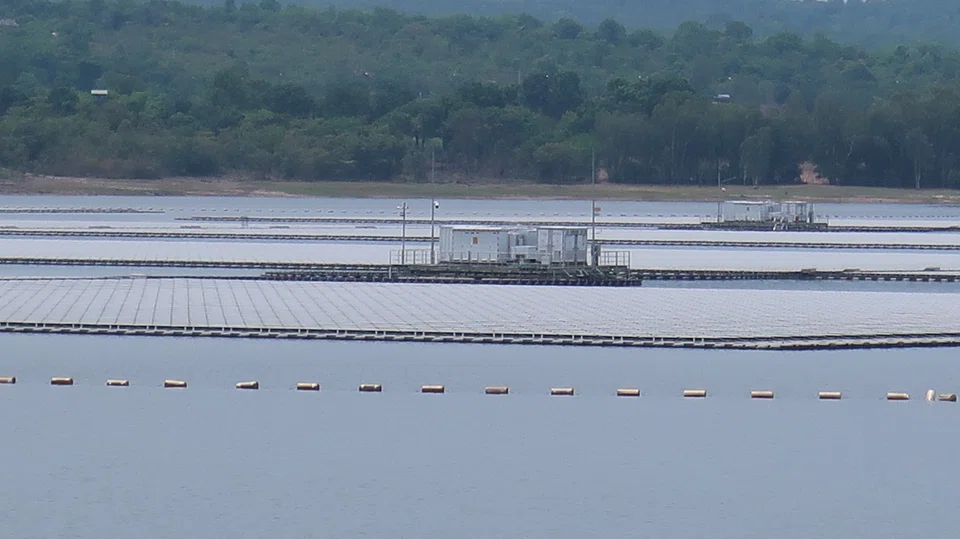
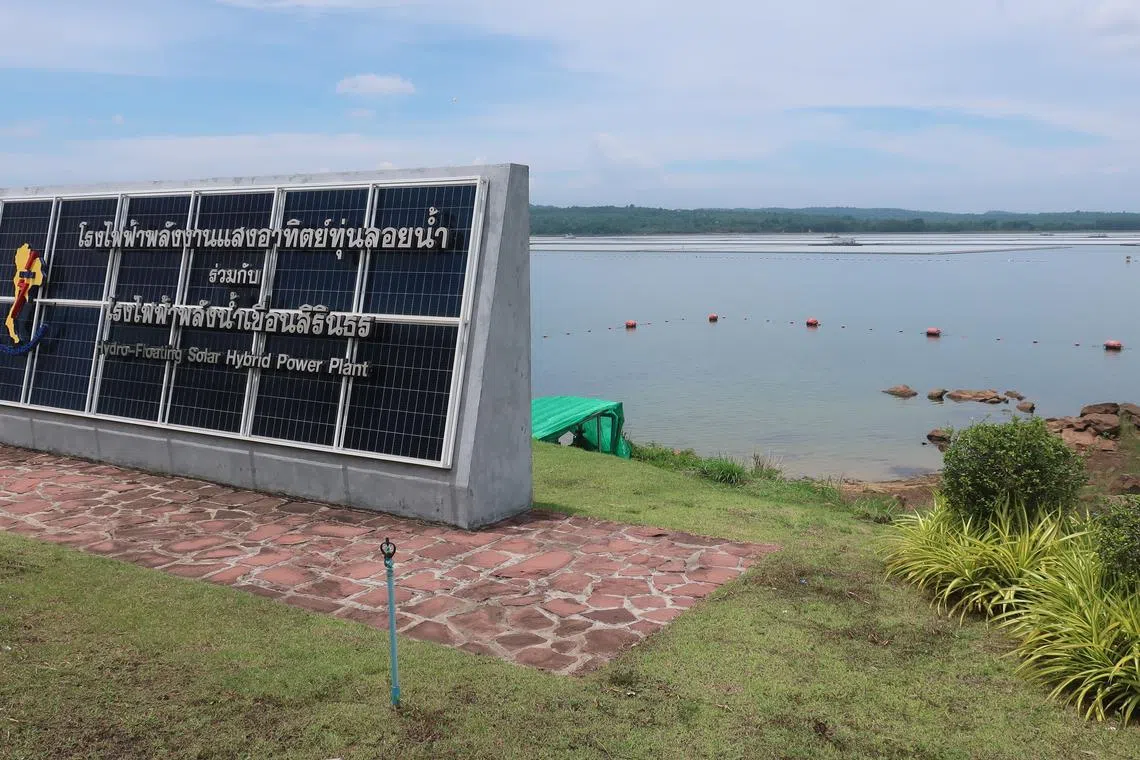
On its part, it is investing in floating solar farms across 15 of its hydro-electric dams, which will eventually contribute 2.725 GW to the national grid.
To meet the 51 per cent RE target by 2037, Thailand will need to construct a significant number of new facilities, with the majority focusing on solar and wind energy, and depend on biomass and hydropower imports from Laos.
During the same period, an additional 6.3 GW of natural gas-fired plants will be commissioned to ensure grid stability, which is considered crucial for attracting foreign investments in energy-intensive sectors such as data storage centres. Currently, Thailand has 59 data centres with a total capacity of 66 megawatts, according to Cushman & Wakefield data.
A balancing game
Despite the focus on renewables, the PDP leans heavily on natural gas as a transitional fuel, raising concerns about Thailand’s carbon footprint before its RE transition is fully realised.
Energy experts note that new natural gas-powered plants might not be necessary if EGAT enhanced its flexibility in managing the grid, such as fluctuating the use of conventional power plants, allowing third-party access to its grid, and investing in battery storage.
The PDP does not call for the closure of coal power but puts a moratorium on new coal plants, while increasing natural gas-based power.
But if auctions of natural gas-fired plants are prioritised by the government led by Paetongtarn Shinawatra over the next couple of years, Thailand’s carbon footprint will get bigger before it gets smaller.
To boost its natural gas supply, Thailand has been turning to liquefied natural gas (LNG) imports, with two LNG import terminals already in place and a third one under construction by Gulf Energy Development – one of Thailand’s largest private-sector energy conglomerates.
“Gulf Energy is building a third LNG terminal, which will start importing LNG in 2026-27; so there will be a big jump in LNG imports then,” said Dr Areeporn. “So they would like to make some money.”
Nearly all of Thailand’s big energy conglomerates, starting with the PTT, the national energy company, and EGAT, have invested heavily in natural gas or LNG-powered plants and will benefit from the country’s natural gas dependence, Dr Areeporn noted.
Third-party access – potential game changer
A key development closely watched by the energy sector is whether the new government will expedite the passage of the Third Party Access Framework Notification, drafted in 2022.
Third-party access would allow private power-plant owners to directly use EGAT’s electricity grid to supply their customers, bypassing the current requirement to sell power to EGAT first.
This is expected to primarily benefit small power producers that generate electricity from solar, wind, and biogas, especially those supplying to factories striving for 100 per cent RE dependence.
It could also enhance the competitiveness of Thailand’s Eastern Economic Corridor, where the government has been promoting foreign investment in high-tech industries such as electric vehicles, electronics, and data service centres, all of which rely on consistent energy supply.
“Now, solar farms are not allowed to sell their electricity through the transmission line,” said Chokchai Montreeamornchet, vice-president of SCG Cleanergy Co – a provider of clean-energy services focused on industrial use.
That would change if the third-party access law is passed, which would be good news for solar farms and for clean-energy system providers such as SCG Clenergy. So now everyone is waiting for the government to pass the law, added Chokchai.






