



Thailand's NRF targets global plant-based food platform
Bangkok
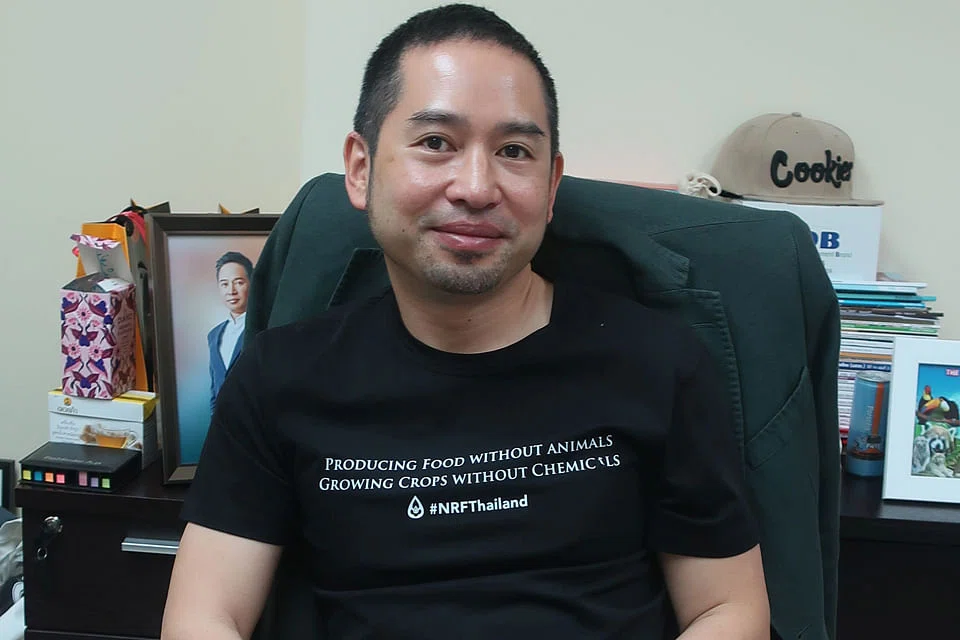
DAN Pathomvanich, the chief executive officer of NR Instant Produce (NRF), is best described as a venture capitalist turned "mission-driven capitalist."
The 47-year-old has a vision to transform NRF - a company that listed on the Stock Exchange of Thailand (SET) in October 2020 - into the world's leading co-manufacturer of plant-based foods, or what's better known as alternative proteins.
His capitalist transition started with the purchase of NRF, a manufacturer and exporter of ethnic foods such as sauces and ready-made meals, which was acquired in 2017 by Hatton Capital Partners, run by his family. Hatton Capital is a Hong Kong-based private equity (PE) fund.
Prior to the NRF purchase, the Hatton group participated in more than US$1 billion worth of acquisitions, primarily in the consumer and food sectors, before seeking exits from their investments in classic PE fashion.
For example, Hatton Capital was one of several international investors in Bangkok Ranch Company - Thailand's leading duck meat products provider and exporter, before exiting the company in 2015 following its initial public offering (IPO) on the SET.
Pathomvanich described Hatton's investment strategy as opportunistic. "What we would typically do is club together with other PE funds to take over companies. We always had an exit strategy. Not so with NRF," he told The Business Times in a recent interview.
"Having been the CEO of NRF since 2017, it changed my entire perspective of what I wanted to do. I no longer want to be a capitalist. I want to be an impact capitalist, a mission-driven capitalist," he said, pulling out Klaus Schwab's book, Stakeholder Capitalism.
He attributes his change of heart to his young children, who didn't see much of him during his jet-setting pre-Covid days.
"I love doing deals, so I wasn't going to stop doing what I was doing but having said that, I want to make sure that whatever I do is worth my time away from my kids," he explained. "I want to have a positive impact on the world so when my kids grow up, they can look back on this time and feel proud of their dad."
To do so, Pathomvanich has embraced the threats of climate change and the future impact it is likely to have on the company's main food manufacturing business.
His strategy for NRF has been to make the company stand apart from its competitors as a leader in sustainability, in preparation for the changing global market.
"I believe that plant-based food is going to explode, because of regulatory reforms and consumer change. So in 2017, I declared that plant-based food was the future. We would go all out into alternative proteins," he said.
According to Euromonitor, demand for plant-based food is expected to grow to US$26 billion in sales in 2024, up from US$16 billion in 2019.
For NRF, Pathomvanich has set a target to grow sales by 50-60 per cent per annum between 2020-2023, or from 1.4 billion baht (S$58.4 million) in 2020 to 4-5 billion baht by 2023.
Although NRF's export performance faltered in the second quarter of 2021 due to the global container shortage, he is still expecting about 50 per cent growth "across all metrics" in 2021.
NRF's forward-looking strategy is partly prompted by fears of higher tariffs on carbon emitting products, such as the European Union's Carbon Border Adjustment Mechanism going into effect next year.
"Given the threat of 'carbon tax', NRF is pursuing a 'carbon negative footprint' platform in plant-based foods," noted a recent analysis of the company by Bualuang Securities.
As part of the mission Pathomvanich in 2017 launched a US$50 million accelerator, headquartered in New York with an office in Singapore, to invest in startups in the alternative protein space as part of his effort to create an eco-system for the plant-based food industry.
The accelerator has invested in more than 50 startups globally to date, with Singapore's Temasek Holdings as one of their partners.
After its successful IPO in 2020, which raised 1.56 billion baht and was 9 times oversubscribed by institutional investors, NRF has gone on an acquisition spree. It recently acquired a 25 per cent stake in the UK-based Plant & Bean Company, a leading alternative protein producer, and it is currently looking for potential investments in the US, Europe, Australia and China.
"My top priority is growing in the US market," Pathomvanich said. "It's the biggest market, for everything. The big mega trend at the moment is sustainable living."
While Thailand plays a lead role as one of NRF's core manufacturing hubs, Singapore also had a role in NRF's "future foods" ambitions.
"I think Singapore will be our regional and maybe even global headquarters for some of our businesses," Pathomvanich said. "Singapore's advantage is its tax and regulatory system, talent pool and R&D. Thailand's advantages are its agricultural inputs and labour."
As for 2022, Pathomvanich said: "It's going to be a great year for us," citing the subsiding of Covid-19 and secondly the take off of e-commerce since its acquisition of the US-based Boosted Ecommerce in 2019.
Decoding Asia newsletter: your guide to navigating Asia in a new global order. Sign up here to get Decoding Asia newsletter. Delivered to your inbox. Free.
Share with us your feedback on BT's products and services






