



Thailand’s push for virtual banking may cement dominance of the big boys
The country aims to spur competition, but the process may consolidate power among big players, as high capital requirements shut out smaller fintechs and stifle innovation
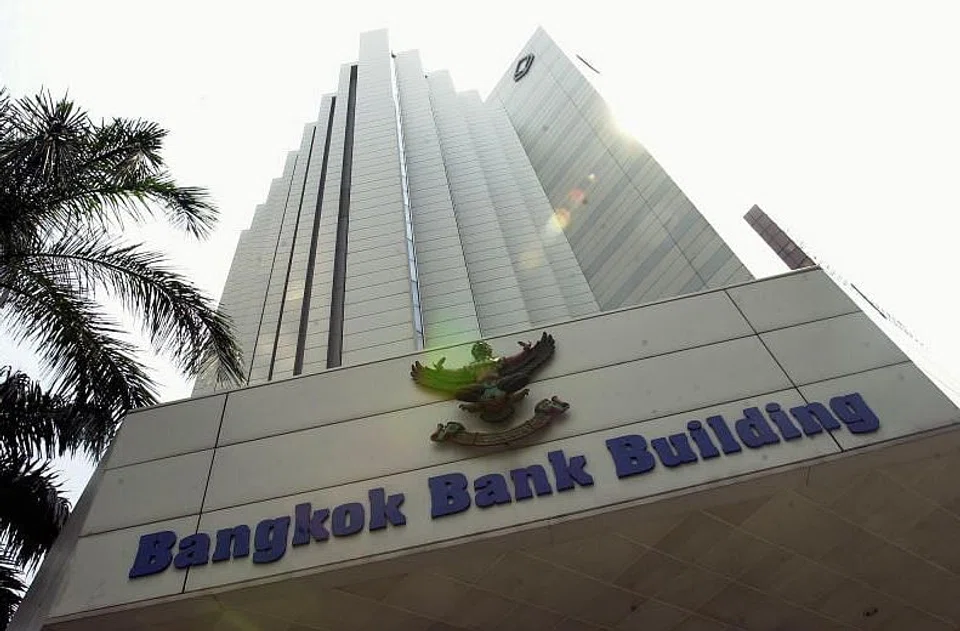
[BANGKOK] Thailand’s push for virtual banking, with three licences up for grabs, promises to improve financial access for the underbanked and boost competition.
However, the licensing process may instead reinforce the dominance of the country’s largest banks and conglomerates.
Three of the five applicants for the country’s first virtual bank licences are leading Thai banks – Krungthai Bank, Bangkok Bank and SCB X – which have all paired up with some of the country’s most powerful conglomerates.
In theory, the traditional banks are expected to compete with virtual banks by expanding their market base and offering more attractive digital banking services. However, given that these banks are the country’s sector bigwigs, the goal of the Bank of Thailand (BOT) – to increase competition – could be tested.
Pavida Pananond, a professor of international business at Thammasat University in Bangkok, said: “Three of the traditional banks have the opportunity to expand into a new segment. We might call this horizontal dominance.”
The BOT said on Sep 19 that it had received five applications for the country’s first virtual bank licences. The licences are expected to be issued in June 2025, with operations starting sometime in 2026.
Bangkok Bank, Thailand’s largest private commercial bank, has roped in the following partners:
- BTS Group, which operates Skytrain, Bangkok’s elevated mass rapid transit rail system, and owner of media affiliate VGI;
- Thailand Post, the country’s national postal service;
- Saha Group, a consumer goods conglomerate; and
- Singapore’s Sea Group, known for its Shopee e-commerce platform and Garena gaming services.
Krungthai Bank, the largest state-owned bank, has formed an alliance with Gulf Energy, and PTT Oil and Retail Business. Energy company Gulf Energy is the majority owner of AIS, Thailand’s largest GSM mobile phone operator; PTT Oil and Retail Business is the retail and coffee shop arm of PTT, Thailand’s national energy company.
SCB X, the holding company of SCB Bank, has joined hands with KakaoBank (South Korea’s largest digital bank), and WeBank (a global digital bank), in its bid for a licence.
The remaining two applicant groups are:
- Ascend Money (owned by CP Group) and Ant Group (an affiliate of Alibaba, which is a stakeholder in Ascend); and
- Lighthub Asset and WeLab (a pan-Asian fintech platform). Lighthub was co-founded by Chatchaval Jiaravanon, a nephew of CP Group senior chairman Dhanin Chearavanont, and owner of Fortune magazine, among other companies.
Prof Pavida remarked: “If you look at these five groups, it is pretty much a parade of who’s who in Thai business.”
The CP group, one of Thailand’s largest conglomerates, has diverse holdings in agroindustry (frozen chicken, shrimp, feedmeal), telecommunications (True) and retail (Makro, Lotus and 7-Eleven).
In the bigger scheme of things, the virtual banks are unlikely to result in market disruption.
Parson Singha, senior director of financial institutions at Fitch Ratings (Thailand), said: “The virtual banks will remain very small in the medium term as the initial capital will only be five billion baht (S$198 million), which inherently limits asset size, and will thus have a limited macro effect.”
The virtual bank licences are classified as Thai commercial banks and therefore subject to the standard foreign shareholder restrictions, or a 49 per cent maximum foreign holding.
Except for the foreign minority partners, there are no newcomers among the Thai applicants, which might threaten the financial status quo, at least in the medium term.
Analysts say the three bank-led consortiums are likely to be favoured by the BOT in their selection process, as the central bank has made clear that it will closely control the virtual banks by imposing the same controls that are already in place for commercial banks.
The BOT said in a January report on virtual banks that it would “supervise the virtual banks in a risk-proportionate manner, placing great importance on robust corporate governance and sound risk culture”.
It added: “(The virtual banks) should not initiate a race to the bottom, engage in irresponsible lending that leads to excessive debt-taking or abuse their dominant market position, which would pose risks to financial stability, depositors and consumers as a whole.”
A key objective of the virtual banks is to provide financial access to the unbanked.
Given that the virtual banks will have lower overhead expenses than their traditional counterparts, the assumption is that they will be able to lend to customers at lower rates and fees, while using digital data analysis to assess risk.
Fitch’s Singha said: “From a micro-economic view, these new banks will help many people have improved access to financial services – and that indeed may be sufficient rationale for them.”
He added: “But from a macro view, there are already high levels of financial penetration, and excessive amounts of indebtedness in Thailand. We are keeping an eye on the virtual banks, but generally think they should have limited impact in the sector over the next several years.”
Bualuang Securities has estimated that the potential market size for virtual banks, targeting the unbanked, underserved individuals and micro, small and medium-sized enterprises, exceeds three trillion baht.
By setting a high capital requirement of five billion baht, the central bank has effectively excluded small newcomer fintechs from entering the sector, prioritising overall financial stability and minimising the risk of potential bankruptcies.
The high capital requirement has limited the virtual bank applicants to Thailand’s big banks and giant conglomerates, which are increasingly dominating all aspects of the Thai economy.
“You can see the opportunities in digital banking for companies that already control mobile phones, with access to consumers, allowing them to have vertical dominance in the digital economy,” said Prof Pavida.






