Thailand’s rice woes lay bare when even durian brought in more foreign earnings in 2021
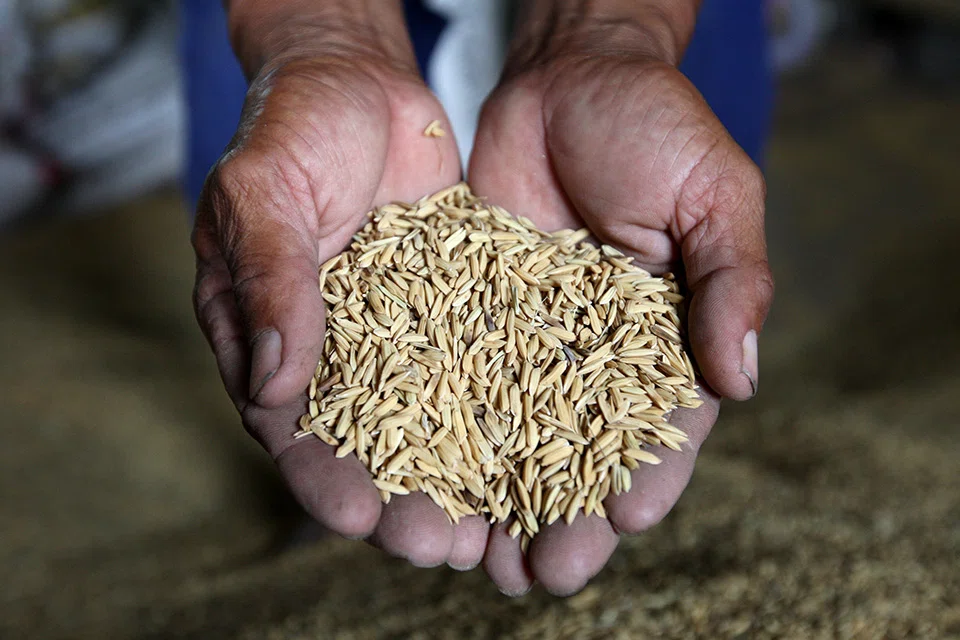
THAILAND’S foreign-exchange earnings from its rice exports fell below that of durians for the first time in 2021, with the stinky fruit expected to pip rice export revenue again this year.
According to latest figures from the Thai Chamber of Commerce, durian exports are expected to earn the country 200 billion baht (S$7.86 billion) for the whole of 2022, much higher than the rice exports’ haul of 120 billion baht. Last year, durians pulled in 187 billion baht in foreign exchange, compared with rice’s 107 billion baht.
The Thai Rice Exporters Association (TREA) recently downgraded its target for total rice exports in 2022 from 8 million to 7 million tonnes, despite the looming food crisis caused by the Russia-Ukraine war which threatens to reduce the world’s supply of wheat, the other main food staple.
“We exporte 3.5 million tonnes of rice between Jan 1 and Jun 18 this year, and unless the price comes down soon, I predict we will only be able to export another 3.5 million tonns by the end of the year,” said TREA honorary president Chookiat Ophaswongse.
Long gone are the days when Thailand could claim to be the world’s top rice exporter, a title it lost to India back in 2011 - the year which saw Thailand devastated by floods that wiped out crops in the central plains.
The natural disaster was then followed by a policy disaster in 2012, when the populist “paddy pledging” scheme went into effect. This involved the government’s purchase of rice from farmers at inflated prices, which ultimately undermined Thailand’s price competitiveness in the global rice market.
Price competitiveness remains an issue for Thai rice exports today. While global rice prices initially rose in March, following the outbreak of the Russia-Ukraine war when consumers in Asia rushed to stockpile the commodity, they have since flattened. In Thailand, the domestic price of rice has soared, resulting in higher prices for Thai rice exports.
“The speculation among the local (millers) has made the price go up dramatically,” said Chookiat.
The higher local costs are passed onto the export prices, which are now considerably above what is charged by Thailand’s two main rice competitors, India and Vietnam.
“Although the depreciation of the Thai baht this year is helping quite a lot, our price of rice is relatively high when compared with India,” said Chookiat. The price of rice in India, which is known to be heavily subsidised by the government, is about US$100 cheaper per tonne than Thai rice of similar grade.
In 2021, India exported about 19 million tonnes of rice - much higher than Thailand’s 6.1 million tonnes and Vietnam’s 6.5 million tonnes.
Vietnam has been slowly edging Thailand out of its higher-value jasmine rice markets abroad in destinations such as Hong Kong and Singapore, because their production costs are lower and the quality is similar.
“Thailand’s price is always high for jasmine and Vietnam’s price is US$200 to US$300 cheaper (per tonne),” said Chookiat.
In general, all the major rice exporting nations are enjoying an abundant local supply, thanks to favourable weather conditions this year.
The picture differs from the 2008 “food crisis,” when a shortfall in Australia’s wheat crops prompted both India and Vietnam to enforce bans on their rice exports, leading to a sharp rise in global rice prices. No such bans have been enforced in 2022 as yet, despite the Russia-Ukraine war and wheat shortages.
“India and Vietnam are unlikely to restrict their rice exports at this time because their rice outputs are still sufficient for both domestic consumption and exports,” said Kevalin Wangpichayasuk, an economist at the Kasikorn Research Center (KRC), a think tank.
While Thai rice exports are likely to rise only marginally this year to 7 million tonnes, from 6.1 million tonnes in 2021, Thailand’s other food exports are looking more promising.
“We project that the total value of Thailand’s food and beverage (F&B) exports for 2022 may stand at US$32 billion, equivalent to growth of 7.9 per cent year on year,” said Kevalin.
F&B exports account for approximately 34 per cent of Thailand’s total exports, which will grow an estimated 7.8 per cent this year, according to KRC.
Overall, Thailand stands to be a net-loser from the Russia-Ukraine war as the country is highly dependent on imports of oil and natural gas, which have seen sizeable price hikes in recent months.
“For Thailand, although it is a net food exporter, it is also a net oil importer. As such, the Ukraine situation will have a negative effect on the Thai economy this year,” said Kiatipong Ariyapruchya,” the World Bank’s senior country economist based in Thailand.