A tight Malaysia election produces results, but very few answers
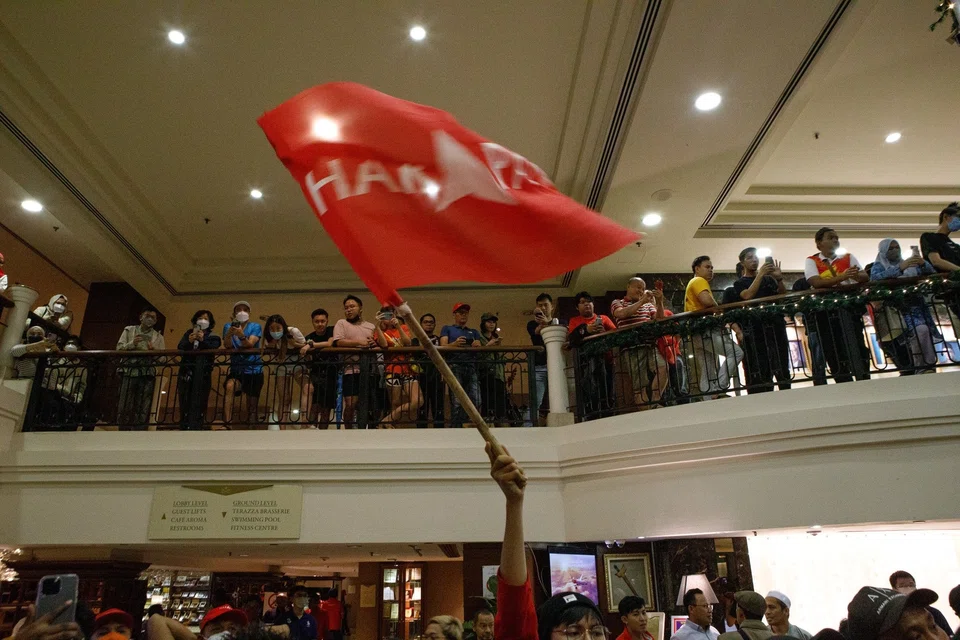
The hotly-contested general election in Malaysia produced many multi-cornered fights and several shock defeats. While there was a clear rebuff by voters to the Barisan Nasional (BN) coalition led by Umno, it’s telling that no single party or alliance managed to win the minimum of 112 seats needed to take power.
After some deal-making, Gabungan Parti Sarawak (GPS) said on Sunday (Nov 20) that it will join Perikatan Nasional (PN), Barisan Nasional (BN) and Gabungan Rakyat Sabah (GRS) to “form a stable and strong federal government”. GPS also announced that Muhyiddin Yassin is the party’s choice to be the coalition’s prime minister candidate.
What may unfold in the coming weeks and months can be glimpsed not only from the results of this election, but the context of events since the previous polls in 2018.
Referendum against Umno
The last four years have seen three different governments in charge. This includes the short-lived government led by Pakatan Harapan (PH) that was felt by some conservative Malays to push too hard on reform, and the succeeding government led by PN and Muhyiddin that struggled to manage the Covid-19 pandemic and its impact on people and livelihoods.
Holding the prime ministership and after recent large victories at state-level, Umno judged that the time was ripe to seal its return in a big way. But the rush to hold early elections, despite flooding in many states this month, proved to be hubris. The judgment of the results was, like the 2018 elections, against Umno and BN.
BN won a mere 30 seats on Saturday. Yes, the biggest Umno chieftains won safe seats, but the party holds little wider appeal and faces the choice of either entering the opposition or accepting a junior role in government. The prospects for reformers within the party seem all but extinguished.
There were defeats of two younger, competent ministers who are not implicated in corruption charges – former finance minister Zafrul Aziz, and ex-health minister Khairy Jamaluddin, who was forced by Umno to fight in an opposition-held ward.
Like 2018, Malaysians voted for change and some will find optimism in this.
Split opposition and unstable politics
Yet, unlike 2018, the opposition parties are split, and so are their supporters. The PH alliance won 82 seats while the PN alliance also showed strong support, with 73 seats.
This points in two contrary directions. One is to a bloc of Malaysians who still hope for change and reform, within a more multiracial frame. The other are voters who want a Malay- and Muslim-focused government – represented by PN, rather than Umno.
In the hours after polling closed, both the PH and PN alliances claimed it could form the majority without the other, and reject the idea of a compromise. Indeed, the man who helmed that “compromise government” in 2018, Mahathir Mohamad, ended his long and grand political career in humbling defeat on Saturday night.
There are limits to what can be done to bring together a viable and stable coalition to take and hold power. There are divisions and different components within each coalition.
While Anwar Ibrahim leads the PH alliance, his own PKR party won 31 seats, nine fewer than the DAP’s 40. The DAP, seen to be a Chinese-led party, was the target of criticism for seeming to challenge Malay prerogatives, but has maintained a considerable constituency. The PKR, however, won considerably fewer seats compared to 2018, and within the party, Anwar’s younger deputy Refizi Ramli could contest for rejuvenation.
In the PN alliance, Muhyiddin is in front but his Bersatu party holds just 24 seats. Its alliance partner, the pro-Islamic PAS, secured 49 seats – emerging as the single largest party. This is a huge gain compared to the 18 seats that PAS won in 2018 and the trend bears watching, especially given the eclipse of Umno and softening in PKR’s support. If there is a PN-led government, expect the PAS to wield even more influence and power.
Many see a hung parliament. Yet the rewards of being part of the government in power are high and a compromise will emerge, perhaps sooner rather than later. Even so, the three post-2018 governments have been short-lived and the new government must struggle to avoid a similar fate.
Whoever else is left outside government – whether PN, PH or Umno – will snipe and seek another way to return. It is not only parliament, but the electorate that is divided and hung. Even among the large segment of first-time, younger voters, their preferences bear closer analysis, but it is likely to reflect racial and urban-rural differences.
Outlook for business
For anyone seeking a strong and stable government, the situation appears sub-optimal. Markets seem to have anticipated this, drifting downwards going into the election. Few expect a sustained rally when markets reopen on Monday (Nov 21). The difficulty in forming an enduring government and the prospect of more chop-and-change cabinets could be negative to businesses that depend on good ties with policymakers.
Malaysia’s economy continues to depend and do well enough on resources and an electronics sector that is linked to regional and global value chains.
There is no crisis but inflation and cost of living issues are real, and the weakness of the ringgit continues to signal potential vulnerabilities. Government coffers are constrained, given the delayed introduction of the goods and sales tax. Some may consider this is good enough, to allow the politics to continue bickering while focusing on business.
But consider that just over a year back, as the country struggled with the pandemic, many Malaysians took part in the “white flag” movement to signal their unhappiness. Any new government will give emphasis to help citizens cope, with cash handouts and other goodies, and will commit to build up infrastructure.
With limited finances, slowing global growth and a squeeze on capital, especially for emerging markets, the next government will need to adjust and respond to the global poly-crisis, including the navigation of Sino-American competition and business dealings with the Chinese.
Who will form the new government and be the next prime minister is an important question. But with new and more difficult conditions ahead, even more important is whether the next leadership will be able and stable enough. The results of the Malaysian elections are in, but not all the answers.
Simon Tay is chairman of the Singapore Institute of International Affairs.