Asean Business logo
SPONSORED BYUOB logo

Tourism, factories reeling as Typhoon Yagi wreaks havoc in northern Vietnam 

Travel companies suspend services and manufacturing operations restart slowly as region deals with extensive damage
Published Tue, Sep 10, 2024 · 08:23 PM
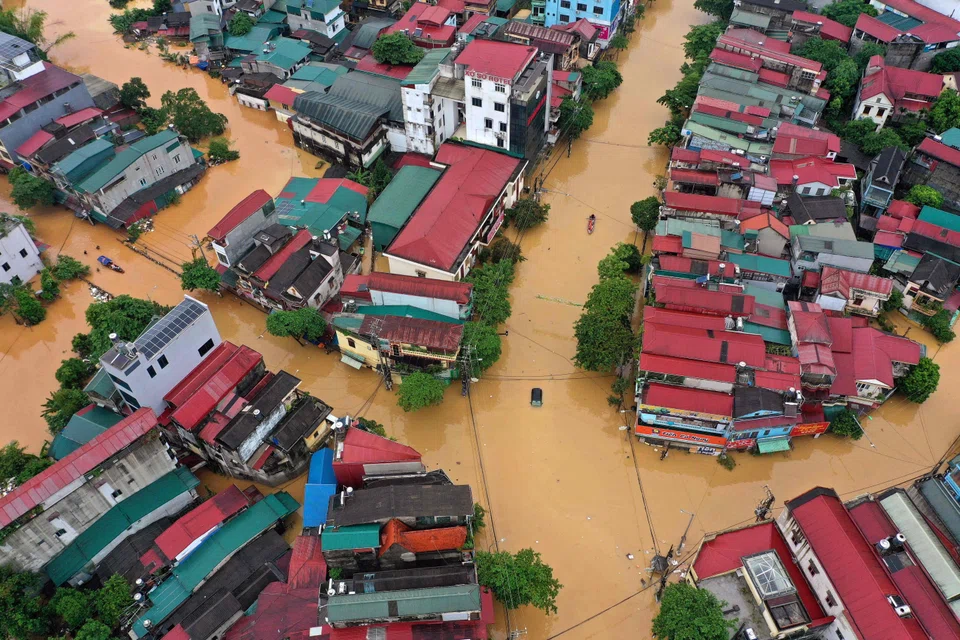
    • Flooded streets in Yen Bai in the aftermath of Typhoon Yagi hitting northern Vietnam. The storm has continued to unleash heavy rains, triggering landslides and structural collapses across cities and provinces.
    • Flooded streets in Yen Bai in the aftermath of Typhoon Yagi hitting northern Vietnam. The storm has continued to unleash heavy rains, triggering landslides and structural collapses across cities and provinces. PHOTO: AFP

    [HO CHI MINH CITY] As Typhoon Yagi, the strongest storm in Asia this year, appears to subside, the devastation in the northern provinces of Vietnam has brought tourism to a standstill, with no clear timeline for recovery.

    Travel companies are suspending services for about one to two weeks to attractions in various mountainous and beach locations in the north.

    Pham Ha, founder and chief executive of Hanoi-headquartered LuxGroup that operates several luxury tourism businesses in Vietnam, said that the storm has wreaked havoc on his firm’s assets, including yachts, speedboats and waiting accommodations, inflicting losses and repair costs amounting to five billion dong (S$265,000).

    The facilities were designed to serve luxury cruises in Vietnam’s scenic bays and archipelagos, including Ha Long Bay and Bai Tu Long Bay in Quang Ninh Province, as well as Lan Ha Bay in Hai Phong City. Some parts of the amenities were torn off by the force of the wind and swept out to sea.

    “We face many difficulties due to ongoing telecommunications disruptions and power outages in the bay areas,” he noted, adding that it may take two more weeks until his company can start welcoming tourists to those locations.

    The two coastal localities, Quang Ninh and Hai Phong, have been battered the hardest by the typhoon, which made landfall on Saturday (Sep 7) afternoon and slammed Vietnam’s north-eastern coast with high wind gusts and torrential downpour. 

    Yagi has damaged thousands of homes, buildings and commercial stores, sunk ships and boats, toppled trees along streets as well as flooded highways, effectively hindering travelling activities in multiple provinces and cities, including the country’s capital Hanoi.

    Vietravel, a leading tour operator based in Ho Chi Minh City, swiftly adjusted the itineraries of two tourist groups after receiving warnings about the typhoon. The company also does not have any pre-booked tours to the northern region in the coming days and underlines that it will prioritise safety as the weather risks continue to unfold.

    Lux Travel DMC, a unit of LuxGroup, has also temporarily stopped tours to Sapa, a popular mountainous town in the north-west of Vietnam close to the border with China.

    A group of Singaporeans, who declined to be named, told The Business Times that their flight to Hanoi last Saturday was abruptly cancelled due to the closure of Noi Bai International Airport. Undeterred, they decided to go to Chiang Mai, Thailand, instead for their annual trip, determined to make the most of their time off from work.

    “We’re just glad we didn’t arrive in Hanoi before the typhoon hit and get stuck in Sapa and Hanoi,” said one of them. She added, however, that the group is intent on visiting Vietnam in better times next year.

    Others caught in the storm, including friends who had arrived in the country earlier, were stranded in Sapa after train stations were closed last weekend. They only managed to return to the capital on Monday via a private-hire car.

    International and domestic flights to and from northern airports including Hanoi’s Noi Bai have resumed since Sunday; yet train services to Sapa are suspended until Sep 15. 

    Widespread devastation

    Although Yagi was downgraded to a tropical depression on Sunday, it has continued to unleash heavy rains, triggering floods, landslides, and structural collapses across northern cities and provinces. According to reports as at 2.30 pm (Vietnam time) on Tuesday, the storm has left 157 people dead or missing, and more than 750 others injured.

    Farmers are in distress as almost 150,000 hectares (ha) of rice fields were inundated, while more than 26,000 ha of farm land growing vegetables and roughly 11,000 ha of fruit tree farms were also affected, said the Ministry of Agriculture and Rural Development of Vietnam on Tuesday.

    About 85 ships and boats had sunk, 122,000 trees were either broken or uprooted and more than 48,000 homes, shops, offices and schools were damaged in the past few days.

    The aftermath for factories

    After Yagi passed through, authorities in Hanoi have been rushing to clear streets to free up traffic and resume business activities, although some areas are still blocked by floods and large debris.

    In some other provinces that are home to manufacturing operations of domestic and foreign companies, power supplies and telecommunications have been partly reconnected and production activities are gradually returning.  

    Managers at factories located in industrial parks in northern provinces such as Hai Phong, Thai Binh and Hai Duong said that repairing broken windows, warped roller-shutters, ripped-off roofs, toppled trees and cracked solar panels may require one to four weeks.

    “We have never experienced such a destructive storm like Yagi,” said Do Quang Thinh, technical director at New World Fashion Group, which operates two industrial clusters in the north of Vietnam.

    In anticipation of future natural disaster risks, Thinh also considered securing insurance coverage for the extensive rooftop solar power systems that his company is going to install soon across its London Business Park in Thai Binh.

    On Monday, authorities urged insurance companies to accelerate compensation payments for those affected by Yagi, requesting reports on the status of settlements by Sep 12. Several insurers have already dispatched personnel to affected regions to evaluate the extent of the damage and process compensation for policyholders.

    The State Bank of Vietnam has instructed credit institutions to assess borrower losses and provide timely support. Recommended measures include restructuring debt-repayment terms, considering interest rate exemptions and reductions, and offering new loans to help customers restore production and business operations.