



Tourism-reliant Thailand at risk of losing 3 million visitors if Middle East war persists
The government had set a 2026 target of 35 million foreign visitors
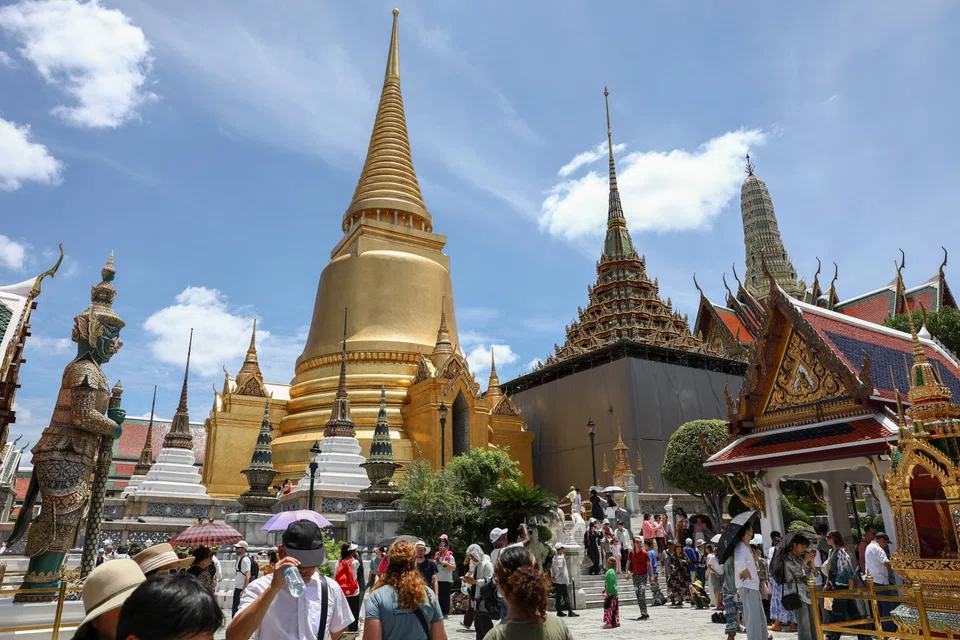
[BANGKOK] The number of foreign visitors to tourism-reliant Thailand is at risk of falling to its lowest level in three years as the Middle East war threatens global travel.
The second-largest economy in South-east Asia could see three million fewer foreign tourist arrivals this year if the conflict drags on for six months, according to Natthriya Thaweevong, permanent-secretary of the Ministry of Tourism and Sports.
The drop could cost the economy 150 billion baht (S$5.86 billion) – about 10 per cent of the nation’s total foreign tourist receipts last year, she said.
The government had set a 2026 target of 35 million foreign visitors. The disruption could reduce the number to around the level of 2023, when the country recorded 28 million foreign visitors, Natthriya said.
Airlines globally are grappling with a painful spike in oil prices, leading consumers to cancel travel plans or rush to lock in lower fares.
“The heart of tourism is the journey, and to make that journey you need fuel,” Natthriya said in an interview with Bloomberg News. “Everyone is affected and faces the same high costs. We will lose tourists from all over.”
The nation’s tourism industry will still be hurt by a loss of one to two million foreign visitors even if the war ceases at the end of March, said Natthriya, the country’s top tourism official.
To cushion the blow, the tourism industry needs to court more wealthy Middle Eastern travellers seeking refuge from war through new marketing campaigns, she said. Thailand aims to attract at least 200,000 Middle East visitors this year – roughly a quarter of last year’s arrivals from the region, Natthriya said.
Marketing budgets earmarked for Europe and the US will be redirected to country-specific campaigns in the Middle East, she added.

Tourists from that region are among the highest spenders, with each doling out an average of 80,000 baht per trip, according to government data analysed by Bloomberg. That compares with an average of 61,000 baht for a European visitor, and about 39,000 baht for an Asian tourist.
Travellers from the Middle East with deep pockets have no problems paying higher commercial or charter flight fares, Natthriya said.
Flights to and from Thailand have almost returned to normal, with cancellations dropping from hundreds to fewer than 30 per day, she said.
The push to draw more Middle Eastern travellers is part of Thailand’s ongoing campaign to lure more affluent visitors by promoting itself as a destination for world-class medical treatment, with hospital operators such as Bangkok Dusit Medical Services and Bumrungrad Hospital leading the efforts.
Authorities are also tailoring marketing campaigns to entice short-haul travellers from neighbouring Asian markets, said Natthriya.
The war has complicated efforts to revive Thailand’s tourism industry, which contributes about 12 per cent to the country’s gross domestic product and has struggled to regain momentum after the Covid-19 pandemic.
Thailand welcomed 8.54 million tourists between Jan 1 and March 22 this year, a decline of around 3 per cent from the same period a year ago.
Last year, Thailand recorded 32.97 million foreign visitors, down 7.23 per cent from the previous year, as the country endured an earthquake, its worst flooding in recent history and deadly clashes with neighbouring Cambodia.
Asian tourists made up the largest group of visitors in 2025, with 22 million visitors, while Europe accounted for over 8.25 million, and the Middle East, more than 750,000.
The government is also looking to roll out incentives next month to spur domestic travel, such as allowing taxpayers to claim allowances from tourism receipts, Natthriya said.
Lower tax rates or debt moratoriums for hotel operators are being discussed, and the government is weighing rationing at filling stations to ensure tour bus operators can get enough fuel, Natthriya said.
“Now, with the war affecting things, this growth driver might be faltering,” she said. “But we have to keep going.” BLOOMBERG
Decoding Asia newsletter: your guide to navigating Asia in a new global order. Sign up here to get Decoding Asia newsletter. Delivered to your inbox. Free.
Share with us your feedback on BT's products and services
TRENDING NOW

Companies still in search of AI use cases with worthwhile ROI, says Broadcom’s CEO

Malaysian king buys stake in Singapore-listed mining firm expanding into rare earths

Once staunchly pro-China, Malaysian Chinese businesses are now distancing themselves from Beijing

Singapore’s wealth management success should extend to everyday families

