



Typhoons and floods batter Vietnam, fuelling investor demand for climate-resilient infrastructure
Industrial zones in the country are vulnerable to the impact of flooding, heat stress and other climate-related disruptions

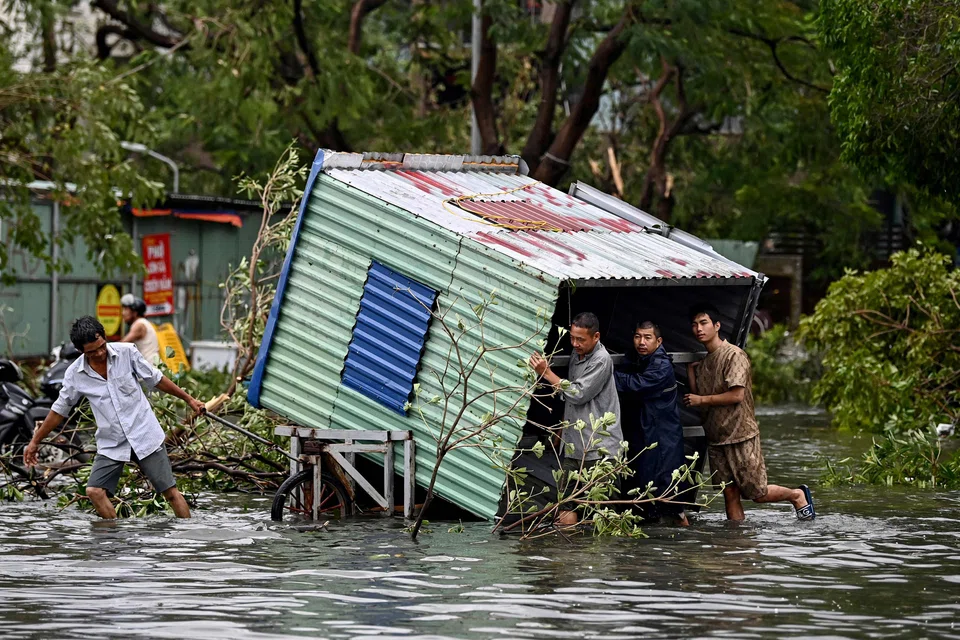
[HO CHI MINH CITY] As Vietnam contends with extreme weather events, the rise in typhoons and their destructive flooding have heightened demand for climate-resilient infrastructure across the country’s industrial parks, which hosts thousands of export-oriented factories and serve as the region’s key manufacturing hubs.
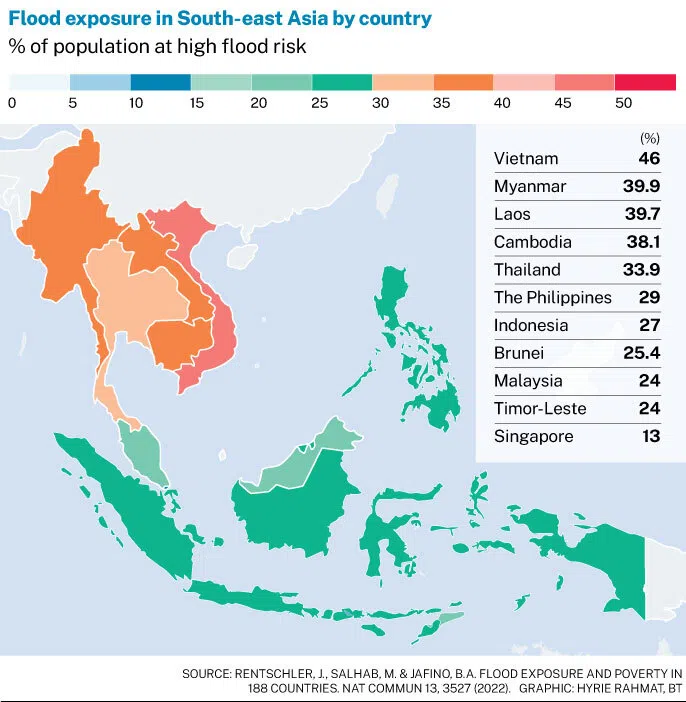
With some 3,260 km of coastline and two densely populated river deltas, Vietnam’s exposure to climate change has grown increasingly evident over the past year. The country faces the highest flood risk in the region and the third-highest globally, with nearly half its population – about 46 per cent – at risk.
In September alone, Vietnam was struck by two of the four storms that formed in the South China Sea, bringing the total to 10 storms in the first nine months of the year.
The latest typhoon, Bualoi, tragically claimed the lives of 51 people, left 14 missing, damaged roads, schools and offices, and caused power grid failures. The economic losses as at Friday (Oct 3) was estimated at nearly 16 trillion dong (S$784 million) in the northern and central regions of Vietnam, indicated a preliminary assessment report.
More worryingly, this marks just the beginning of the Vietnam’s typhoon season, which typically peaks between September and November.
Climate experts have predicted that the future may bring more frequent and intense storms in the South China Sea, partly due to the ongoing effects of global warming that has increased sea surface temperatures.
A 2022 study published in scientific journal Nature noted that South-east Asia was home to more than two-thirds of the global population at risk of flooding, with approximately 1.24 billion people exposed to this threat.
Investor scrutiny
Amid the growing complexity and unpredictability of global climate change, investors – particularly manufacturing enterprises with international supply chains – are placing increasing emphasis on a location’s disaster resilience and its capacity to maintain production continuity when picking investment sites.
The experience of Deep C, one of the largest port-oriented industrial park clusters in Vietnam, provides a case in point.
Deep C’s chief executive Bruno Jaspaert said that five years ago, the park lost a major potential investor, with one of the key reasons being that Hai Phong, like Ho Chi Minh City, is ranked among the most flood-prone cities in the world.
“The insurance company of this investor refused to reinsure the investment, they said the risk was too high,” he said. “(Climate-resilient infrastructure) is an increasingly important matter that has been raised by not one investor, but many, as part of any due diligence that investors execute these days.”
Le Ngoc Tram, sales manager at Amata City Ha Long, echoed this perspective, noting that investors are looking for assurance that investing in Vietnam not only provides competitive costs but also ensures a stable and safe long-term environment.
“This is no longer a secondary factor; it has become one of the most critical criteria in the decision-making process,” said Tram.
Amata City Ha Long is an industrial park located in the northern province of Quang Ninh, one of three developed by the Thai multinational real estate firm Amata Corporation across Vietnam.
Prone to climate risks
The World Bank’s report in May this year indicated that 34 per cent of industrial parks in Vietnam are located in coastal provinces that are prone to flooding. Many of these are built on low-lying regions and coastlines, increasing their vulnerability to increasing climate risks – including both extreme weather events and slow onset climate change.
“While these sites offer strategic advantages, they also increase exposure to natural hazards that can disrupt infrastructure and business operations,” the report noted.
About a year ago, Typhoon Yagi, one of the most powerful storms to hit Vietnam in three decades, wreaked unprecedented damage across the nation, disrupting business, production and national supply chains.
Floodwaters submerged entire communities, with Hai Phong, Quang Ninh and other coastal cities enduring some of the worst flooding in living memory. The economic losses was estimated at 0.7 per cent of the country’s gross domestic product within just a few days of the typhoon sweeping through.
In addition to flooding, the World Bank highlighted that industrial zones in Vietnam also face risks from heatwaves, which have led to power outages and reduced productivity – particularly in the apparel and electronics sectors, which together account for half of the nation’s exports and employ more than two million people.
In June 2023, an unusually long and serious heat wave led to electricity shortages and rolling power cuts, affecting operations at industrial parks in the northern provinces, home to major multinational manufacturers Foxconn and Samsung.
However, difficulties in obtaining permits for solar energy, limited building code resilience and financing constraints remain key barriers to sustainable industrialisation in countries such as Vietnam, said the report.
Infrastructure investment
The missed opportunity with the significant investor has prompted Deep C to collaborate with a Dutch engineering company to develop a comprehensive flood prevention strategy, which integrates natural-based engineering solutions.
These include the creation of open channels designed to resemble rivers rather than using conventional concrete pipes, enhancing water retention capacity and reducing pressure on the drainage system. Street levels are also lowered to direct excess water towards the sea, minimising flood risks to nearby infrastructure.
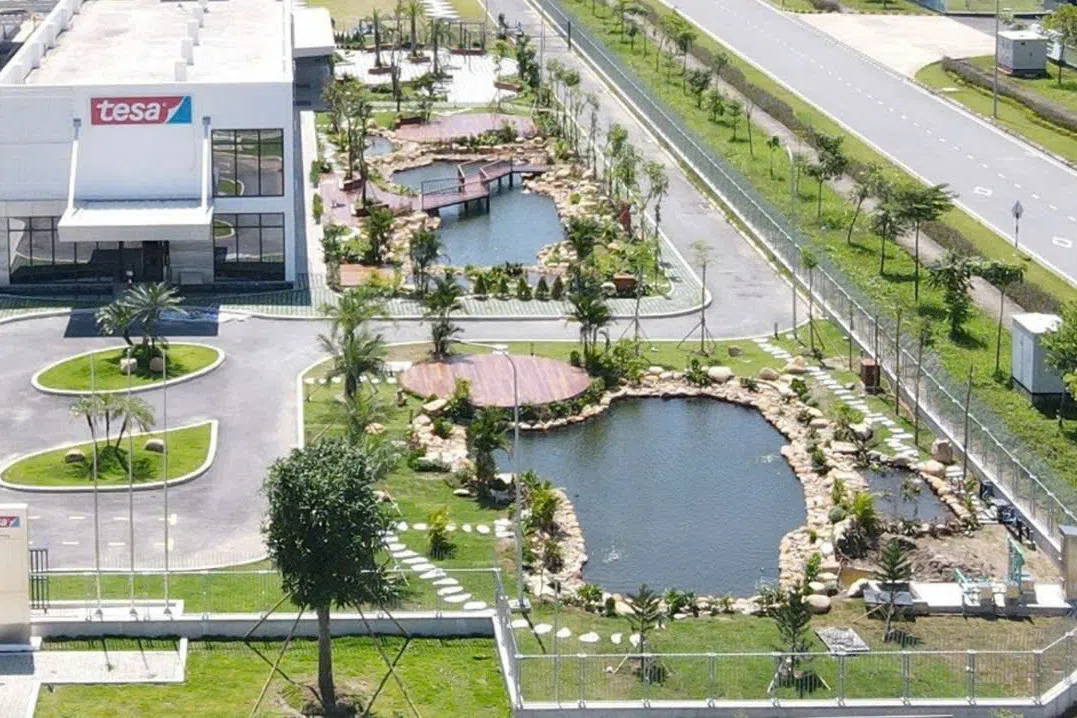
Additionally, green zones are designed to function both as scenic lakes and flood retention areas, allowing for longer rainfall periods before flooding occurs.
“We assume that over time, there will be more storms, higher flood levels… It’s better to spend more today and be safe tomorrow,” he said, noting that the design proved effective during the “one-in-100-year” Typhoon Yagi last year, as Deep C experienced limited flooding.
The industrial park developer has also pushed investors to set aside 30 per cent of each tenant plot for green zones to buffer stormwater. German adhesive tape producer Tesa, which opened a US$57.8 million factory at Deep C Hai Phong II in October 2023, incorporated such a zone into its landscaping.
At Amata City industrial parks, in addition to various measures to prevent flooding, the power systems are being progressively located underground to minimise disruption from strong winds and extreme weather.
Large-scale water reservoirs are also integrated within the industrial parks, playing a crucial role in Amata’s efforts to mitigate the impacts of prolonged heatwaves and droughts, while ensuring a reliable water supply for its investors.
Owing to such efforts, which are designed according to climate change scenarios with a calculation cycle of up to 50 years, Amata Ha Long remained unaffected by flooding or disruption during the recent Typhoon Bualoi despite many nearby areas experiencing significant impact, Tram noted.
“Given the growing complexity of global climate change, proactiveness, sustainability and disaster risk management capability will become crucial competitive advantages for industrial parks,” she added.
Financing
The Vietnamese government has been actively implementing a range of strategies to address climate risks, including flood management systems, adaptive urban planning, innovative farming practices and, when necessary, the relocation of households.
Infrastructure investments have also been accelerated, including projects designed to mitigate the impacts of climate-related events.
International financiers have also played a role. On Sep 30, the World Bank approved the Integrated Resilient Development Project to strengthen flood protection and transport connectivity in two of Vietnam’s vulnerable yet economically vital regions: Da Nang, the fast-growing coastal hub in central Vietnam; and Gia Lai, the highlands corridor that connects farms and factories to the coast.
“The severity and frequency of flooding following major storms in Vietnam underscore the urgent need for increased investment in climate-resilient infrastructure,” said Tamma Febrian, director of the financial institutions group at Fitch Ratings Singapore. “Climate risk is becoming an increasingly relevant factor in our credit analysis.”
He pointed out that there is also growing awareness within the State Bank of Vietnam – the country’s central bank – and the banking sector on the importance of promoting sustainable financing, “which should help create a more conducive environment for these climate-related projects to succeed”. “We expect investments in these projects to materialise over time, although execution remains a key risk.”
TRENDING NOW

Government to bring forward raising of retirement age, give employers more financial support to create flexi-load jobs

If Europe goes to war, the fallout will be felt in East Asia

Indonesia stocks suffer worst plunge in nearly 30 years as MSCI proposes standalone status

Vietnam’s northern provinces, not Hanoi or Ho Chi Minh City, are powering near 10% GDP growth

