



Under Anutin, Thailand will look to reinvent in uncertain post-Thaksin era
With the former premier sentenced to a year in jail, all eyes are on new PM Anutin Charnvirakul as he leads a minority government with only a brief mandate to rule
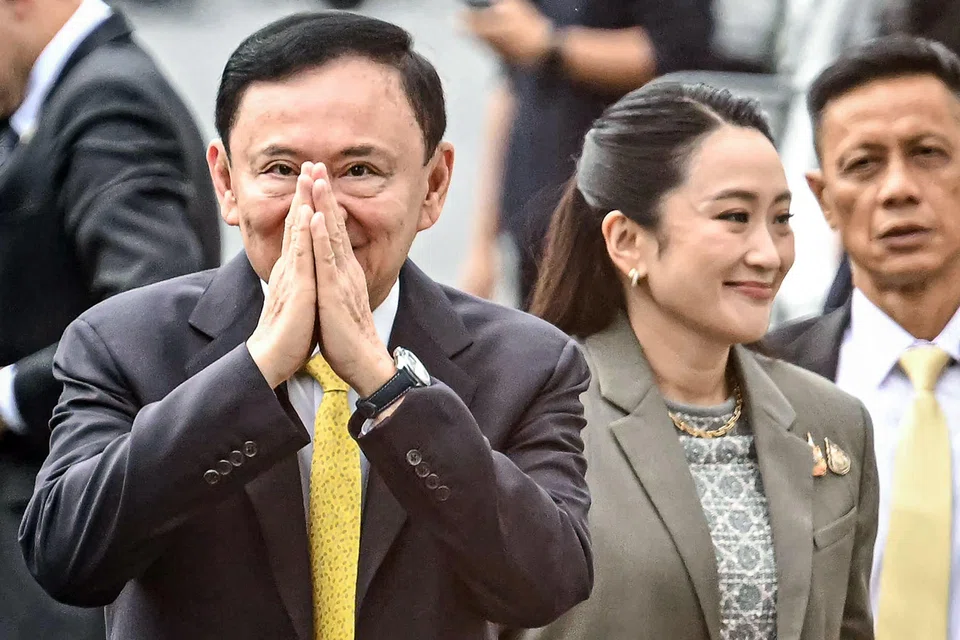
[BANGKOK] Thailand’s Supreme Court ruling against former prime minister Thaksin Shinawatra on Tuesday (Sep 9), which sends him back to jail for a year, marks the end of two-and-a-half decades of Thaksin-centric politics. But the road ahead for the kingdom remains murky – not least for its export-driven economy.
The Supreme Court’s Criminal Division for Holders of Political Positions ordered Thaksin to serve one year in jail, on the grounds that he had earlier avoided his year-long prison sentence by being hospitalised.
The decision is another blow to Thaksin’s political legacy.
He first rose to power in 2001 on a populist platform that delivered benefits to the neglected poor. He is regarded as the de facto leader of the Pheu Thai Party, which led the last coalition government that ended last month.
This followed a court ruling that removed Paetongtarn Shinawatra, Thaksin’s daughter and protege, from the office of prime minister.
Paetongtarn was accused of unethical behaviour over a leaked phone call with Cambodian leader Hun Sen on Jun 15 regarding an escalating border conflict, in which she appeared deferential to a foreign government. Thaksin and Hun Sen have enjoyed close personal ties for years.
Pheu Thai failed to win the most seats at the last general election in 2023, falling behind the reform-driven People’s Party (PP), but nonetheless ended up leading a coalition government after PP’s candidate for prime minister, Pita Limjaroenrat, failed to win enough parliamentary votes.
Thaksin returned to Thailand in August 2023 after 15 years in self-exile. He had allegedly secured a “deal” with people in the establishment to receive leniency in three court cases against him, in return for keeping the reformist PP out of power.
He got his wish. The billionaire former businessman was handed an eight-year prison sentence on charges of corruption and abuse of power, which was later commuted to just a year by a royal pardon. He spent only six months of that in the Police General Hospital due to various illnesses.
The perceived excessive leniency sparked criticism and led to the Supreme Court ruling on Tuesday.
Loss of moral high ground
“Thaksin still has a lot of money, a big war chest, but he has lost the moral high ground,” said Thitinan Pongsudhirak, a political science professor at Chulalongkorn University.
“He had the moral high ground of being a democratically elected leader who was overthrown by a coup (in 2006), but then he came back and started (collaborating with) the people who overthrew him.”
Thailand’s new Prime Minister Anutin Charnvirakul, a construction magnate who leads the Bhumjaithai Party, has a less ambiguous relationship with the country’s establishment – roughly defined as the royalists, military and business elites.
Anutin is a staunch royalist, openly opposed to efforts to reform the country’s strict lese majeste law, and a nationalist – he withdrew Bhumjaithai from the Pheu Thai-led coalition following the Paetongtarn scandal.
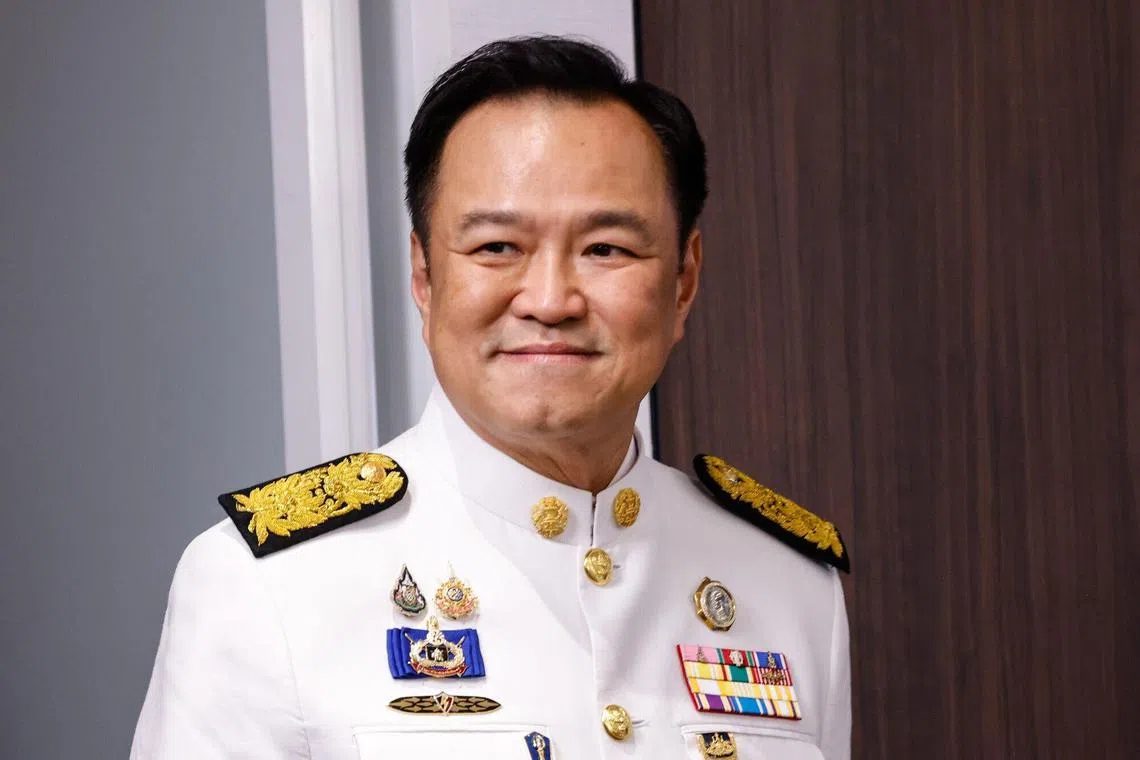
He rose to power – ironically – thanks to the support of the PP that helped to vote him in, on the condition that he hold a general election after four months of running the government, as well as a referendum on amending the current constitution.
Anutin is leading a minority government with a brief mandate to rule. Besides holding the premiership, he is also interior minister, deemed a key post in managing general elections.
One of his first moves was to name three “professionals” to man Thailand’s key ministries: Ekniti Nitithanprapas, a rising star, as the new finance minister; Sihasak Phuangketkeow, a former permanent secretary at the Ministry of Foreign Affairs, as foreign minister; and Auttapol Rerkpiboon, former CEO of the national petroleum company PTT, as energy minister.
Tariff headache
Jatuporn Buruspat will stay on as commerce minister after leading the US-Thailand tariff talks that were finalised last month. Thailand ended up with a 19 per cent reciprocal tariff on exports to the US, on a par with that of its neighbours.
Further negotiations on US-Thailand trade will be one of the first challenges awaiting the Bhumjaithai administration.
“We know what the US is implementing, but we don’t yet know what Thailand is implementing,” said Kirida Bhaopichitr, research director at the Thailand Development Research Institute. “We have to wait until this is tabled in parliament.”
Thailand has reportedly agreed to impose zero tariffs on 90 per cent of imported US goods, but details are scrappy.
Information on “transhipment tariffs” on Thai exports to the US are also still unclear. Anutin’s bigger challenge will be on the home front, in terms of stimulating domestic consumption.
For this, the key strategy appears to be reviving the so-called “half-and-half” policy, implemented from 2020 to 2022 during the Covid-19 pandemic, in which the government paid for half of a small purchase of food or personal items (under 150 baht, or S$6, per day) to support low incomes and increase consumption.
The policy was deemed a success at the time. But such short-term schemes will fail to stimulate Thailand’s sluggish economic growth, which has been lagging around 2 per cent since the pandemic.
“The structural reform of Thailand’s economy cannot be delayed any longer,” stated a manifesto published on Sep 3 by the Bank of Thailand and some leading Thai business associations.
“The potential (of) the Thai economy depends on the ability to adapt and seriously address structural issues, which need to be initiated urgently and continuously pushed forward,” it added.
The call for regulatory reforms is hardly new, but the joint call suggests a growing frustration in the Thai business community, which is pushing for the leadership to go beyond populist policies and concentrate on structural changes to bolster South-east Asia’s second-largest economy.
No one is banking on Anutin’s caretaker government to meet these expectations, but it is hoped that, post-election, either he or a PP-led government could take up the challenge.
“These reforms take time, but someone needs to put the hammer on the nail, and initiate it,” said Kirida.
TRENDING NOW

Once staunchly pro-China, Malaysian Chinese businesses are now distancing themselves from Beijing

Britain’s mansion tax shows the difficulty of targeting wealth
Three hats, one goal: How Ng Kian Swan runs sustainability at NUHS
COE review: The gap between luxury and mass-market cars isn’t the only one worth bridging

