University incubators key to propelling Singapore startups in the region
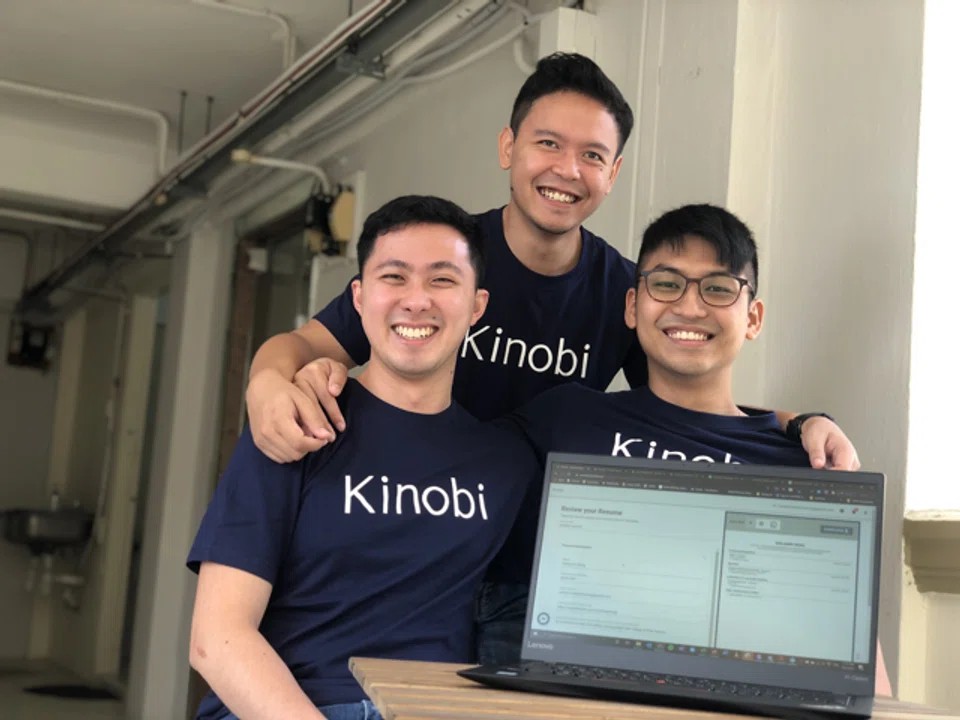
[JAKARTA] Benjamin Wong has always been a self-starter., having founded clubs and choirs while still in school and at university. It was thus no surprise that the 28-year-old launched an edtech startup, named Kinobi, with Hafiz Kasman and Joshua Phua in 2020.
All 3 are graduates of the Singapore Management University (SMU), where they not only received their degrees, but also plenty of knowhow on how to be successful entrepreneurs.
Kinobi, which raised US$1 million in seed funding last year, helps students draft resumes and cover letters as well as offers short online courses and job Interview practice. The firm has helped more than 400,000 students to date and works with over 60 universities across Indonesia, Singapore and the Philippines.
Wong told The Business Times that he pins much of his success today down to his time at the entrepreneurship programme at SMU’s Institute of Innovation and Entrepreneurship (IIE).
IIE’s incubator, the Business Innovations Generator, was established in 2009 to support innovative and promising ideas. It aims to guide aspiring entrepreneurs in their startup journey by helping them navigate the process of taking their ideas to market.
“When I joined the programme in 2020, I was doing career training and many people asked us for advise,” he said. “It was not working out so we sat down to brainstorm and we came up with the idea that every student needs a resume to land his or her first job.”
“We had a lot of support from the programme managers to determine the business model, and they forced us to put the entire idea on one page,” Wong added. “We had mentors. Venture capital firms also came to listen to our pitch, so it forced me to crystalise my business plan.”
As South-east Asia’s digital economy takes off, university incubators can help to propel more startups to be commercially successful, said IIE director Hau Koh Foo. “We can be similar to Y Combinator in the US, which is the holy grail of incubators.”
Y Combinator is an American technology startup accelerator that has been used to launch more than 3,000 companies including Airbnb, Coinbase, DoorDash and Dropbox, among other tech companies.
“Our key objective is to increase the percentage of students from IIE to become successful entrepreneurs,” Hau said. “Currently we have 5 per cent of students becoming entrepreneurs and if we can get to 10 per cent to 15 per cent, that would be substantial.”
While the programme is focused on helping tech enabled startups, any entrepreneur can join. Hau noted that university incubators can play a critical role in enabling and supporting the next wave of tech startups in areas such as renewable energy, waste management, agritech, healthtech, fintech, and edutech. Singapore-based startups can fine-tune their strategies and test their business models at such incubators before launching into the region.
South-east Asia’s booming digital economy is set to double to US$363 billion by 2025, according to a recent research report from Google, Temasek Holdings and Bain & Co. Since the start of the pandemic, there have been more than 60 million new digital consumers entering the markets in the region.
For Kinobi’s Wong, Indonesia offers huge potential for Singapore-based startups. “Technology must solve an issue but you also need customers and Indonesia offers a huge potential market,” he said.
He added that the Indonesian government is keen to attract more Singapore startups to set up shop there. “Economic recovery is critical for Indonesia and the fastest route to recovery is investor funds,” said Wong.