UOB Malaysia on track to better 2023’s record profit this year, says CEO
Top-line growth, cost management and strategic investment in key sectors are helping bank achieve this

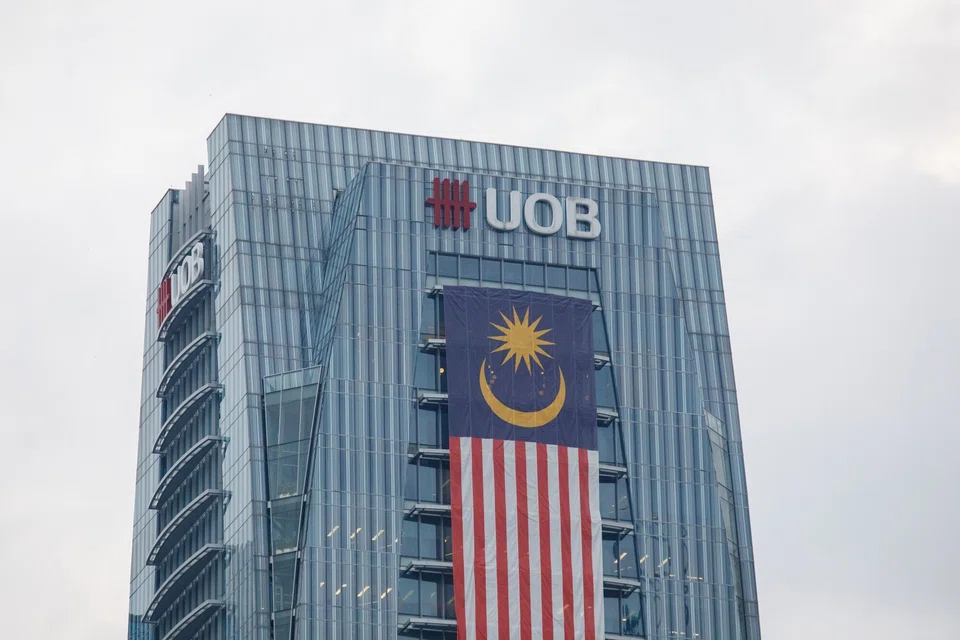
[KUALA LUMPUR] The chief executive of UOB Malaysia is confident that the bank’s strong financial performance this year will surpass the record numbers seen in 2023.
Last year, the bank posted a net profit of RM1.9 billion (S$564.4 million), a 44 per cent increase from the RM1.3 billion in 2022.
Operating income surpassed the RM4 billion mark for the first time as it grew by 19 per cent to reach RM4.6 billion. This was bolstered by a 7.4 per cent growth in net interest income to RM2.9 billion.
Speaking to the media at a recent event in Kuala Lumpur, UOB Malaysia CEO Ng Wei Wei said she was confident that the bank’s financial performance in 2024 will better last year’s record profit through top-line growth, cost management and strategic investment in key sectors.
“The trajectory appears to be on track, with positive top-line growth aligning with Malaysia’s economic progress. Overall, considering how we manage our costs and impairments, I would say things are moving in the right direction,” she added.
She noted that UOB Malaysia – the largest foreign bank and the sixth-largest commercial bank in the country – has been experiencing steady growth in both its retail and wholesale banking segments.
The retail segment has seen substantial gains with a consistent rise in new current and savings accounts (Casa) each month. She said the bank’s digital platforms have successfully onboarded around 55 per cent of new retail customers.
“The quality of new accounts remains strong with average balances per account contributing positively to the bank’s financial health,” noted Ng. UOB Malaysia intends to grow its customer base from 1.5 million today to two million by 2026.
As for wholesale banking, Ng pointed out that compared with 2020, this segment’s compound annual growth rate increased 6 per cent in 2023 and is expected to grow by 16 per cent by 2026.
“Malaysia’s New Industrial Master Plan and National Energy Transition Roadmap are the key drivers of the growth. We are seeing strong growth from industrials, energy and chemicals, consumer goods as well as digital economy sectors.”
The bank aims to increase its Casa ratio from the current 37 per cent to over 48 per cent by 2026, a move that is expected to reduce funding costs and boost profitability.
Looking ahead, the bank is aiming for a 12 to 14 per cent return on equity by 2026.
UOB Malaysia believes that total income will grow by 11 per cent over this period, driven by a balanced income mix anchored by revenue synergies, fee income and regional growth.
Gross loans are also projected to grow by 11 per cent, with trade loans and unsecured loans in the mass and affluent markets expected to accelerate.
Growth corridors
Ng’s confidence is also largely attributed to the bank’s optimism on Malaysia’s economic growth, with robust business activities driven by the country’s four main growth corridors, with the Johor-Singapore Special Economic Zone (JS-SEZ) being a key focus.
The four corridors are Johor, the Klang Valley area (Selangor and Kuala Lumpur), the greater Penang area (covering Penang island and the mainland) and Sarawak.
Ng noted that Malaysia attracted RM560 billion in approved foreign direct investments (FDIs) from 2021 to 2023, with 90 per cent of this amount channelled to the four corridors.
“The recent positive developments, such as the Johor Bahru-Singapore Rapid Transit System and the JS-SEZ, has bolstered the growth of healthcare, the digital economy, logistics and manufacturing sectors in Johor,” said Ng.
As for Penang, known as the Silicon Valley of the East, it is benefiting from the electrical and electronic up-cycle and has attracted total approved FDI of RM251 billion over the 2021 to 2023 period.
Ng noted that more infrastructure developments in the state, such as the Light Rapid Transit system as well as high-value front-end development, are expected to enhance its tech ecosystem.
The central region of Klang Valley, which includes the country’s capital Kuala Lumpur, has attracted a total approved FDI of RM112 billion.
This region has contributed more than 40 per cent of Malaysia’s gross domestic product and is also the centre of major infrastructure projects such as 5G development and other digital economy-related developments.
Sarawak, meanwhile, has abundant land and natural resources and is widely seen as the country’s renewable energy powerhouse. The state has garnered strong interest from multinational companies, with a total FDI of RM30 billion during the 2021 to 2023 period.
“Our footprint is strategically located in these high-growth states, and we are already working closely with companies in these areas or are looking to enter these markets,” said Ng.