US$100 for a bowl of pho? Michelin Guide’s Vietnam debut seeks to give local eateries a boost
Jamille Tran
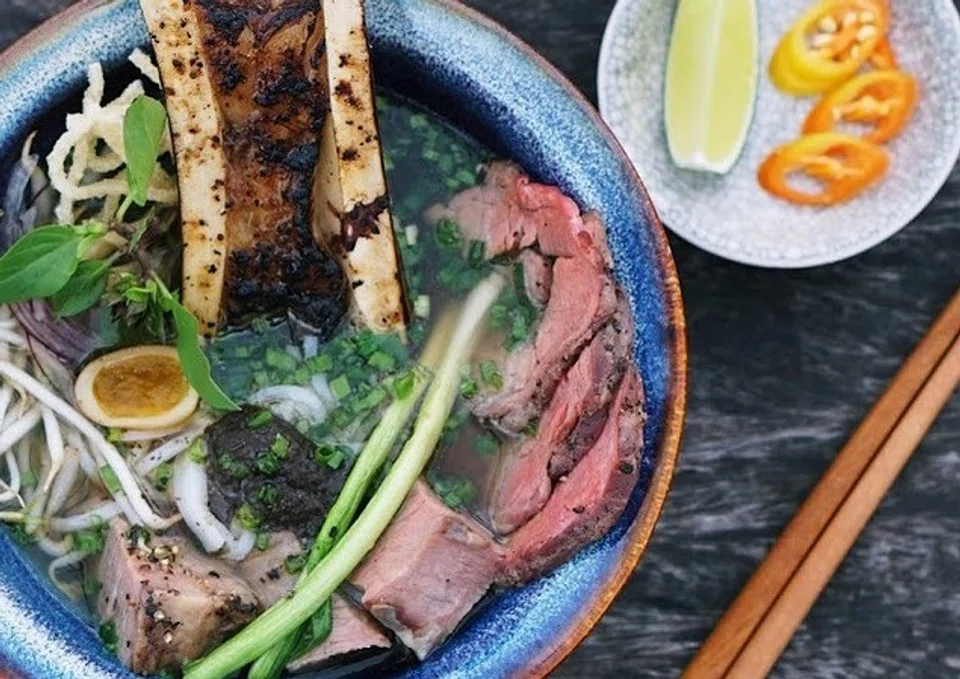
[HANOI] Would you shell out US$100 for a banh mi sandwich or a bowl of pho, both of which could easily be found along the streets of Vietnam for US$2 or even less?
Those eye-watering prices hit the headlines this month after the Michelin Guide made its long-awaited debut in Vietnam.
A total of 103 local eateries, including street food options and fine-dining establishments, were highlighted by the century-old French culinary guide. They cover all sorts of cuisines such as Cantonese, French, Japanese, Latin American and Mediterranean. Seventeen restaurants are devoted mainly to pho, a Vietnamese traditional noodle soup cooked with beef or chicken.
Four restaurants have the honour of being the first with a Michelin star – Anan Saigon in Ho Chi Minh City, along with Gia, Tam Vi, and Hibana by Koki – all located in the capital Hanoi.
Earlier this year, Anan Saigon was the only restaurant in Vietnam to be named among the 50 best in Asia.
The US$100 banh mi that is available at Anan Saigon, for instance, contains premium ingredients such as foie gras, caviar, and truffle mayonnaise that are placed on top of prime pork chop.
Over the last few years, Michelin has sent hundreds of anonymous inspectors to explore undiscovered gastronomic spots in South-east Asia. Singapore, Thailand and Malaysia were the first three countries from the region to be featured, with Vietnam and its two largest cities – Hanoi and Ho Chi Minh City – joining that list this month.
Global spotlight
It marks a milestone for Vietnam’s culinary scene, with the authorities hoping the global spotlight from the Michelin Guide will give a major boost to the country’s tourism and food and beverage (F&B) sectors.
In Thailand, for instance, the inclusion of the country in the Michelin Guide in 2017 resulted in 842 million baht (S$32.7 million) for the tourism sector over the following five years, according to data from the Tourism Authority of Thailand.

A 2021 study by the Vietnam National Administration of Tourism found that food and drinks made up nearly 25 per cent of an overnight tourist’s total expenditure in Vietnam.
After the launch of Vietnam’s Michelin Guide, the agency said that it would make use of the recognition to promote the country’s gastronomy and culture to attract more international visitors.
Just last week, Hanoi announced a plan to create a “food tour map” featuring its Michelin-starred restaurants and other reputable eateries in the city.
Gia is a Vietnamese contemporary restaurant, while Hibana by Koki is a Japanese eatery that specialises in teppanyaki and located in a five-star hotel. Tam Vi is a vintage tea house serving Vietnamese food, with bills said to be around 200,000 Vietnamese dong (S$11.36) per head.
Of the 103 restaurants listed in the Michelin Guide, 29 were given the “Bib Gourmand” recognition, or what is known as the “best value-for-money” award, for offering high-quality food at moderate prices.
This, according to Michelin, represents an ongoing shift to recognise a greater variety of restaurants in a country, and not just the premium or luxury establishments.
“The arrival of Michelin and its focus on local Vietnamese food, especially those found in informal eateries, signal the growing recognition of Vietnamese cuisine as a whole, both globally and domestically in Vietnam,” said Damien Yeo, a consumer and retail analyst at BMI, a research unit of Fitch Solutions.
Driving consumer nationalism
A recent report from the Mastercard Economics Institute noted that Asia-Pacific consumers are prioritising eating out – both in-person and via online ordering – over cooking at home. Spending at restaurants is up 16 per cent in August 2022, from the levels recorded in January that year.
Yeo believes that the demand for more experiential F&B and a growing preference for fine dining are due to the middle-class expansion in many markets, particularly those with a young adult demographic and strong wage growth.
“Vietnam is no exception. The entry of Michelin further drives this trend, as the global recognition of Vietnamese cuisine will drive domestic interest in their own local food,” he said.
For what a fine-dining Vietnamese establishment charges for its food today, observers said that many Vietnamese consumers are still more inclined to spend that kind of money on other foreign cuisines like Japanese or French, although this could change over time.
“Demand for more premium offerings of local cuisine will take hold among the growing middle class, resulting in a market response to meet that demand,” added Yeo.
Decoding Asia newsletter: your guide to navigating Asia in a new global order. Sign up here to get Decoding Asia newsletter. Delivered to your inbox. Free.
Copyright SPH Media. All rights reserved.