



Vietnam acts fast to shield firms, households from fuel price surge
The government eliminates more taxes on petrol, diesel and jet fuel in an emergency move

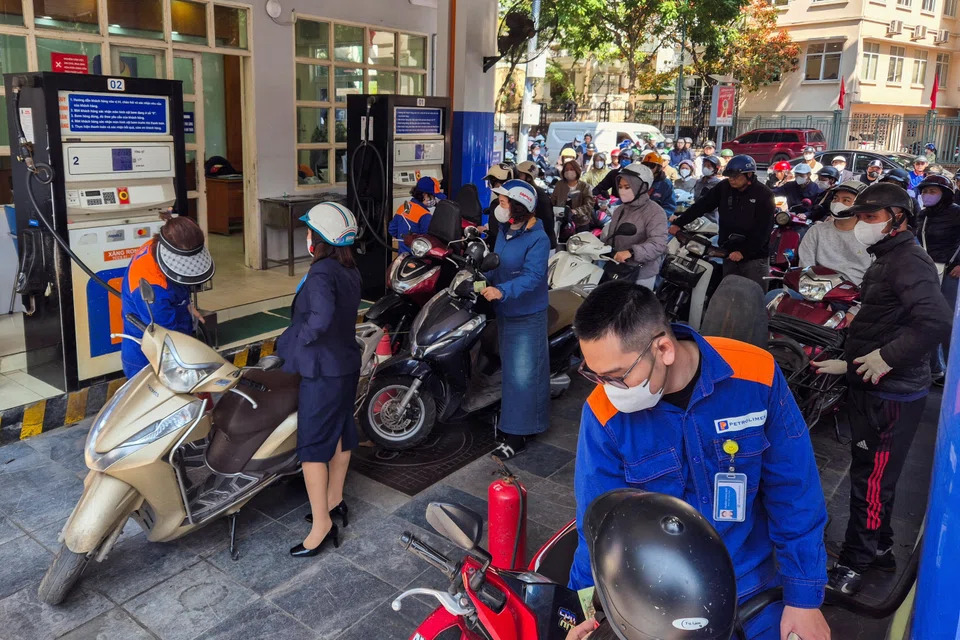
[HO CHI MINH CITY] Vietnam has emerged as one of the region’s fastest policy responders to the energy shock, moving early to cushion surging fuel costs even as its heavy reliance on Middle Eastern supplies leaves it among the most exposed in South-east Asia to prolonged disruptions.
The country’s government has eliminated more taxes on petrol, diesel and jet fuel from Mar 27 to Apr 15, in an emergency move aimed at easing surging energy costs and supporting households and businesses as geopolitical tensions disrupt supply.
Lavanya Venkateswaran, senior Asean economist at OCBC, said: “The Vietnamese authorities were one of the first to react in the region and have been vigilant of the situation. Their nimble approach to policy ensures that timely adjustments are made, and we expect this will continue to be the case.”
Under Decision 482 signed by Vietnam’s Prime Minister Pham Minh Chinh on Thursday, both environmental levies and excise tax will be reduced to zero per cent and value-added tax will no longer be applied to key fuels.
The Ministry of Finance estimates that the changes will reduce state Budget revenue by about 7.2 trillion dong (S$351.3 million) a month, and framed the move as a form of indirect support for households and companies grappling with rising costs.
These taxes, combined with the import tariff – which was also reduced to zero from Mar 9 – can account for roughly 38 per cent of the retail price of RON95 petrol in Vietnam, according to industry calculations.
'%3e%3cpath%20d='M12.1475%2025.5262C13.7713%2025.4295%2014.94%2023.913%2014.94%2021.8832C14.94%2019.5359%2013.474%2018.093%2011.5917%2018.093C11.3745%2018.093%2010.9582%2018.093%2010.8393%2018.1413V25.2086L11.8891%2025.5745C11.8891%2025.5745%2012.207%2025.5262%2012.1475%2025.5262ZM11.4934%2017.6281C13.2567%2017.6281%2014.3843%2016.4292%2014.3843%2014.4501C14.3843%2012.372%2013.275%2011.2973%2011.4339%2011.2973H10.8393V17.6305H11.4934V17.6281ZM6.66078%2025.6482L7.39265%2025.5492C8.02617%2025.4502%208.26403%2025.3053%208.26403%2025.1097V11.6149C8.26403%2011.4193%208.1451%2011.3709%207.23484%2011.249L6.68137%2011.173L6.6219%2010.7588H11.9508C15.7153%2010.7588%2017.0624%2012.0797%2017.0624%2014.1578C17.0624%2015.9666%2015.7748%2017.1909%2013.4969%2017.6305V17.7041C16.111%2017.948%2017.6571%2019.5382%2017.6571%2021.7636C17.6571%2024.3318%2015.8937%2026.0417%2012.1109%2026.0417H6.60132L6.66078%2025.6482Z'%20fill='%232B2B2B'/%3e%3cpath%20d='M20.6287%2025.6505L21.5596%2025.5515C22.1725%2025.4779%2022.4104%2025.3076%2022.4104%2025.112V11.249H21.9346C20.073%2011.3479%2018.982%2013.0095%2018.408%2014.6227L18.1907%2015.5018H17.6555L18.1701%2010.7588H29.3837L29.6421%2015.4787H29.1664L28.9491%2014.6227C28.3728%2012.8645%2027.3047%2011.2743%2025.5002%2011.249H24.9856V25.1856C24.9856%2025.3812%2025.1251%2025.4548%2025.9965%2025.5515L26.7695%2025.6505L26.829%2026.0417H20.5693L20.6287%2025.6505Z'%20fill='%232B2B2B'/%3e%3c/g%3e%3cdefs%3e%3cclipPath%20id='clip0_5242_21648'%3e%3crect%20width='24'%20height='16.8'%20fill='white'%20transform='translate(6%2010)'/%3e%3c/clipPath%3e%3c/defs%3e%3c/svg%3e)
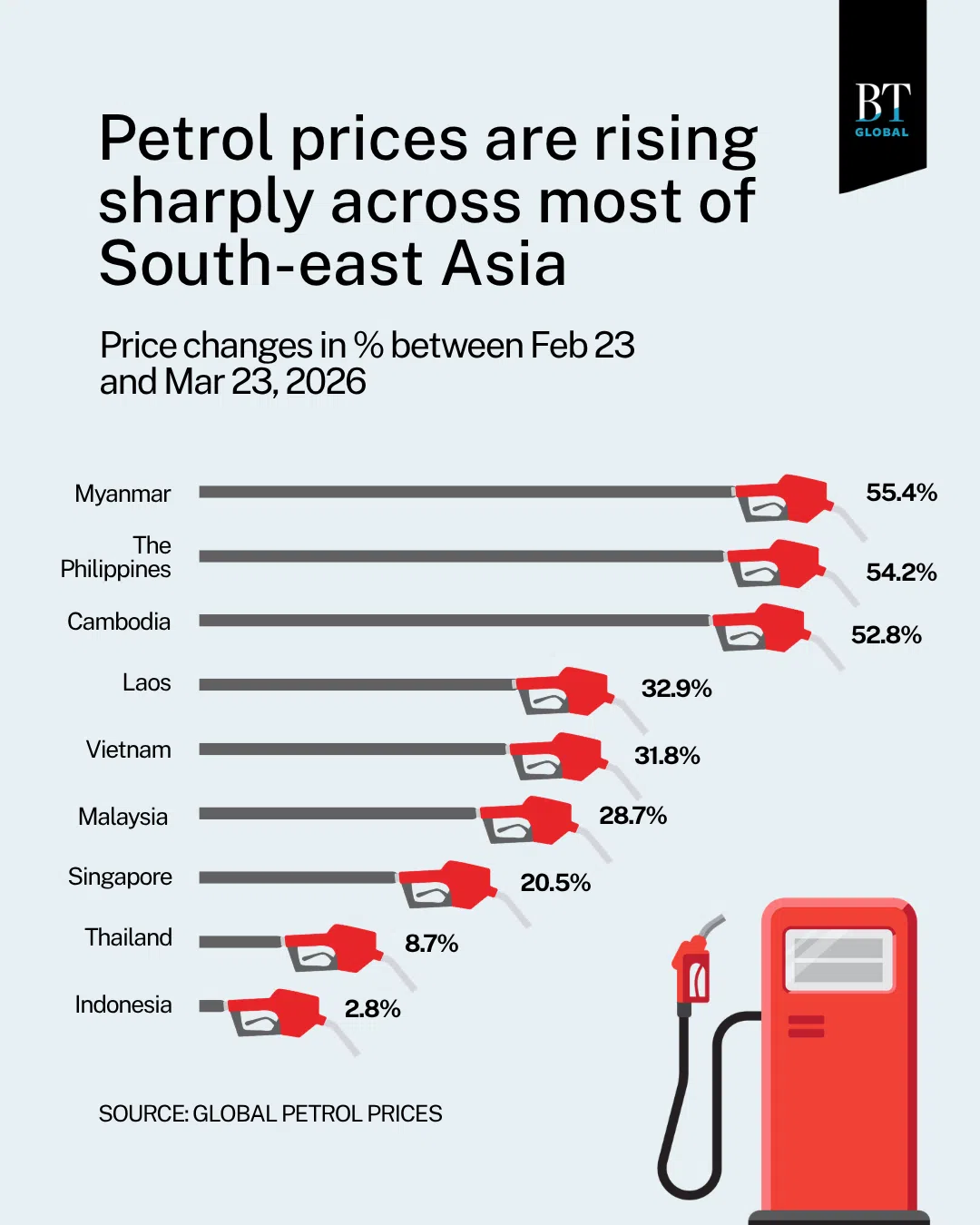
Fuel prices in Vietnam have surged in recent weeks as the conflict in the Middle East intensifies, disrupting global supply chains and driving up input costs.
Retail prices of fuel have been revised 11 times since late February.
Under the latest revision, effective from Friday and factoring in recent tariff cuts, RON95 petrol is priced at 24,330 dong a litre while diesel is at 35,440 dong a litre – marking a decrease of about 19 per cent and nearly 6.5 per cent, respectively, from the previous prices.


Prices hit record levels on Tuesday, with petrol and diesel rising as much as 68 per cent and 105 per cent, respectively, from pre-Iran war levels, according to government data.
The authorities have also leaned heavily on the country’s fuel price stabilisation fund, deploying it nine times in the past month with total disbursements estimated at nearly 5.3 trillion dong.
With the fund’s balance now reduced to about 320 billion dong, regulators have halted further use starting from the latest pricing period.
According to International Trade Centre data, about 88 per cent of Vietnam’s crude imports come from the Persian Gulf, while roughly 49 per cent of its gas imports are sourced from the Middle East region – among the highest levels of dependence in South-east Asia.
The transportation sector has been the hardest hit. A survey by the Vietnam Logistics Business Association in early March found that around 90 per cent of businesses were affected at a moderate to severe level, with over half describing the impact as heavy or at crisis level.
Vietnamese airlines, including Vietnam Airlines, Vietjet Air and Bamboo Airways, have announced plans to cancel certain domestic and international flights next month due to fuel supply constraints.
“We see downside risks to GDP (gross domestic product) growth and do expect inflationary pressures to pick up in the coming months,” added Venkateswaran. “This episode highlights the need to diversify energy resources across different energy sources but also various trading partners.”
Information from Vietnam’s two refineries indicates that Nghi Son Refinery has secured sufficient feedstock to maintain continuous operations at optimal capacity till the end of May, while Dung Quat Refinery has boosted output by 10.5 per cent and ensured sufficient crude supply to sustain production at least till the end of April.
In parallel, the government has stepped up diplomatic efforts to secure additional energy supplies.
Chinh has held calls and sent letters to foreign counterparts, while also engaging with ambassadors in Hanoi to seek support.
Vietnam has already mobilised about four million barrels of crude from partners and is exploring access to strategic reserves, including from Japan.
The country has also stepped up energy cooperation with Russia as part of efforts to diversify its energy mix away from fossil fuels over the coming decade.
Decoding Asia newsletter: your guide to navigating Asia in a new global order. Sign up here to get Decoding Asia newsletter. Delivered to your inbox. Free.
Copyright SPH Media. All rights reserved.
TRENDING NOW

DBS, OCBC, UOB rout lops billions off STI as inflation, rate concerns spook investors

Grab CEO’s wife Chloe Tong on life with Anthony Tan and finding her purpose

OCBC sheds S$8 billion in value as shares close nearly 6% down; analysts cautious on banks

Deal between tycoon friends sparks scrutiny of Philippine power sector

