



Vietnam catches a break as Trump more than halves tariffs, though the plan is short on details
The blueprint from the South-east Asian country could set the stage for US trade deals with other Asean nations, say analysts

[HO CHI MINH CITY] Vietnam may have scored a win.
A new trade deal announced by US President Donald Trump on Wednesday (Jul 2) highlights warmer ties and potentially better terms for the South-east Asian nation, which has positioned itself as a cooperative partner amid rising trade tensions.
But the actual details and their impact will depend on further clarity and how the US handles the tariffs on the other countries in the region. For now, Vietnam appears to have dodged the worst, as the earlier proposed tariff of 46 per cent has been trimmed to 20 per cent – still considered steep, but clearly a step down.
“It is clear that Vietnam remains among the most responsive and cooperative counterparts in US trade negotiations,” noted Tyler Nguyen, chief market strategist at Ho Chi Minh City Securities Corp (HSC).
“No other regional peers have finalised deals or published tariff terms yet. Whether Vietnam’s 20 per cent deal is relatively strong remains an open question,” he added.
Under the “Great Deal of Cooperation”, as it was called by Trump on Truth Social, the US will cut the tariff on imports from Vietnam to 20 per cent, with transhipped goods subject to a higher rate of 40 per cent.
Details on sector-specific or foreign content-based tariffs have yet to be released.
In return, the US will gain tariff-free access to the Vietnam market, with Trump highlighting opportunities for sport utility vehicles – the type of large engine car that “does so well in the US”.
This came a week before the previously announced rate of 46 per cent on Vietnam was set to take effect from the baseline 10 per cent, which could have significantly undermined the country’s competitiveness as a regional production and investment hub, especially since other export competitors, excluding China, faced substantially lower tariffs.
“The blueprint from Vietnam sets the stage for forthcoming deals with the other Asean countries,” OCBC analysts wrote in a note on Jul 3. “(However,) at this point, deals look staggered and there is a risk that countries such as Thailand could miss the Jul 9 deadline.”
In a phone call on Wednesday, prior to the deal announcement, Trump committed to “significantly reduce” reciprocal tariffs on many Vietnamese goods, according to the Hanoi government.
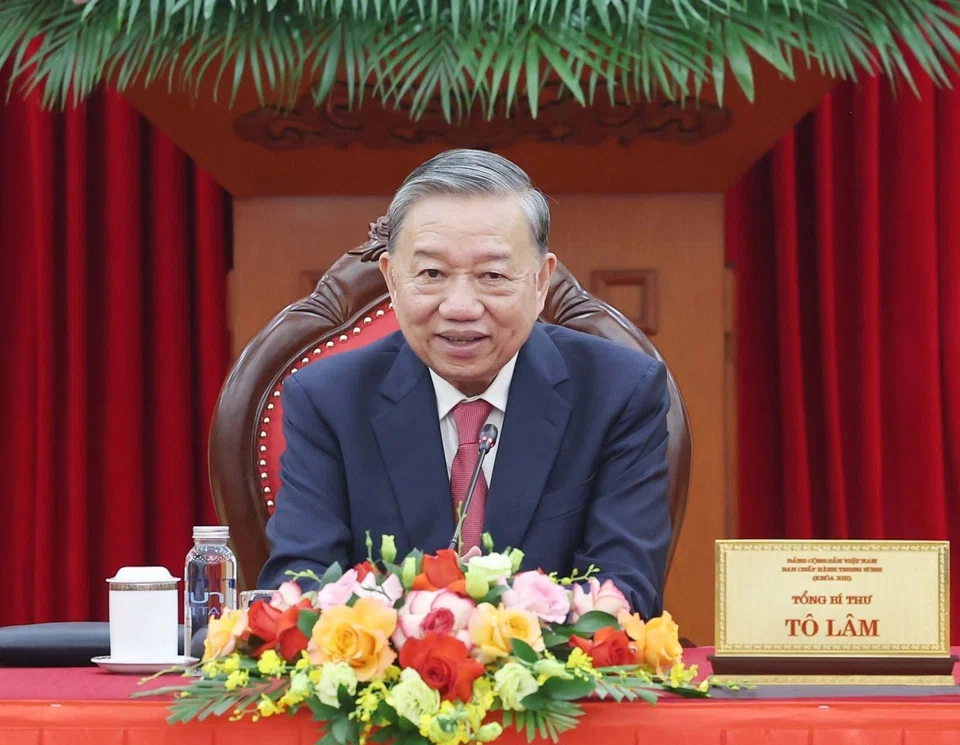
During the call, Vietnam Communist Party chief To Lam also urged Washington to recognise Vietnam as a market economy and lift export restrictions on certain high-tech products.
Looming challenges
Given the new trade-deal design, analysts warn of long-term challenges for domestic agricultural producers and automotive manufacturers in Vietnam, who must compete with a possible influx of duty-free US imports.
Near-term risks include a slowdown in foreign direct investment (FDI) inflows, due to reduced transhipment activity that had previously been used to bypass trade barriers.
In the first five months of this year, FDI pledges into the country hit US$18.4 billion, marking a 51.2 per cent surge from last year’s figure. Mainland China remained the largest source of new FDI projects with 453 projects, 2.5 times higher year on year and totalling US$1.8 billion.
“Overall, we are inclined to think that plain diversion makes up only a minority of Vietnam’s exports,” noted Michael Wan, senior economist at Mitsubishi UFJ Financial Group.
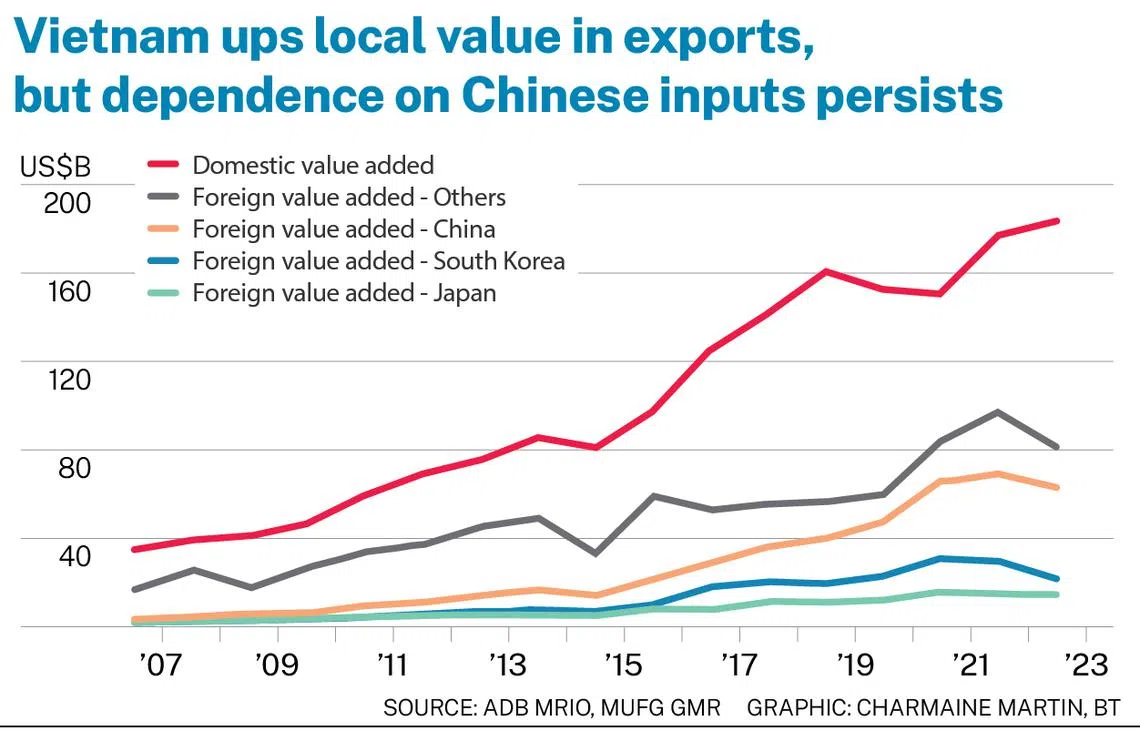
“If there is a stricter determination of transhipment defined as a certain threshold of foreign value added, the impact of these 40 per cent tariffs may be pronounced,” he added, noting that Vietnam still remains dependent on China for intermediate input.
Maybank analysts also anticipate a slowdown in Vietnam’s export growth following double-digit gains from February to May, citing payback effects from elevated US inventories and weakening American consumer demand.
“While still challenging for exporters, the severity of the second-half export slowdown should be mitigated by this more reasonable reciprocal tariff rate,” they wrote in a note on Thursday.
Analysts remain optimistic that the US crackdown on trade diversion could act as a long-term catalyst for industrial upgrading in Vietnam, spurring the development of domestic upstream suppliers and increasing local content in Vietnamese exports.
Vietnam as “great negotiator”
During the 90-day suspension on the US’ punitive reciprocal tariffs, Vietnam – which Trump described in April as a “great negotiator” – has moved swiftly to manage mounting pressure from Washington, while trying to preserve its trade competitiveness and geopolitical neutrality.
Even prior to the Apr 2 tariff blow, Vietnam made a number of pre-emptive concessions, including cuts to tariffs on certain US goods, along with efforts to boost procurement of American goods and services.
Hanoi participated in a total of three rounds of direct negotiations with Washington to secure a trade deal, alongside multiple virtual calls at the technical level.
In response to Washington’s concerns over transhipment and trade imbalances – which reached US$123.5 billion in 2024 as the third-largest US trade deficit after China and Mexico – the South-east Asian export powerhouse has taken concrete steps.
These include tightening the enforcement of rules of origin, increasing dealmaking with US companies and facilitating major investments, such as SpaceX’s Starlink satellite Internet service and a Trump-backed golf resort.
Meanwhile, it has also intensified economic engagement with other major powers, including joining Brics in June as a partner country, and signing new infrastructure and supply chain deals with China during President Xi Jinping’s April visit.
HSC’s Nguyen expects the Vietnamese government to continue negotiations with the US, to improve the tariff policy over time and have “plans in place to stay on track with its growth targets”, which include at least 8 per cent gross domestic product expansion this year and a double-digit level in the following five years.
“The situation is difficult, certainly not hopeless, but it will require strong policy responses and resilience,” he added.
TRENDING NOW

First Resources blames El Nino, outside fires for Kalimantan hotspots amid haze scrutiny

High Court rules against Julius Baer’s Singapore trust arm in US$50 million family trust dispute
Singapore key exports jump by higher-than-expected 68.4% in September, led by non-electronics
MSCI proposes downgrading Indonesia to standalone market status

