



Vietnam at the crossroads: Trump’s policies set to bring new risks and opportunities
The country’s electronics sector, with its export growth and reliance on Chinese imports, could become a target under US trade shifts
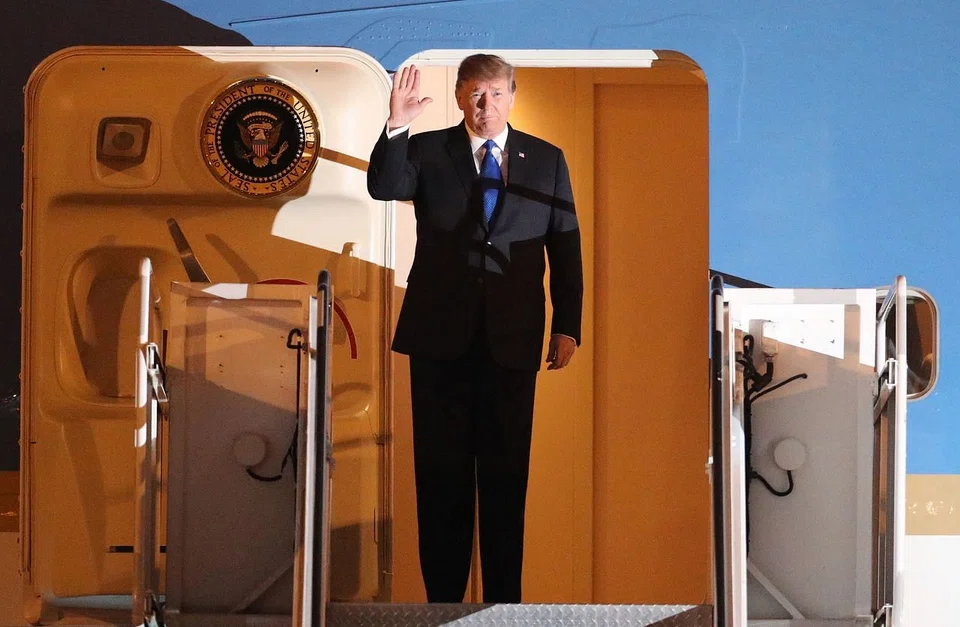
[HANOI] Vietnam, an emerging manufacturing hub, faces both risks and opportunities as Donald Trump’s impending return to the White House stirs fears of renewed trade protectionism, amid a growing trade surplus with the US and rising Chinese investments seeking tariff relief.
Vietnam, as one of South-east Asia’s most open economies with a burgeoning electronics manufacturing sector, is vulnerable to potential US trade restrictions, and this is raising concerns, though analysts see continued prospects from China’s trade diversion and the West’s friend-shoring strategy.
Michael Kokalari, chief economist at VinaCapital, told The Business Times recently: “(The US) will probably be more strict on the content rules. That would be good for Vietnam because (the Chinese manufacturers) have to make more in Vietnam.”
He added in a note on Thursday (Nov 7): “Vietnam may be viewed as helpful in weaning the US off of low-end China-made goods.”
In recent years, Chinese exporters allegedly rerouting their export goods to Vietnam to circumvent higher US tariffs have been under heightened scrutiny by the US authorities, sparking an increase in rule-of-origin disputes, which have flared in the solar panel industry.
During the period, the South-east Asian country also recorded a jump in foreign direct investment (FDI) from Greater China, mainly in the manufacturing sector. When combined, Hong Kong, Taiwan and mainland China accounted for almost half of Vietnam’s new capital inflows last year.
Industry players report that Chinese manufacturers investing in Vietnam tend to concentrate on low-end manufacturing, likely using it as a base to reduce trade costs.
“But this is starting to change... to encompass advanced manufacturing, technology and professional services,” said Yun Liu, Asean economist at HSBC Global Research; she cited the increasing Chinese investments in Vietnam in fields such as electric vehicles and renewable energy.
Kokalari noted that a blanket US tariffs on imports from countries outside China was unlikely to diminish Vietnam’s competitive edge, especially given its ample supply of young, skilled and relatively low-cost manufacturing workers.
In his 2024 presidential campaign, Donald Trump proposed tariffs of 10 per cent on all US imports and 60 per cent specifically on Chinese-made products.
“We expect Trump to increase tariffs as soon as Q2 2025 via executive order, but with an incremental approach,” noted analysts at Allianz Research.
If a full-fledged trade war takes place following the increased US import tariffs to the proposed levels, the Munich-based research centre viewed Vietnam as the country most affected in Asean due to export losses, followed by Thailand, Malaysia, Singapore and the Philippines.
Rising trade tensions
Between the start of the Sino-American trade war in 2018 and until 2023, Vietnam’s trade surplus with the US more than doubled to US$104 billion; Vietnam ranked fourth after China, Mexico and the European Union.
This trend coincided with a US$112 billion drop in US imports from China and a US$65 billion increase in its imports from Vietnam over the same period. The US is now the South-east Asian country’s largest export market, accounting for roughly a third of total exports, up from less than 20 per cent a decade ago.
With Trump’s return, market watchers anticipate new tariffs or export restrictions on Vietnam from the new US administration, aimed at reducing the Western country’s trade imbalances and to prioritise its domestic manufacturing, potentially eroding the gains Vietnam achieved through balanced relations with global superpowers.
Suan Teck Kin, head of research at UOB, said: “Vietnam export markets are quite diversified across countries, so there is room for the Vietnamese government and businesses to expand to markets beyond the US, to moderate some of the pressures coming from there.”
In addition, given the geopolitical implications with China, strengthening economic ties is advantageous for both Vietnam and the US, experts said.
Nguyen Khac Giang, a visiting fellow at the Vietnam Studies Programme of the Singapore-headquartered Iseas-Yusof Ishak Institute, wrote in a note in July that as Vietnam and the US upgraded their bilateral relations to a comprehensive strategic partnership last year, Trump is expected to continue this positive trajectory, viewing Vietnam as a key partner in the Indo-Pacific region.
“Vietnam sits on the front line of the US strategy to manage China’s rise, which will likely grant Hanoi a ‘free pass’ from Washington in some cases,” he noted.
Spotlight on electronics
Vietnamese exporters have grown their market share significantly in the US in the last decade, not only in lower value-added sectors such as footwear, textiles and leather, but also in machinery and electrical goods, going by the analysis of Allianz Research.
Meanwhile, the country’s imports from China have also surged in the last 10 years, from roughly a quarter to about a third of the total, indicating the South-east Asian country’s heavy reliance on Chinese materials for production.
“The electronics sector could be singled out, given its rising share in Vietnam exports and its potential link with Chinese transhipped goods,” Allianz Research analysts wrote in their research in July.
Allianz pointed out that 10 per cent of Vietnam’s imports from China were critical dependencies, of which 44 per cent were found in the textiles industry and 32 per cent in computers and telecom, electronics and household equipment.
The electrical machinery and equipment sector has remained Vietnam’s top export sector since 2010. There have also been rising FDI inflows into Vietnam’s computer and electronics manufacturing in the last 10 years.
However, Banh Thi Hang, a research fellow at the Asia Competitiveness Institute at the Lee Kuan Yew School of Public Policy, noted that Vietnam’s gross exports in sectors such as electrical equipment still have low domestic value-added.
“We can expect efforts by the Vietnamese government to attract more FDI into higher value-added manufacturing in the coming period,” she added.
TRENDING NOW

Government to bring forward raising of retirement age, give employers more financial support to create flexi-load jobs
Former minister Maliki Osman, Revolut chairman join Asia Gulf Holdings advisory board

Is Manila Asia’s new dining hot spot?
Simba at risk of losing operating licence over spectrum misuse

