Vietnam riding out rough year, expects to clock up to 6.5% growth in 2022
Hanoi
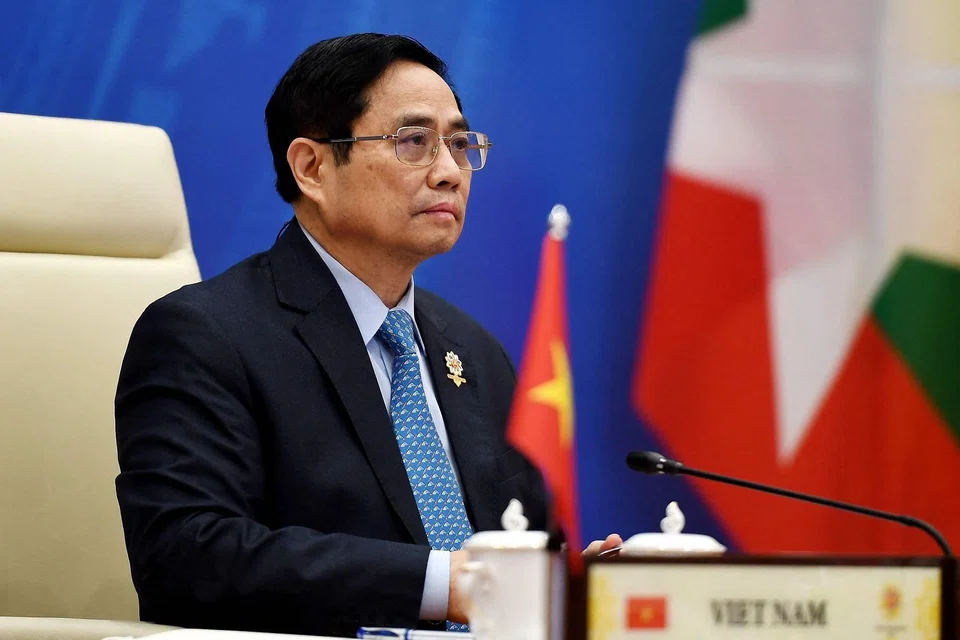
WHEN Vietnamese Prime Minister Pham Minh Chinh addressed the opening of the second session of the 15th National Assembly last week, he provided an insight into the government's thinking on the current state of the economy.
The key takeaway from his speech was that gross domestic product (GDP) is expected to grow by between 6 and 6.5 per cent in 2022 - higher than the expected growth of between 3 and 3.5 per cent for this year.
The projection for 2022 is based on a range of macro-economic factors.
The Covid-19 pandemic
When Covid-19 first started to make its way around the world in early 2020, Vietnam responded quickly.
Borders were closed, quarantine facilities were swiftly erected and isolated lockdowns were implemented. As a result, for the 12 months that followed, there were relatively few reported infections.
In May this year, however, things took a turn for the worse. Not long after nationwide elections, the number of cases began to climb. By the start of September, daily cases were averaging at over 13,000 a day, the majority of which were in Vietnam's financial centre, Ho Chi Minh City.
The city entered a lockdown, officially dubbed "Directive 16", on July 9. Non-essential businesses were closed and a non-essential travel ban was enforced.
Crucially, however, manufacturing plants and factories were allowed to continue to operate, but only under what became known as the "three-on-site" model, under which workers lived on site, isolating these businesses almost entirely from the outside world.
The outcomes were mixed. Not all workers accepted the situation, and businesses had to foot the bill to fit out their factories with accommodation facilities. Outbreaks of the virus still occurred anyway.
Overall, the lockdowns were difficult for industries. In the third quarter of the year, Vietnam's GDP contracted by 6.17 per cent.
Global supply chains
Even if Vietnam's factories had kept moving at full pace during the pandemic, it is more than likely that their output would still be sitting on docks.
At Vietnam's biggest port Vung Tau, congestion this month was 38 per cent higher than the median, with the likelihood of goods getting to where they needed to be by Christmas slowly diminishing.
As a result, scores of orders have been cancelled and exports have taken a hit.
The European Chamber of Commerce found in its September 2021 business climate survey that the top problem enterprises were facing was limited transportation and logistics.
Vaccinations
The vaccine rollout in Vietnam was initially slow to get off the blocks. When the highly-infectious Delta variant took hold, however, the authorities moved more quickly to get more jabs in arms.
A vaccine fund was also established and Vietnamese citizens were encouraged to donate. All in, it raised about US$382 million. But even with the financing covered, Vietnam was still struggling to access the supplies.
This is partially due to a reluctance to embrace China's Sinopharm vaccine - but more so because Vietnam depends on the Covax facility, the guidelines of which state that in the first round of allocations, participants can receive, at most, enough vaccine doses for only 20 per cent of their populations.
Vietnam is also depending on donations from more developed countries which have made "vaccine diplomacy" a keystone of their foreign policy. This, however, is haphazard and inconsistent.
As at Oct 27, just 23 per cent of the country's people have completed their full vaccination regimen; a little over half (56 per cent) have received at least one dose of the vaccine.
Inflation
Vietnam targets inflation of between 2 and 4 per cent a year. Since 2014, it has been relatively stable within this range. While the government's expectation is that inflation this year will come in at under 4 per cent, the situation remains volatile.
Prices of raw materials like animal feed, concrete, sand and steel have all recorded price surges in the past 12 months.
The lockdowns have also thrown domestic demand into chaos. For example, airfares fell by 20.91 per cent in the first 9 months of 2021, compared to the corresponding period in 2020, said the General Office of Statistics.
All in all, despite the challenges Vietnam faces, a GDP growth rate of 6 to 6.5 per cent is relatively conservative - some analysts have suggested it might be as high as 8 per cent.
That said, Vietnam's economy - consistently one of Asia's fastest-growing - is in somewhat uncharted territory. These numbers are likely to change as the post-Covid economic picture becomes clearer in the coming months.
Chinh said in his national assembly address: "Realising our 2022 targets is a heavy task, but we definitely will revive our economy."