Vietnam startup funding falls sharply in 2022, but opportunities are still aplenty for investors

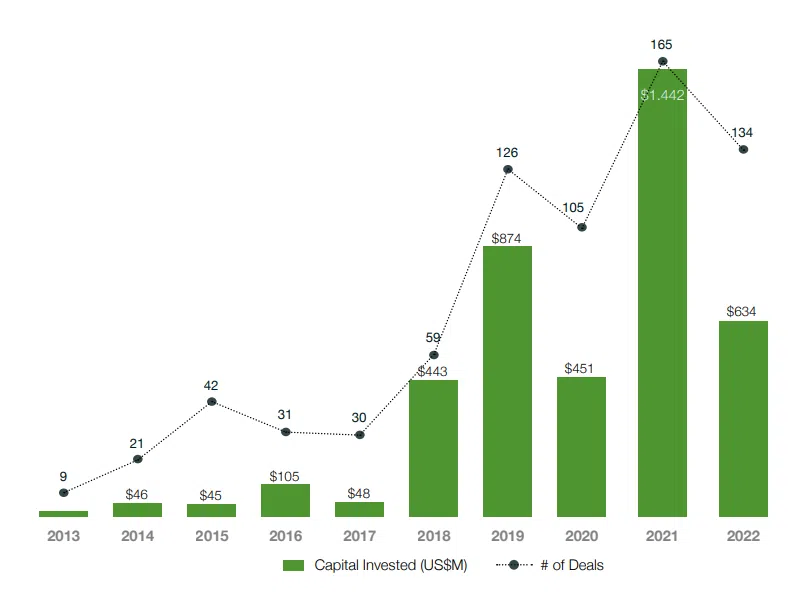
[HO CHI MINH CITY] EVEN though Vietnam’s economy was among the best performers in Asia in 2022, it was a challenging year for startups, as venture capital (VC) deal values plunged sharply to US$634 million.
This represented a 56 per cent decline year on year, with the second half of 2022 proving particularly challenging, as there was a 65 per cent fall from the first six months as a result of the ongoing global tech crunch.
These figures came from a recent report released by Vietnam-focused VC firm Do Ventures, which showed that last year’s deal value was well below the pre-pandemic level of US$874 million in 2019.
The report indicates that Vietnam’s startup funding scene is consistent with the rest of the region. Data compiled by DealStreetAsia showed that regional startups raised US$17.79 billion in equity and debt funding in 2022, down from an all-time high of US$25.75 billion in 2021.
The weaker showing was due to slowing economic conditions due to higher inflation, geopolitical conflicts and supply chain disruptions.
The slump in Vietnam was mostly linked to the 64 per cent decrease in the volume of venture deals worth above US$10 million, which accounted for about two-thirds of the total investment proceeds in 2022.
And while the deal count in the second half of last year picked up slightly from the first six months, total funding proceeds fell sharply from US$471 million to US$163 million – the lowest half-year deal value in five years.
This indicated that investors had a more prudent approach towards the growth prospects and valuations of startups in the latter half of 2022, with reduced cheque sizes despite the steady pace of deal-making activities.
“Following a robust rebound in the previous year, Vietnam’s tech investment landscape has been affected by the profound impact of the global crisis,” Do Ventures wrote in its report. “Increased levels of financial uncertainty and market volatility have significantly influenced investor sentiment towards emerging markets, including Vietnam.”
The total number of deals fell to 134 last year – down 20 per cent compared with 2021, but still 6.3 per cent higher than the pre-pandemic peak in 2019.
There was a continual expansion in the average size of transactions across all investment stages, with the average deal size in Series B hitting an all-time high of US$25.8 million. This represented a 71 per cent increase year on year.
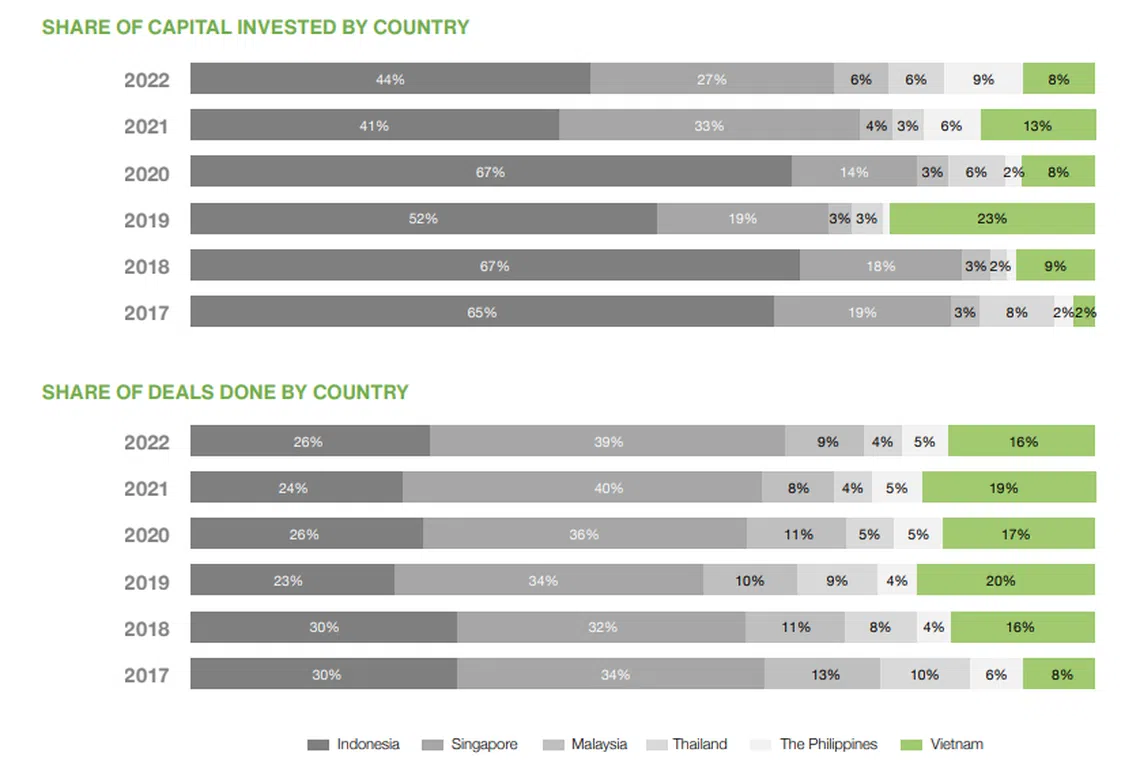
The report also revealed that Vietnam fell behind its regional peers Indonesia and Singapore in terms of deal count. Vietnam also lost out to the Philippines in terms of the amount of venture capital invested in 2022.
The most-funded sector in Vietnam was financial services, which experienced a year-on-year increase of 249 per cent.
Overall, fintech deals – including investments in solutions for payment, lending, data analytics and wealth management – showed plenty of resilience, making up the lion’s share (39 per cent) of the total capital invested in Vietnamese startups last year.
Retail, healthcare and education were among the other sectors that caught the attention of investors.
These findings came on the back of the e-Conomy SEA 2022 report by Google, Temasek and Bain & Company, which noted last October that Vietnam was the fastest-growing digital economy in South-east Asia.
“There’s not been a better time to start a company or be an early-stage investor in Vietnam,” said Justin Nguyen, general partner of Monk’s Hill Ventures, in Do Ventures’ report.
“Investors remain attracted to the market’s robust economic growth, young skilled population, and its huge services industry that’s ripe for technification,” he added.
That said, insufficient policies and regulations for a sustainable innovation environment, a lack of successful initial public offerings and exit stories, and a shortage of funding from large corporations remain the top challenges of the local tech startup scene, the report added.
There was, however, at least one silver lining worth noting. Even as fundraising from established foreign funds fell, Vietnam’s VC firms played a bigger role in providing growth capital for the country’s early-stage startups.
Vietnamese investors led the way, with 30 funds actively making investments in 2022, followed by funds from Singapore, North America and South Korea.
And despite the economic headwinds, some local early-stage VC firms are willing to invest at the same pace as they did in the last two years.
One of them is Ascend Vietnam Ventures (AVV). Its general partner Binh Tran said that the company’s focus on software innovation will help it maintain its pace “even in the face of a bear market”.
“With a five- to 10-year outlook, we understand that seed investing is a long-term game, and are looking for tech opportunities that seek to create sustainable value,” he said.
In 2022, a record-high deal value of US$287 million – or 45 per cent of the total capital invested – was made with the involvement of local funds.
There were 36 deals featuring Vietnam’s third-generation VCs (those founded from 2020 onwards) such as AVV, Do Ventures, ThinkZone Ventures and Touchstone Partners. ThinkZone Ventures established a US$60 million fund that was fully backed by local investors in 2022, and made investments into 11 startups. The firm’s portfolio startups also raised a total of US$34 million in 2022, about 2.4 times more than the amount in 2021.
“(Third-generation VCs) are well-positioned to disrupt the venture capital scene in Vietnam with their global perspective and large funding capabilities,” Do Ventures noted in its report.
“They have actively increased the visibility of the Vietnamese startup ecosystem by introducing Vietnamese companies to international investors, allowing them to access a wider pool of capital and resources.”